
Mesa Verde National Park
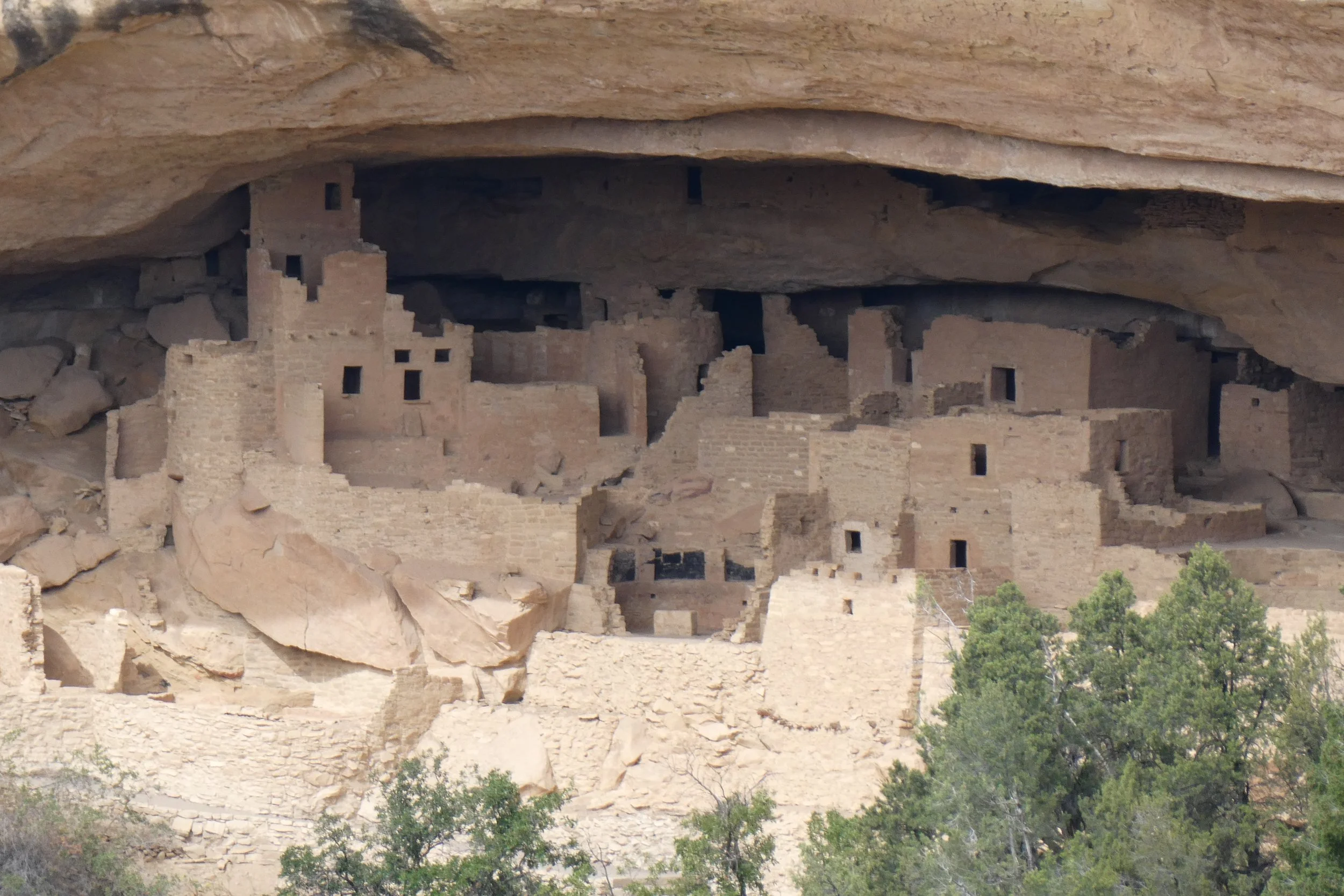
Cliff Palace From Scenic View Drive
Mesa Verde is more than a national park; it’s a window into the history and culture of the Ancestral Pueblo people. Established in 1906 by Teddy Roosevelt, the park protects more than 52,000 acres of land and nearly 5,000 archaeological sites, including approximately 600 cliff dwellings! The park was established to protect and preserve these incredible sites. Coming to the park, we knew we were going to see cliff dwellings, but we had no idea how much education we were going to receive.
We spent two nights and one full day in the park and got to see the highlights of Mesa Verde. Someone wanting to explore the park more fully could easily spend three days here and still not see everything the park has to offer. Arriving late in the afternoon, we had limited time to explore before the park closed. So, to get our bearings, we took a scenic drive through the heart of the park.
Mesa Verde is Spanish for “Green Table,” and this description comes to life at the visitor center where you can see a 3D topographical map of the park. The park is centered on a collection of mesas that tower more than 1,000 feet above the surrounding terrain. The tops of the mesas are lush and green (which we didn’t expect to see, given the desert-like feel of the area in general!) and provided a great farming environment for the Pueblo people. Between the mesas, hundreds of canyons dissect the land, creating natural rock shelters.
The Ancestral Pueblo people lived and built communities on the mesa tops for hundreds of years (roughly 500 to 1100 CE) before cliff dwellings became their preferred style of home in the late 1100s. Eventually, many people moved into the natural alcoves in the canyon walls, creating the incredible cliff dwellings we came to see.
Cliff Palace
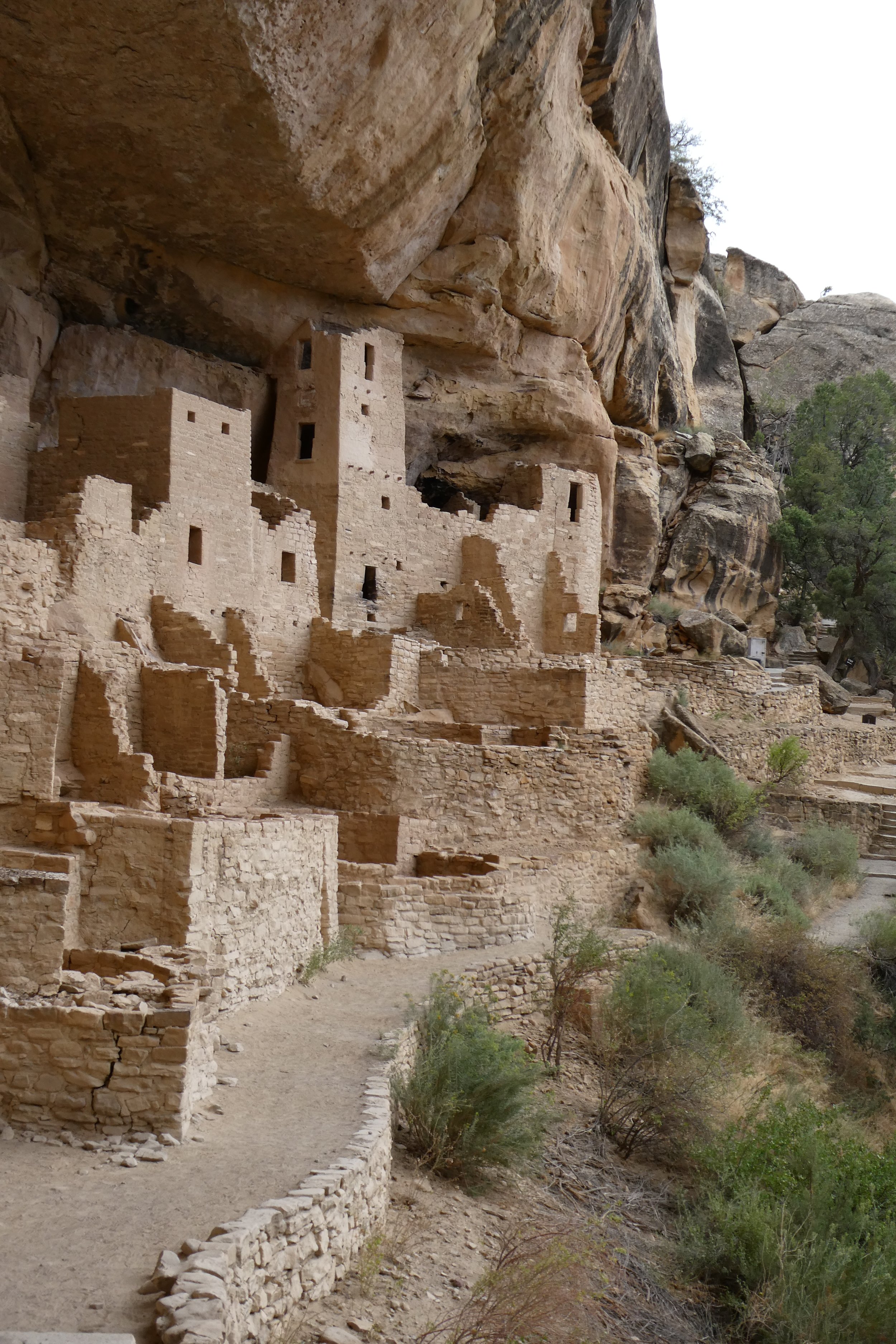
Inside Cliff Palace
On our first full day, we woke up and hit the ground running. We booked a couple of tours and planned on completing our day with a scenic drive.
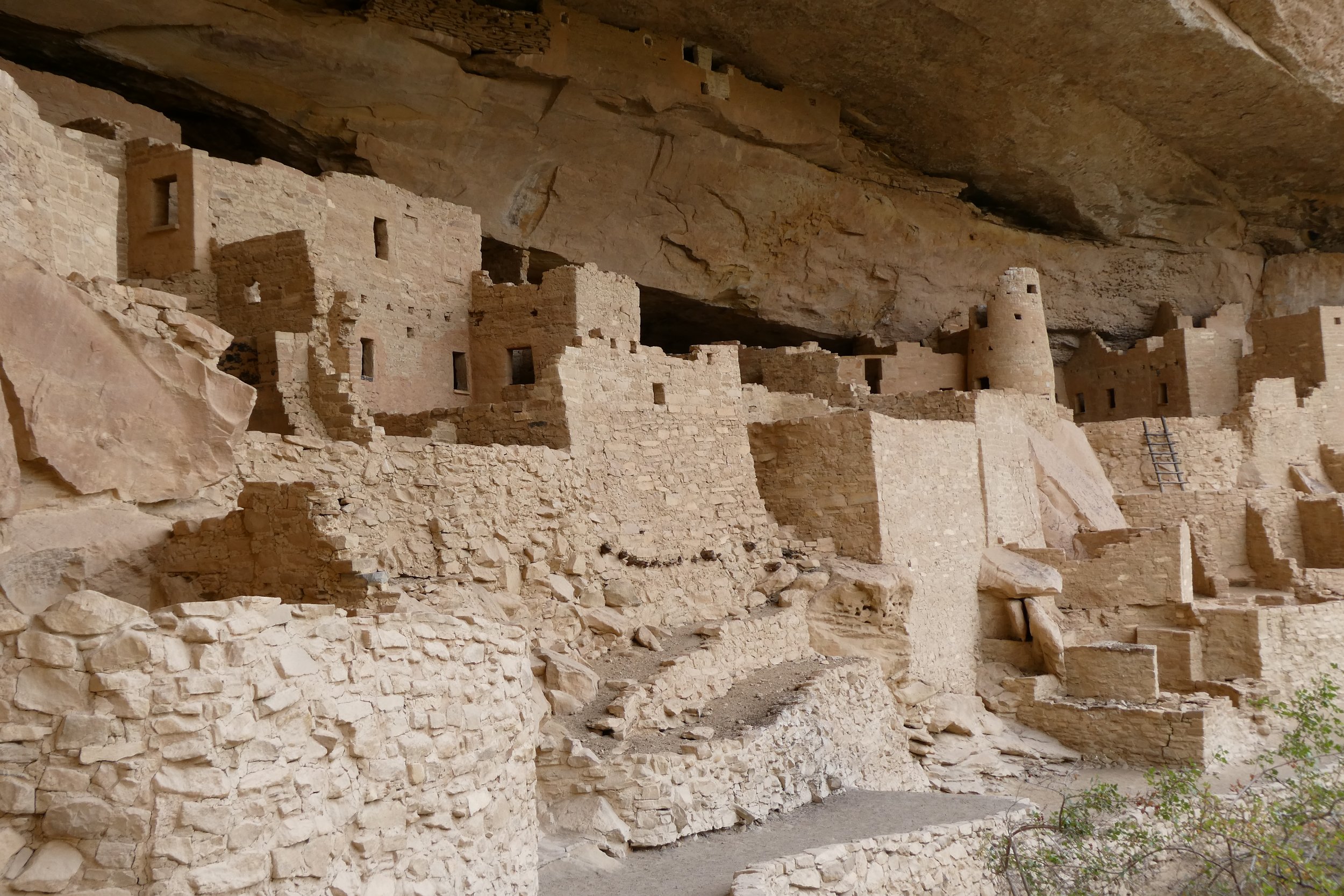
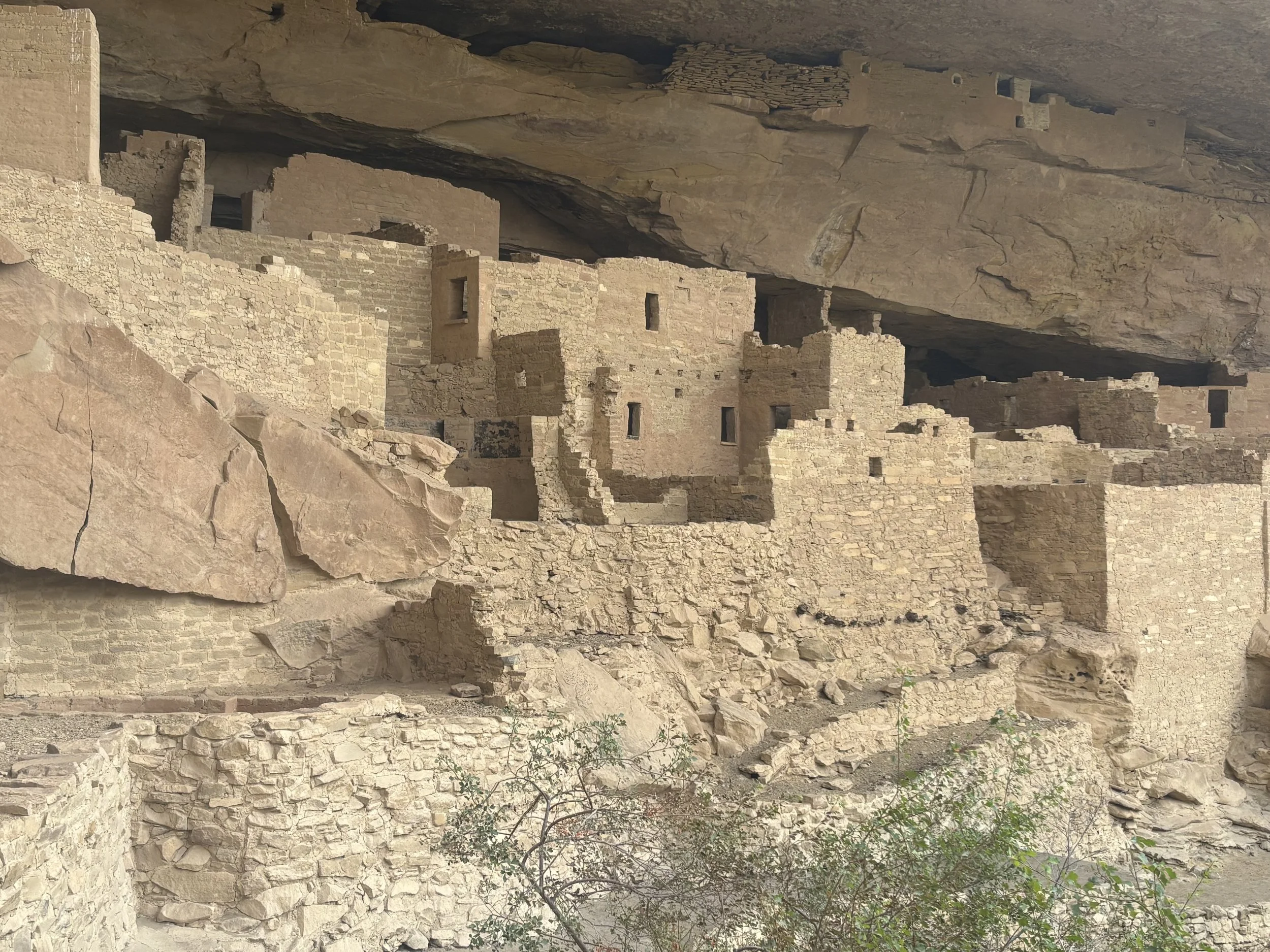
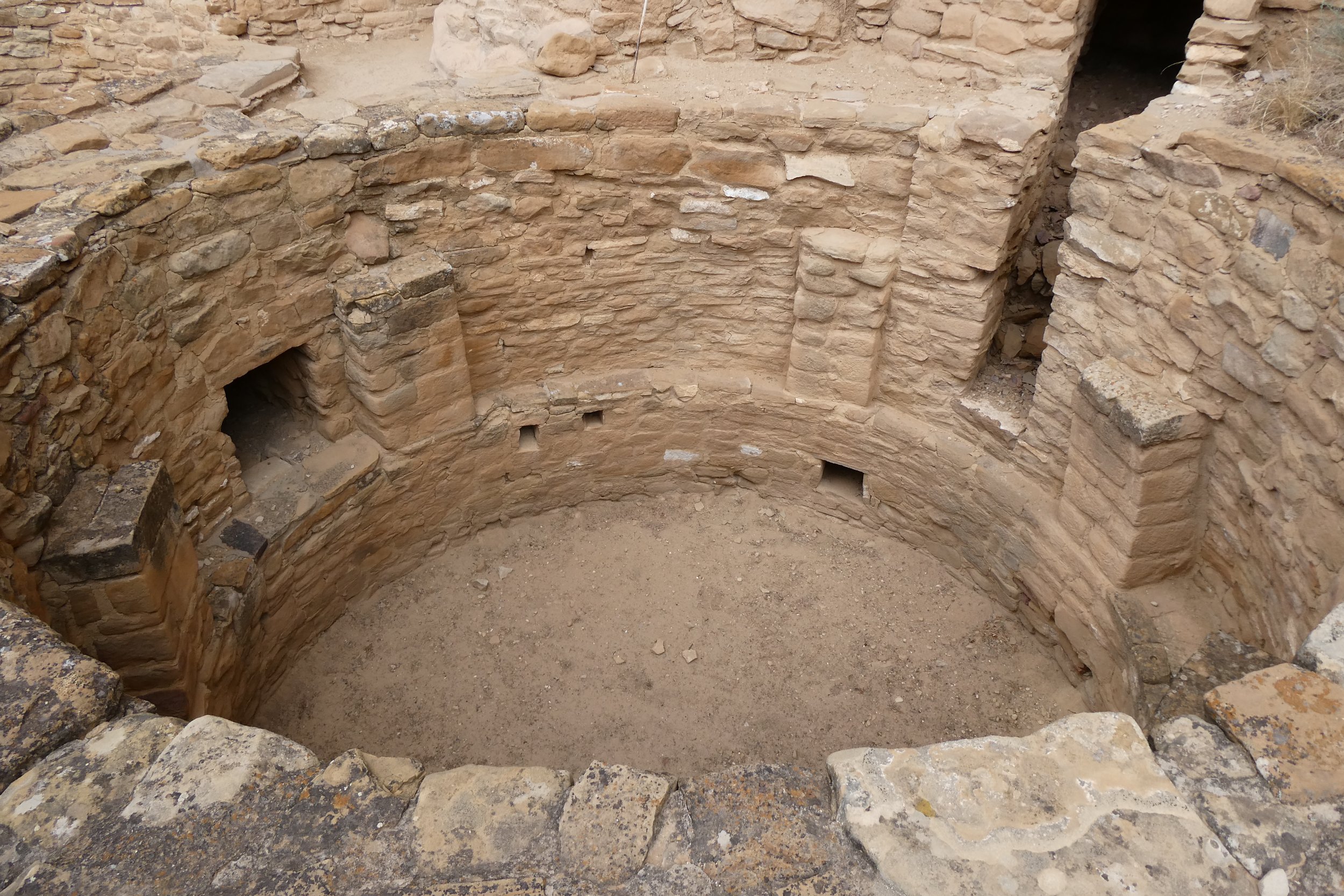
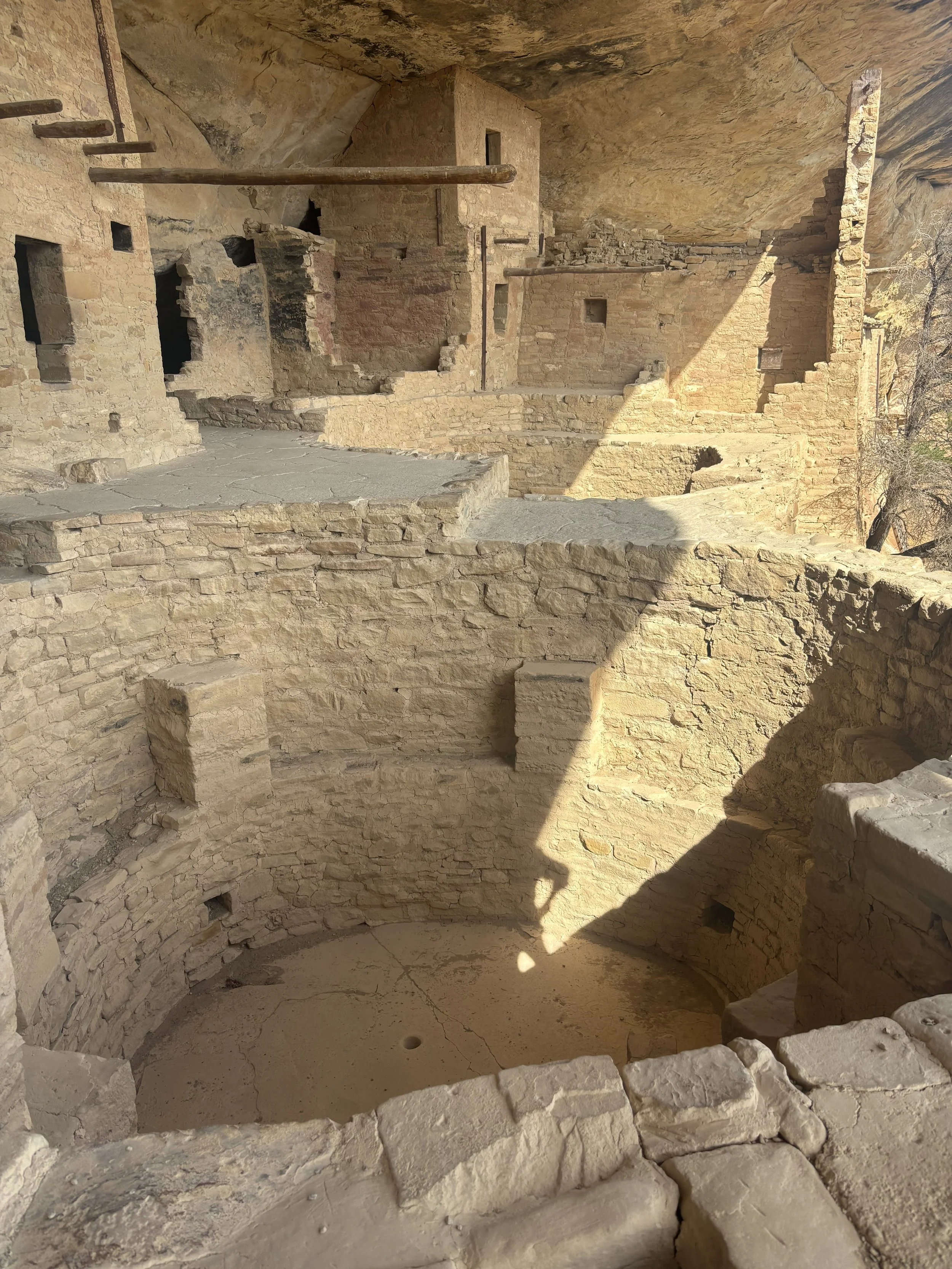
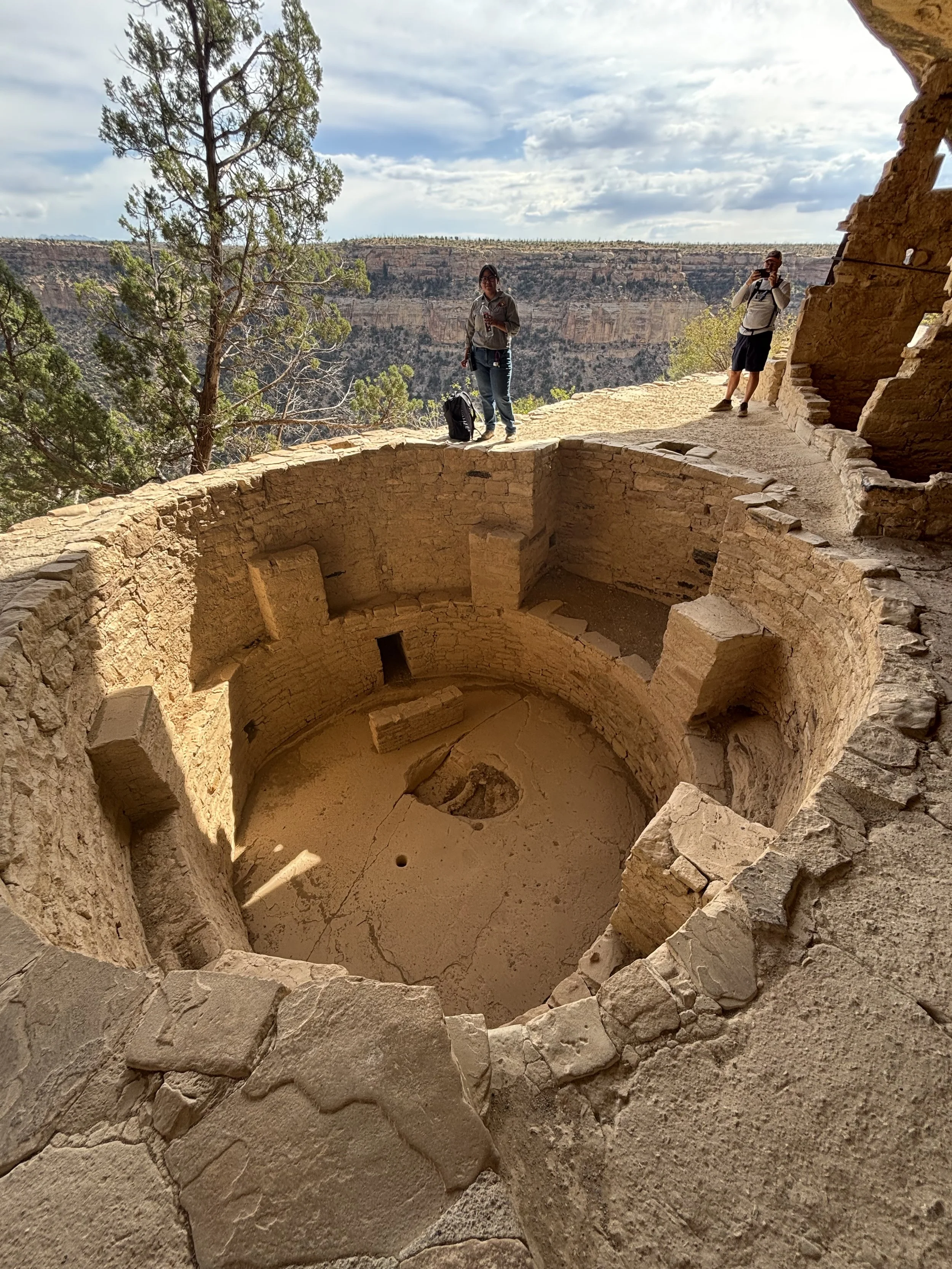
Our first tour was of Cliff Palace which is the largest cliff dwelling in North America. It was built between 1190 and 1280 CE—long before America was “discovered” by other countries. Researchers believe it housed approximately 100 people. With about 150 rooms and 23 kivas, it is easy to see why someone described it to us as the equivalent of a modern-day apartment complex. (Educational note: a Kiva was a large round room that an extended family, or clan, would use for meetings, education, story telling, and celebrations.)
The site is quite impressive, and not only because of its sheer size. Once you stop to think about how difficult it would have been to get to, let alone build, something on this scale and complexity, you recognize how truly amazing this place is. The Ancestral Pueblo people had to navigate steep cliffs to reach these dwellings, and relied on stone tools to complete the work. Despite these factors, the Pueblo people were quite adept at building.
The entire structure was created from materials gathered from around the building site. They chiseled sandstone blocks for the walls, made mortar from soil, water, and ash, and used lumber for floors and ceilings. They shaped the sandstone using stone hammers and felled the trees with stone axes both of which were made from shale rocks collected from nearby riverbeds. (If you want a true appreciation for what they accomplished, grab a stone and try to chop down a tree!). As further testament to their skills, remember that many of the original structures are still standing over 800 years later.
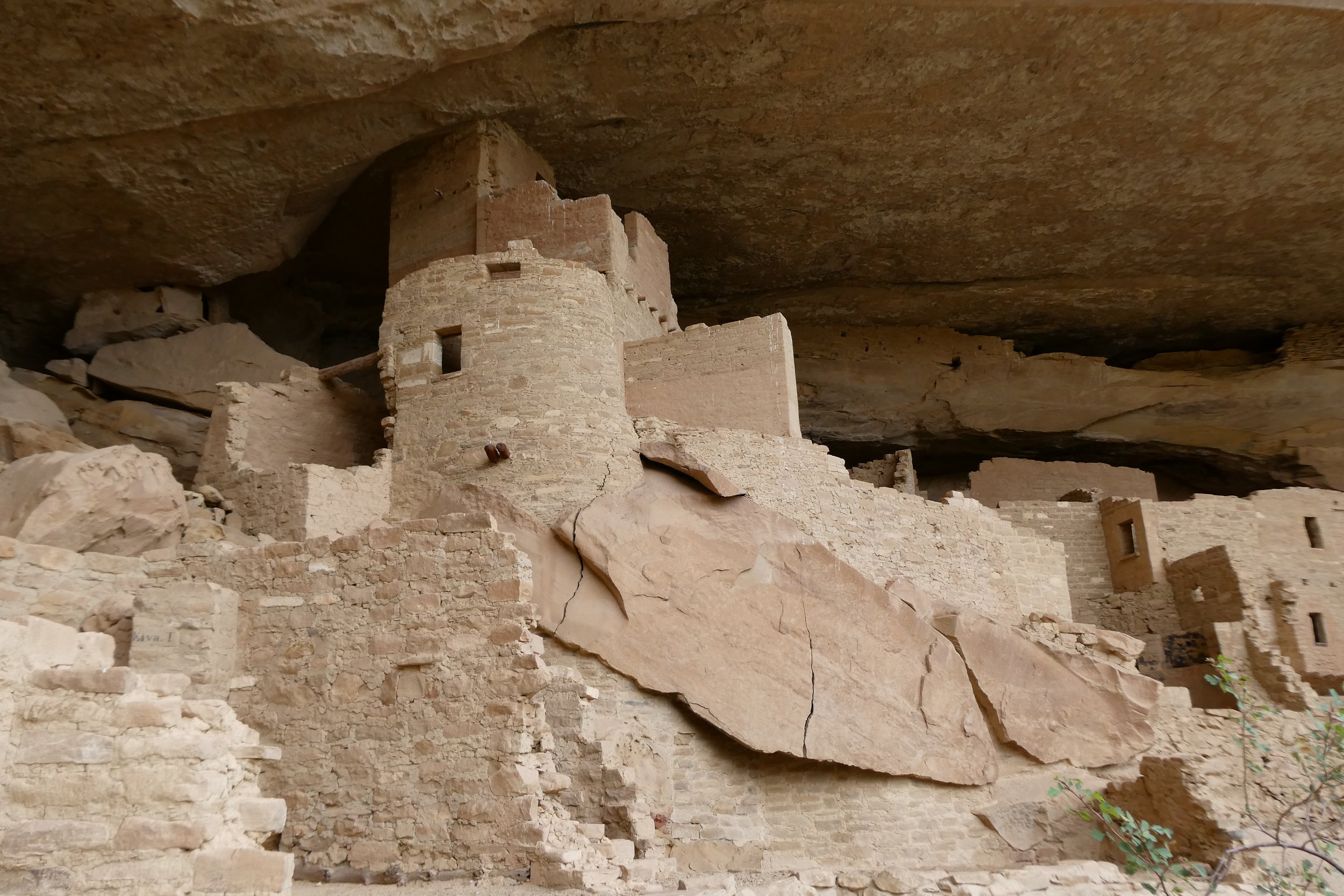
Researchers have found evidence of plaster and colorful paintings throughout the dwellings. Inside, they found murals and artwork painted on the walls, giving us a glimpse into what these communities may have looked like when they were occupied. So, the buildings were attractive as well as functional.
Standing in these dwellings today, it’s easy to visualize what life might have looked like in the 1200s. As you look around, the place evokes images in your mind of a thriving community. You can easily imagine bustling Pueblo people and the sounds they created: music and dancing, women using metates to grind corn into meal, dogs barking, children playing, and people going about their daily lives. You can tell this was a thriving community.
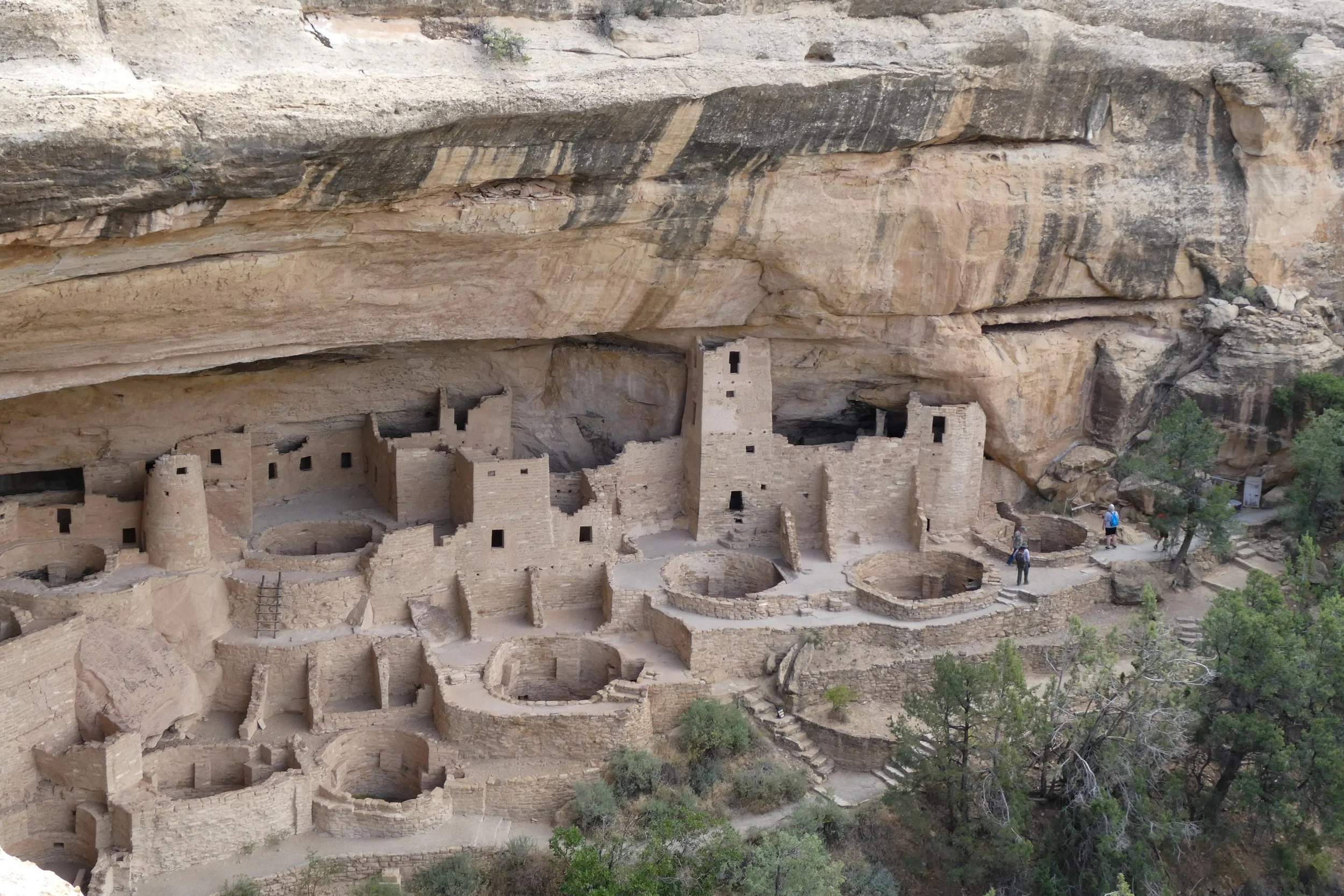
Balcony House
Inside Balcony House
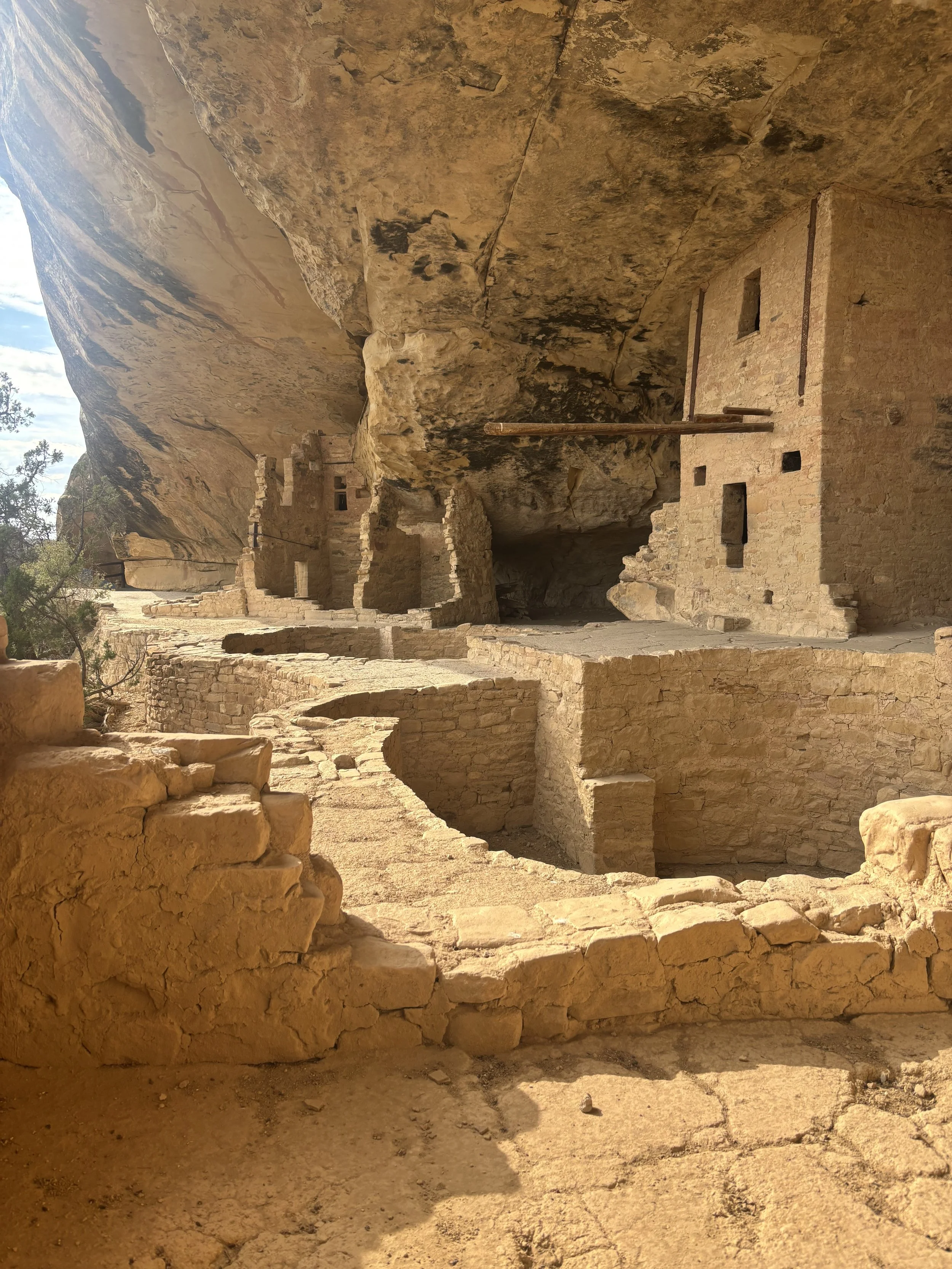
If adventure is more what you seek, then the Balcony House tour is the tour for you.
We met our tour guide in a parking lot above Balcony House. As we waited for people to arrive, the park ranger brought out a wooden, teal frame. (Think of an empty picture frame measuring about 2’ by 3’) To say we were puzzled and very curious as to the purpose of the frame, would be an understatement. We ran through multiple options in our minds, but never came close to the truth. We learned during the safety briefing that if you couldn’t fit your body through the frame, you couldn’t go on the tour. Wait, what??
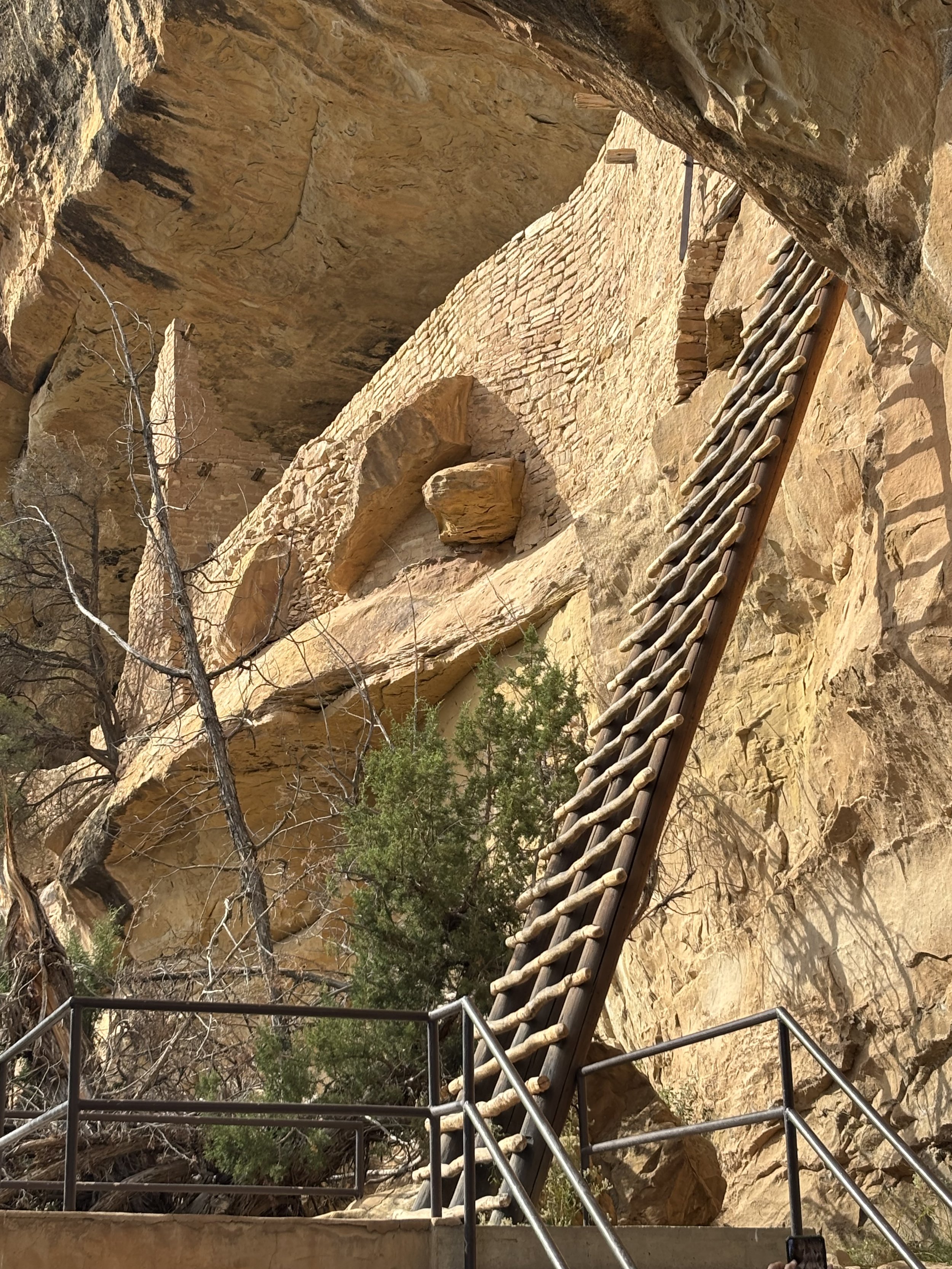
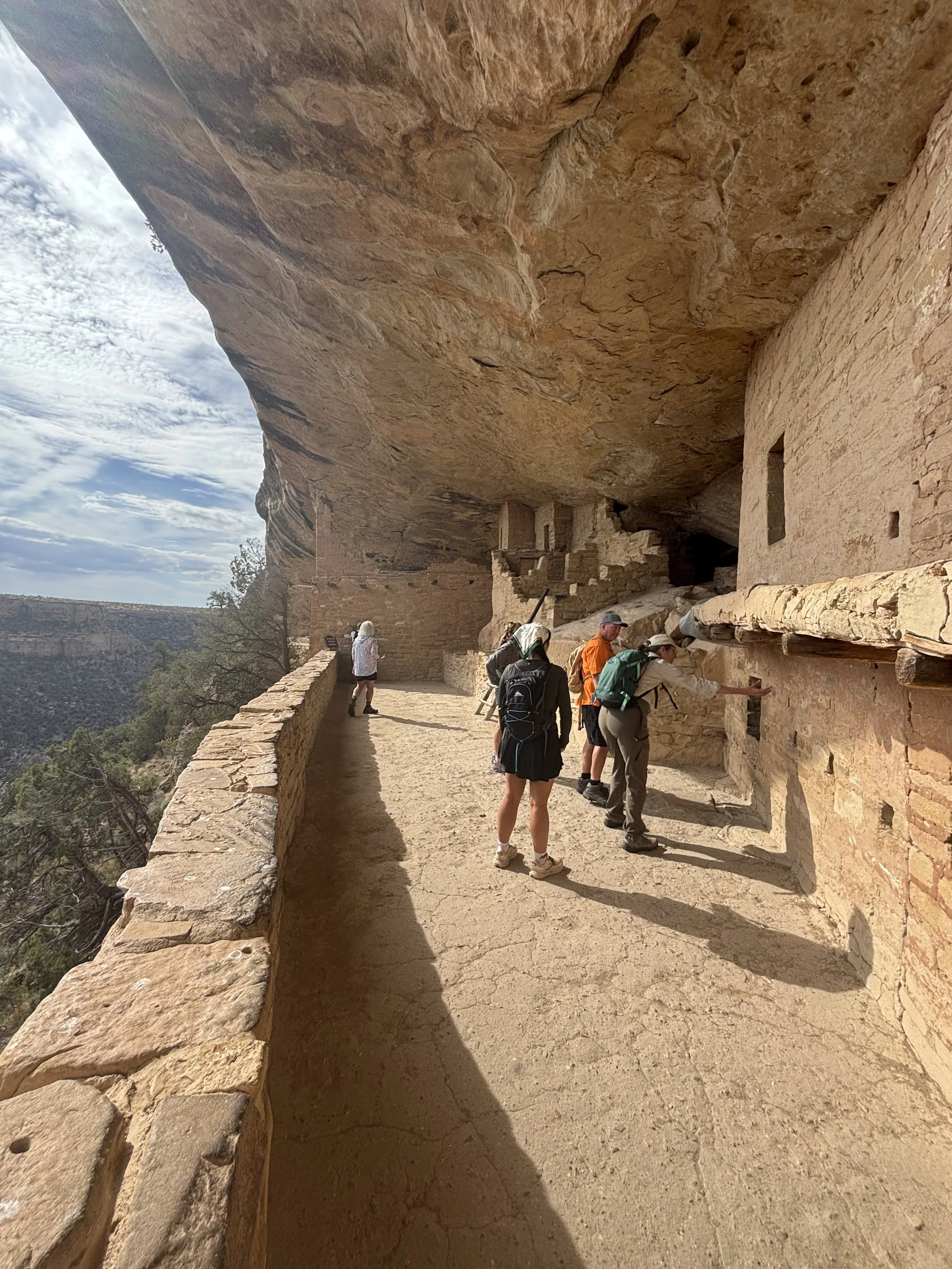
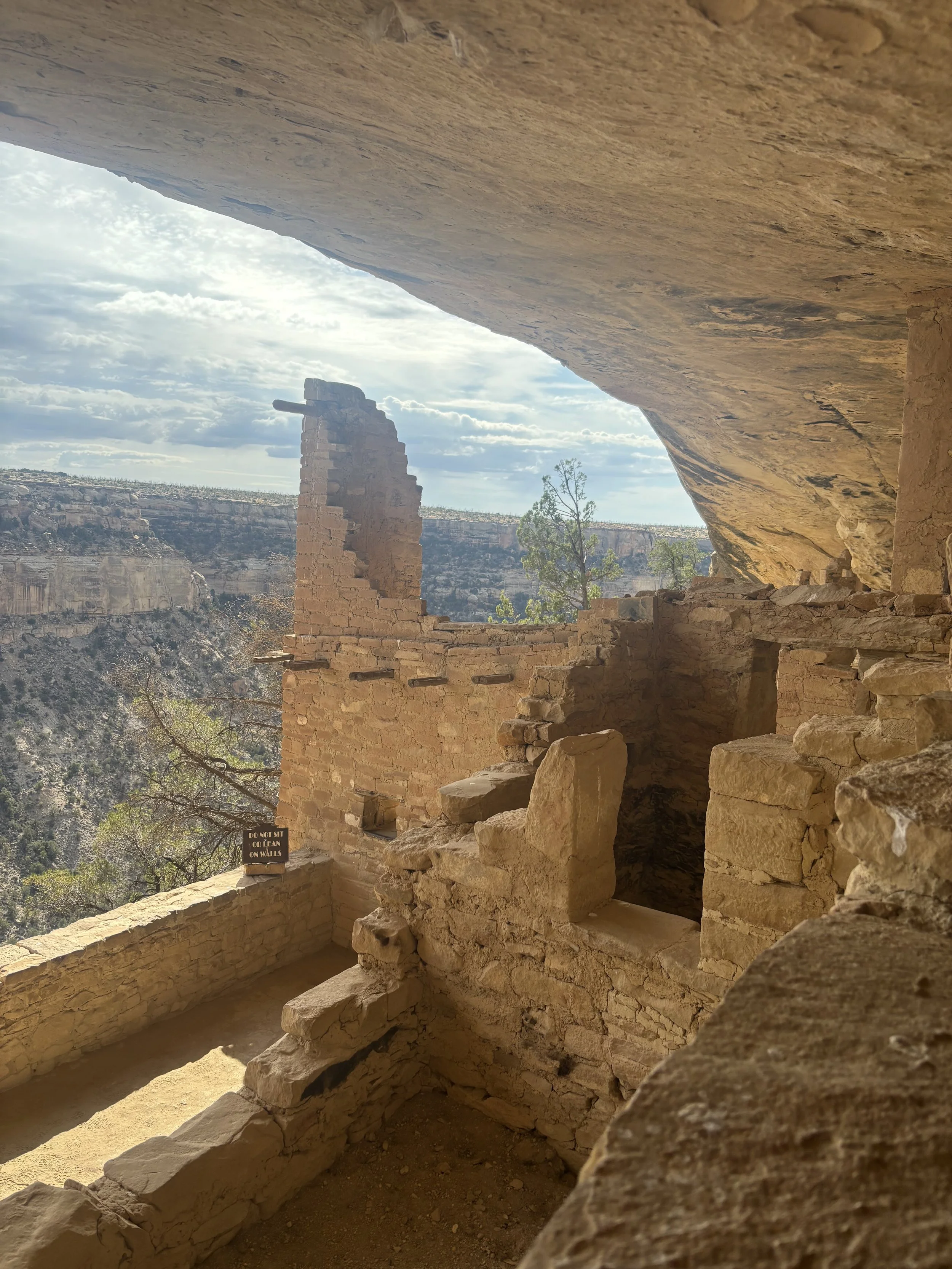
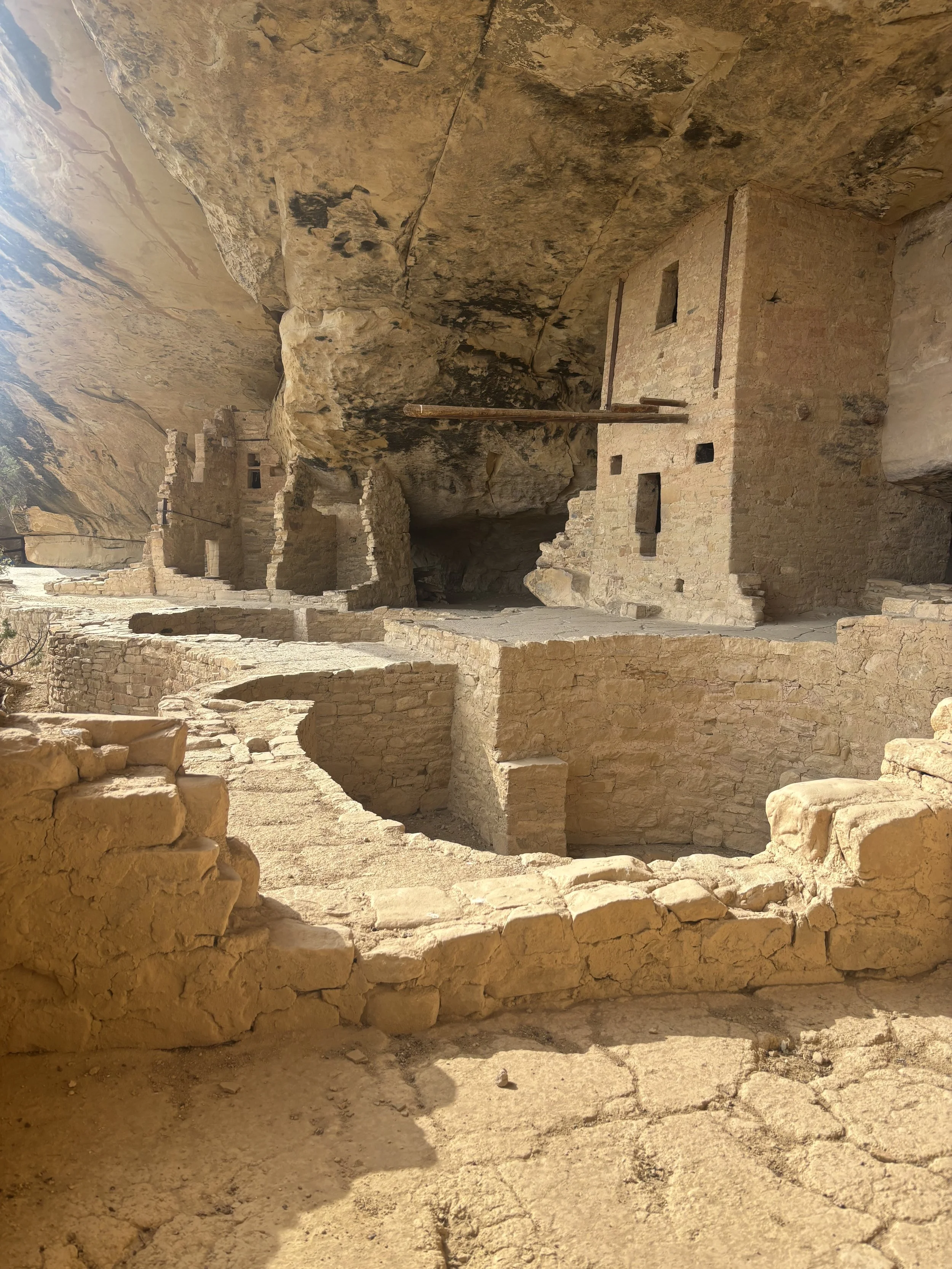
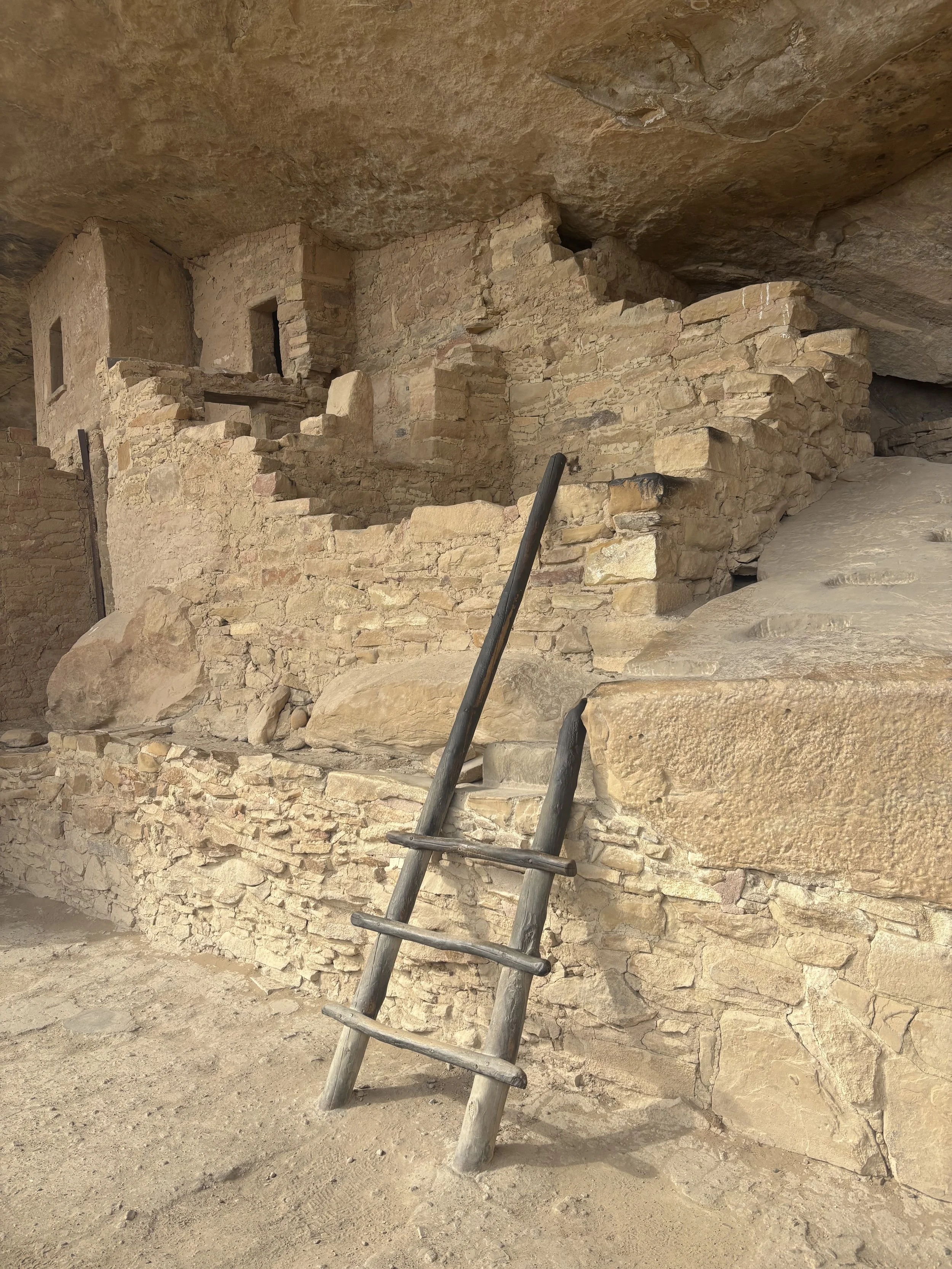
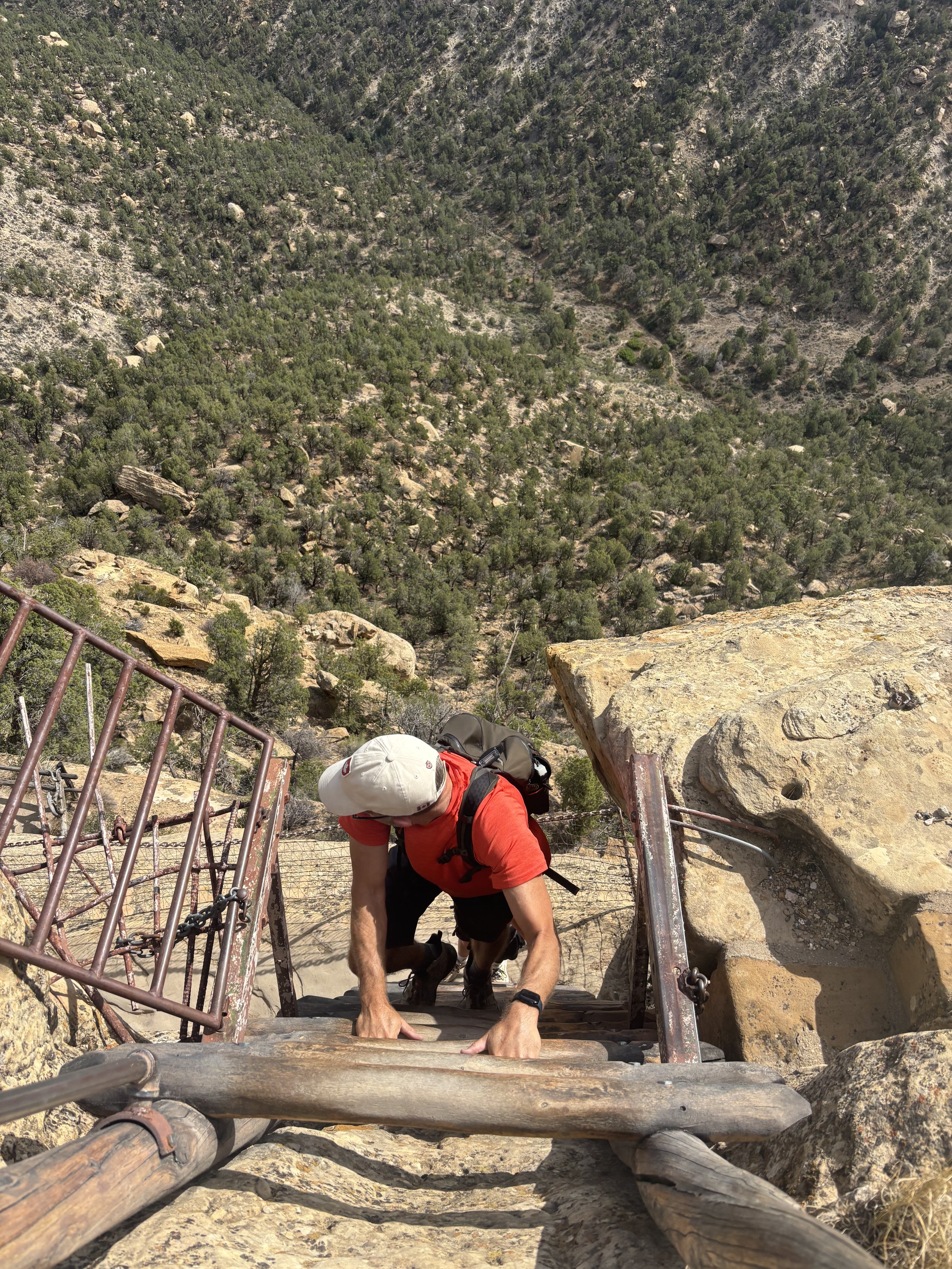
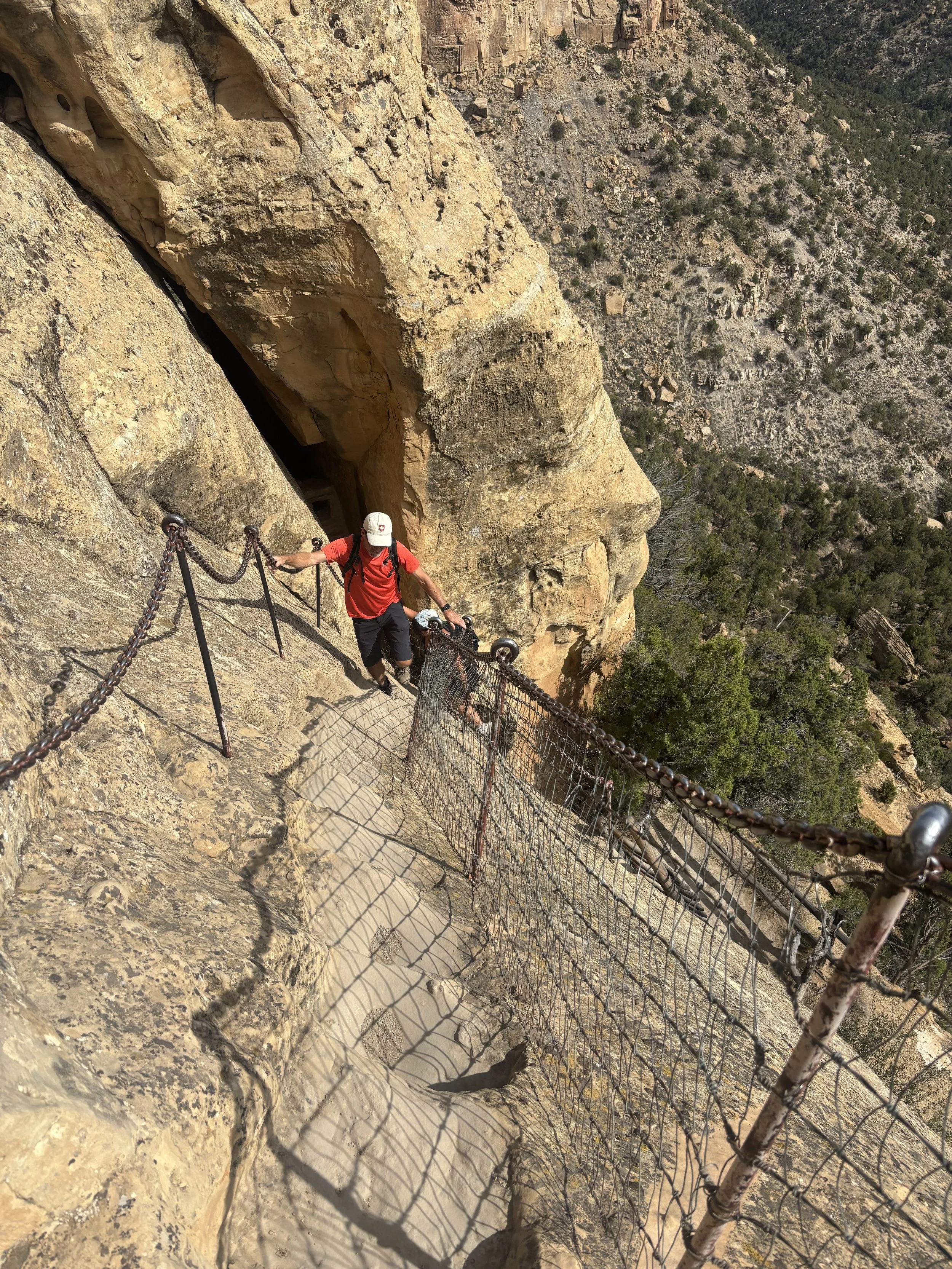
This tour includes several “obstacles” you must overcome. You have to climb multiple ladders (the largest of which was 32 feet high), walk narrow paths that run along the cliff face (no, guard rails here, folks), and work your way up and down hand carved stone steps. (When they say “don’t look down,” they mean “DON’T look down!)
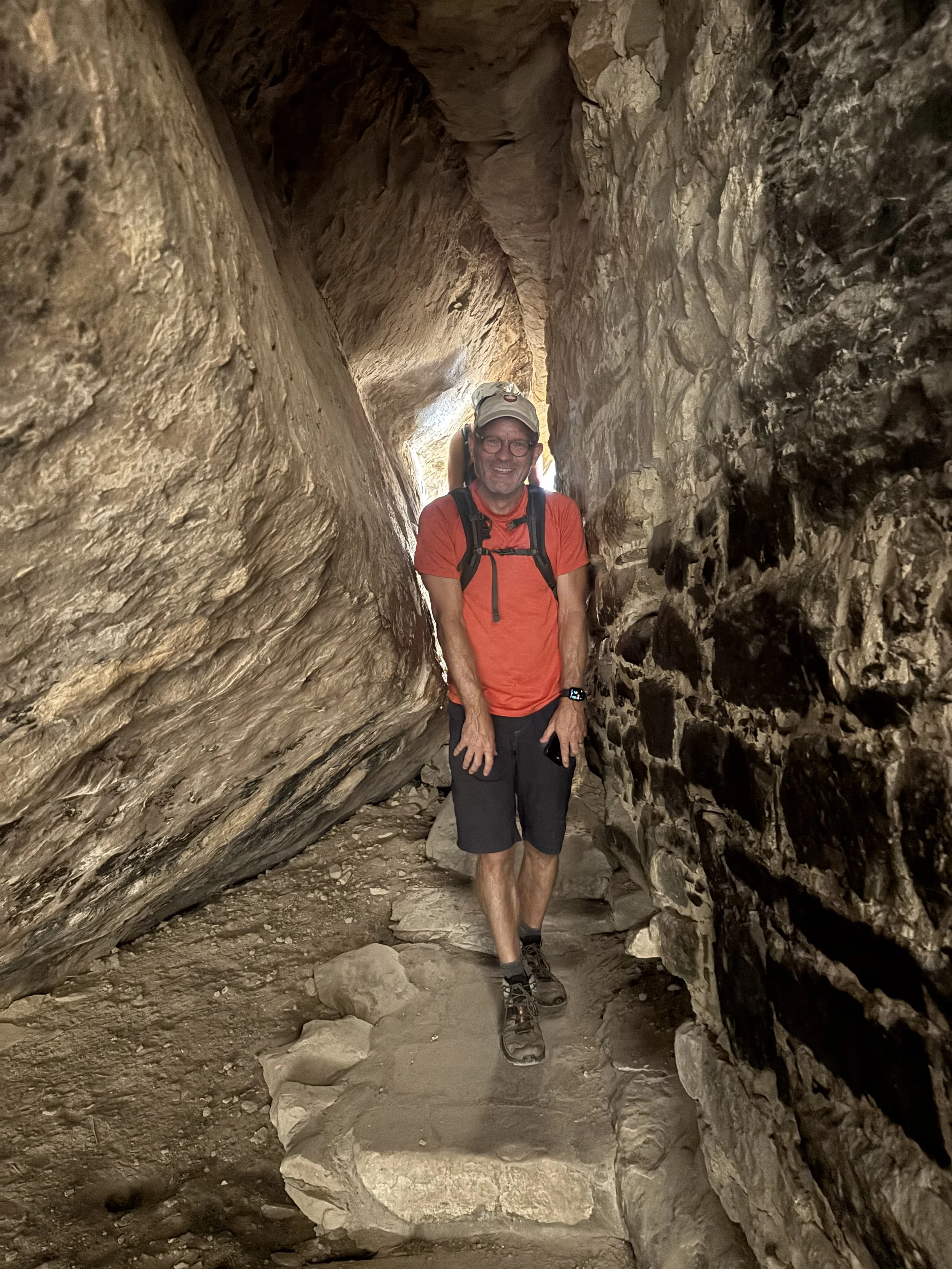
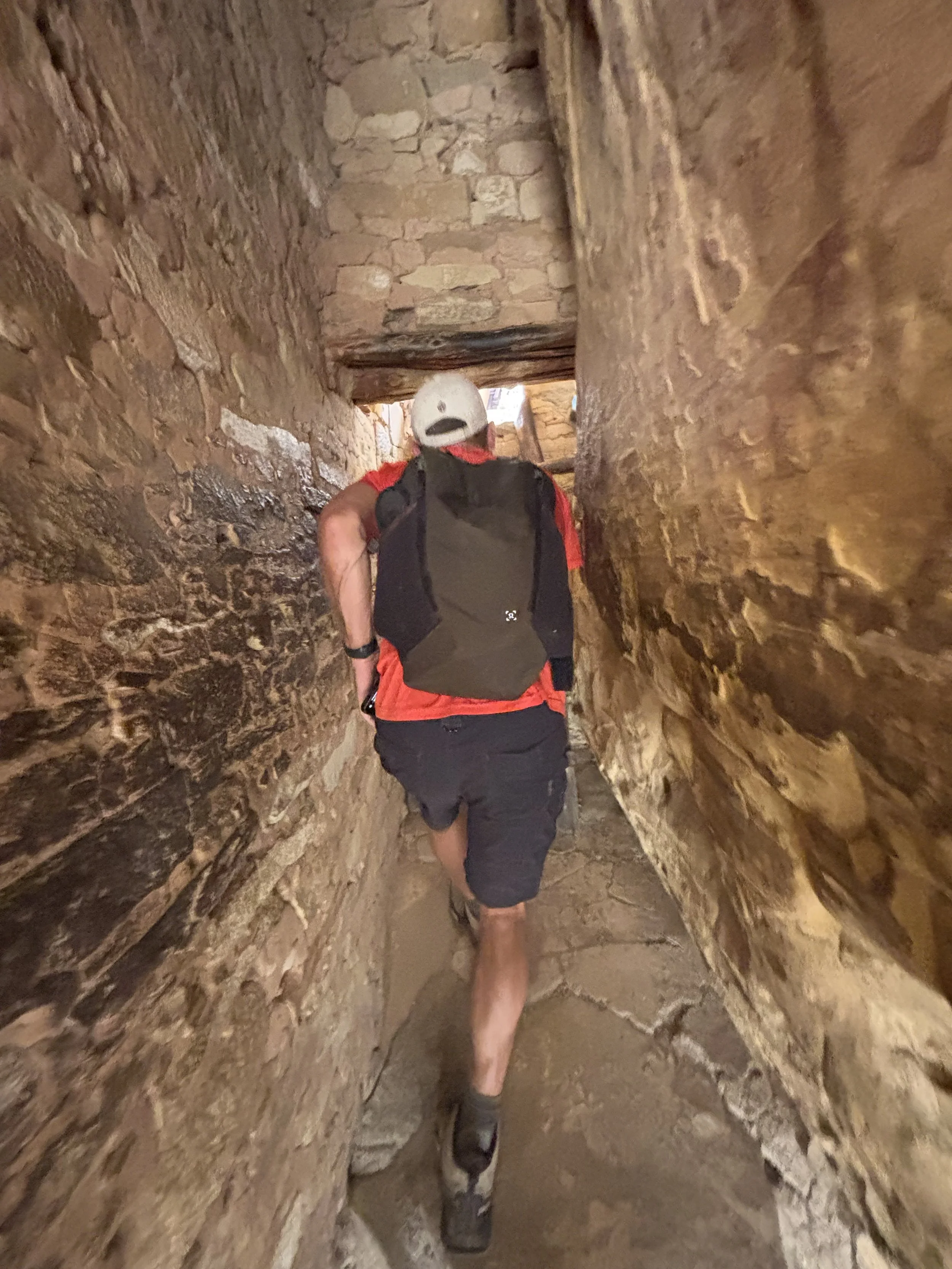
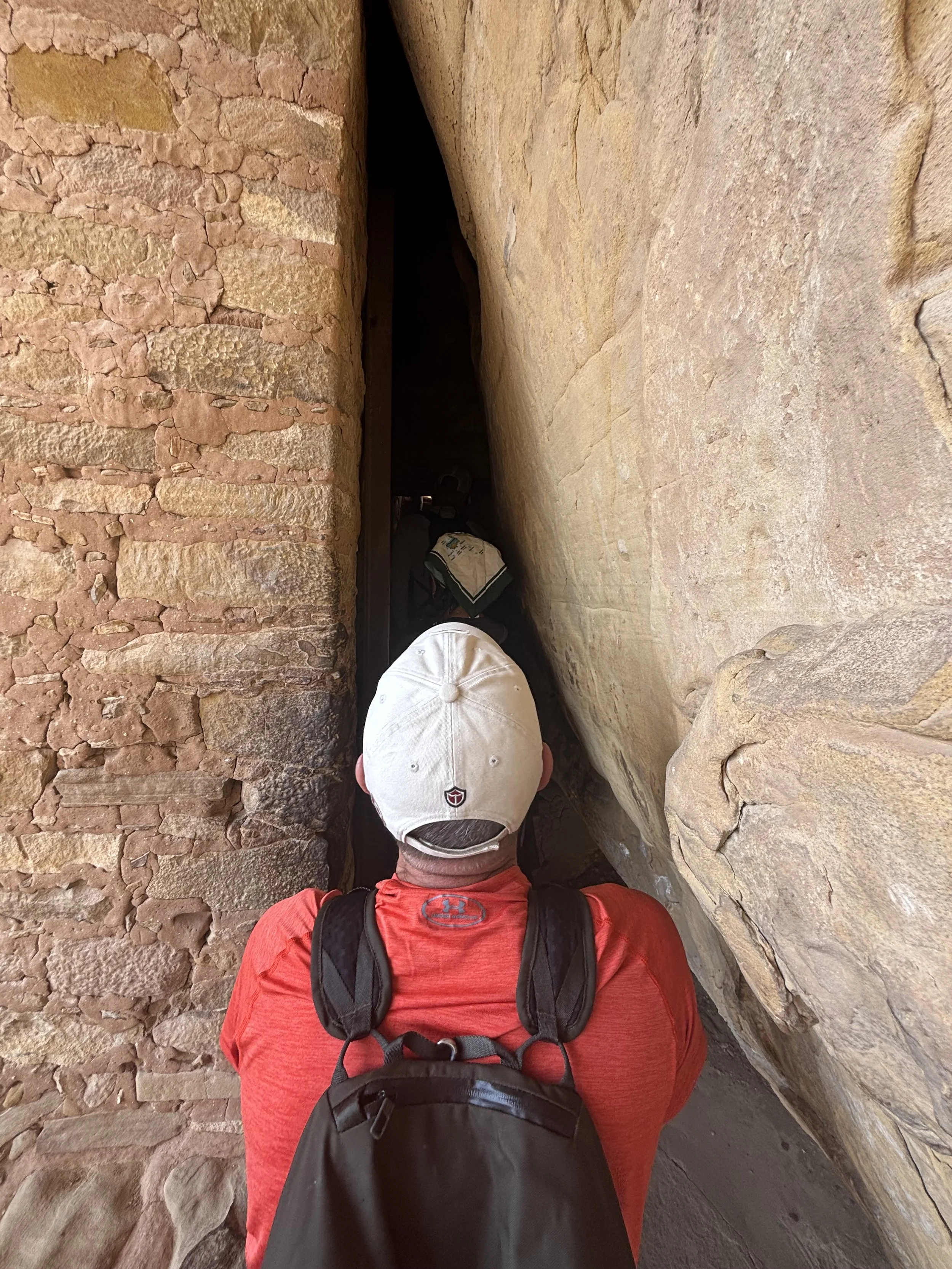
Oh, but wait—it gets better! In addition to the above, you also have to pass through a few tight places. This includes several narrow passages where you have to turn sideways to get through, and (this is where the frame comes into play) one very tight tunnel that is about 18 inches wide, 24 inches high, and 12 feet long! If you can’t get through the frame, you can’t get through the tunnel. Kind of like the baggage measuring device at the airport.
You truly get a real-life feeling of what the Pueblo people had to go through on a daily basis just to get into or out of their home. Now, just for fun, imagine for a second that you are carrying a baby, or perhaps a freshly killed deer while doing all the above.
We certainly came away with a whole new appreciation for modern day conveniences, and a code-compliant set of stairs.
Spruce Tree House
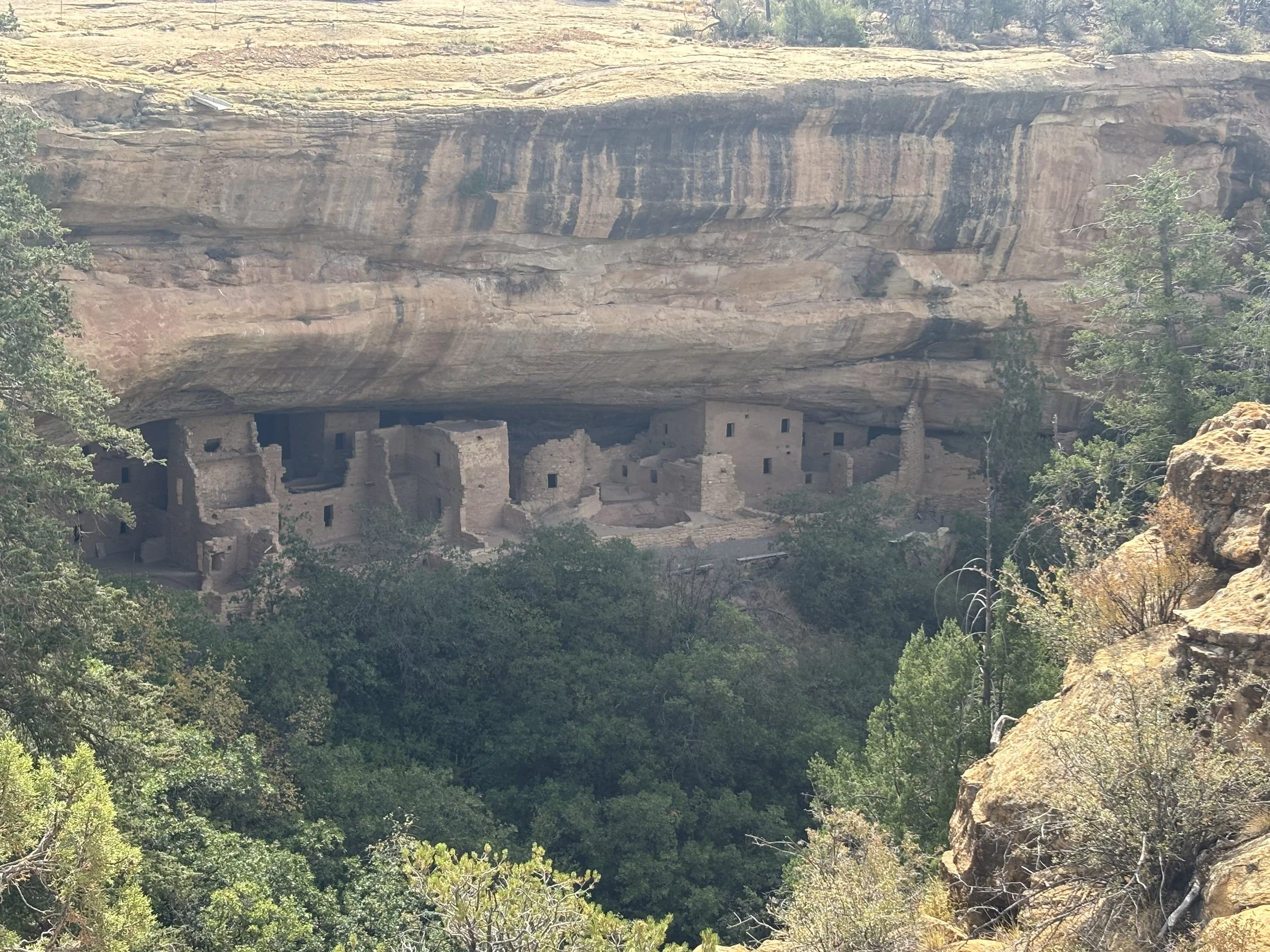
View of Spruce Tree House
We had a little time between tours, so we went over to check out Spruce Tree House. This is the third-largest cliff dwelling in the park and is quite impressive. Nestled in a massive alcove, it contains approximately 130 rooms and eight ceremonial kivas and once housed an estimated 60 to 80 residents.
Protected by the overhanging cliff, the site has remained remarkably well preserved for centuries. In fact, about 90% of the material visible at the site—including walls, wood, and plaster—is original.
Unfortunately, you can’t visit this particular dwelling up close today. Spruce Tree House has been closed since 2015 because of rockfall and concerns about the stability of the natural arch above the dwelling. The park continues to monitor the site and work on ways to address the ongoing stability issues.
Even from a distance, it is pretty incredible to look at and imagine what life must have been like for the people who called this place home.
Scenic Drive
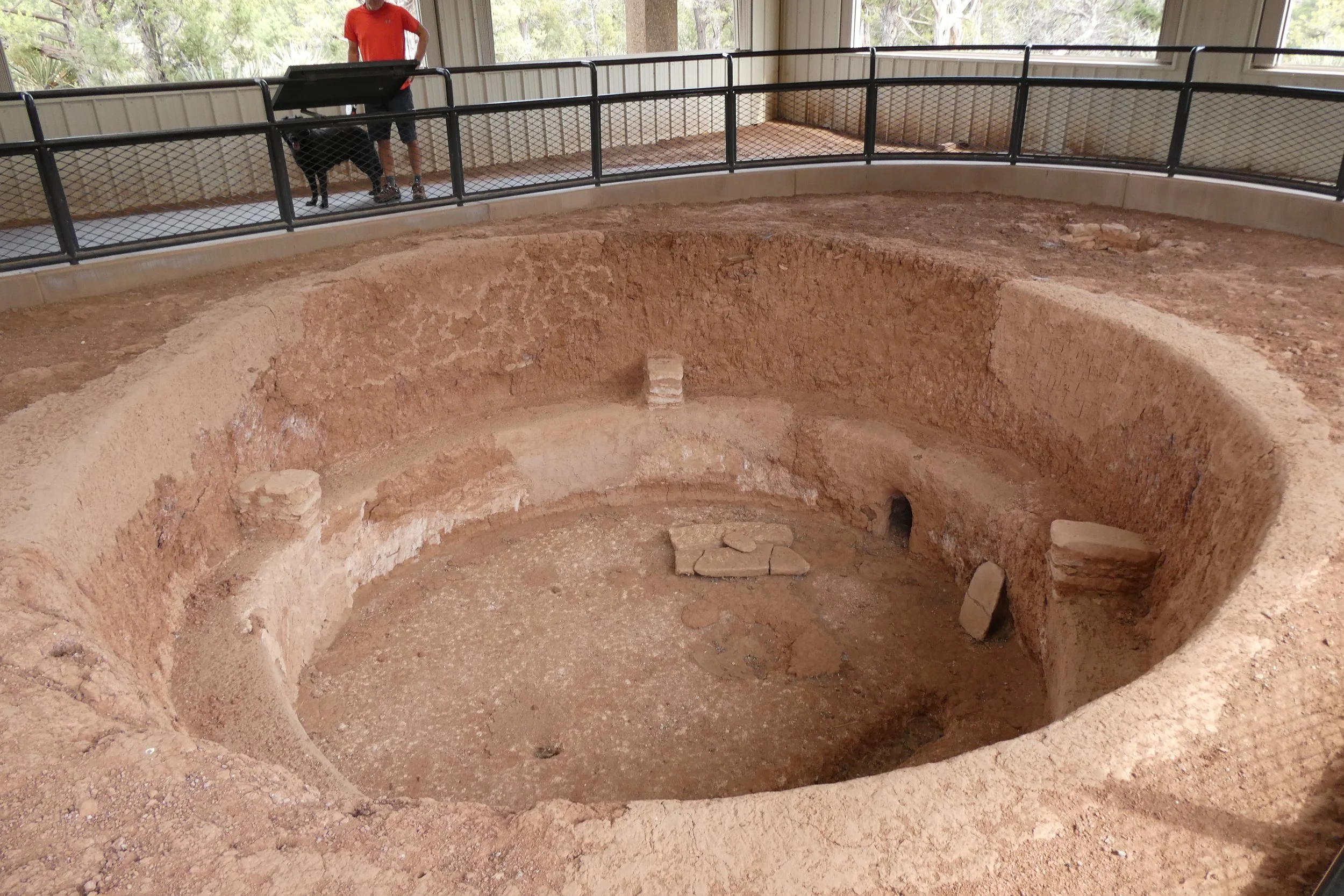
Kiva
To wrap up our day, we did the Mesa Top Loop scenic drive. It’s a 6-mile loop that takes you through more than 700 years of Ancestral Pueblo history.
(Helpful hint: download the audio guide, which can be found through the NPS app. It is narrated by a park ranger who is a Pueblo descendant, and it takes you through each stop while providing an education on what you are seeing.)
A few highlights of the tour are the Square Tower House Overlook, views of Cliff Palace from Sun Point View and the Sun Temple - a very interesting building with no obvious entrances, and whose purpose we can only guess at today. There also incredible vista views all along the route.
After spending the day exploring, learning, climbing ladders, squeezing through tunnels, and trying to imagine what life was like hundreds of years ago, we left Mesa Verde feeling like we had gotten a pretty incredible glimpse into the past.
And, again, with a newfound appreciation for modern-day stairs.
