Kansas Badlands
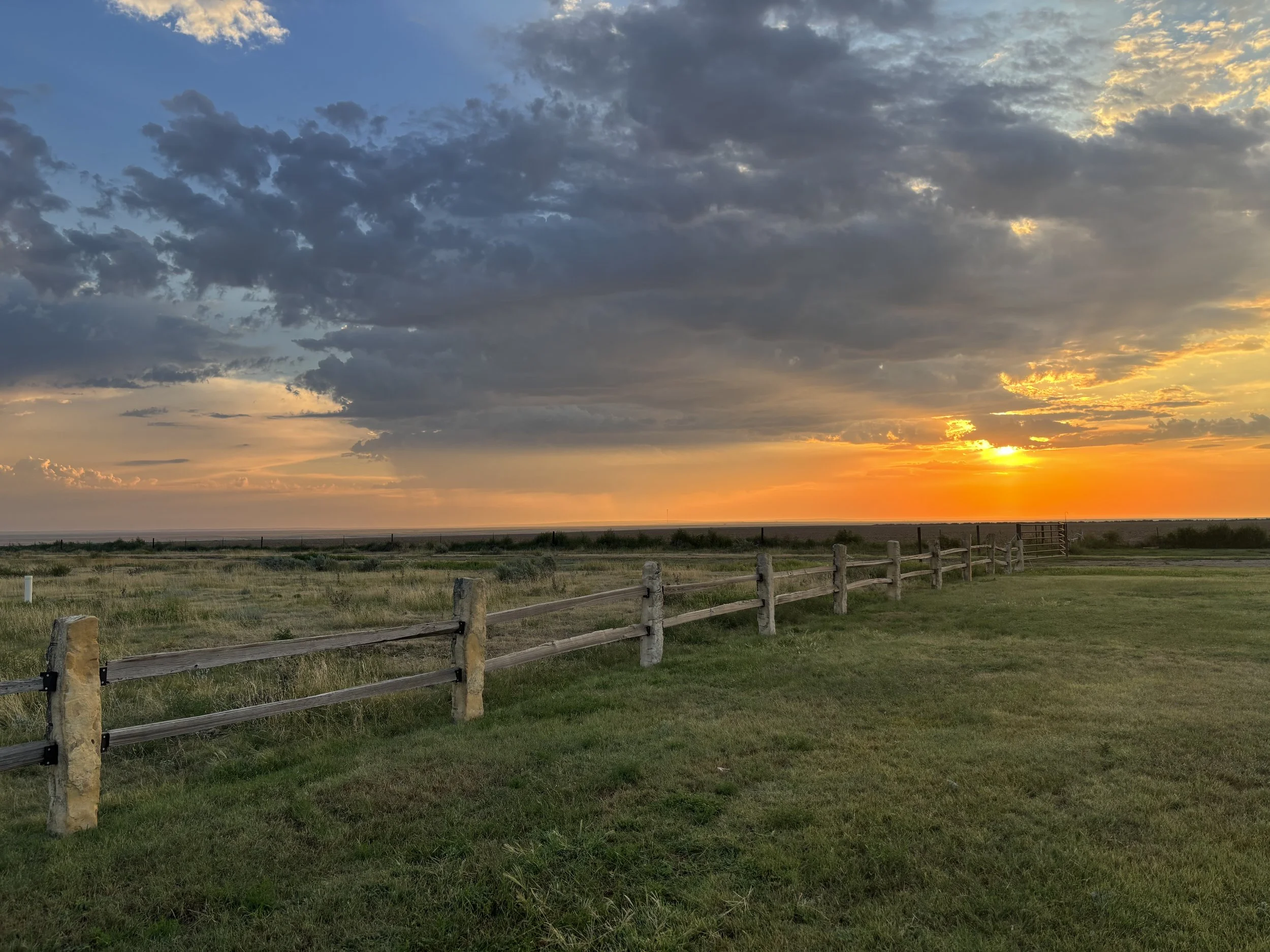
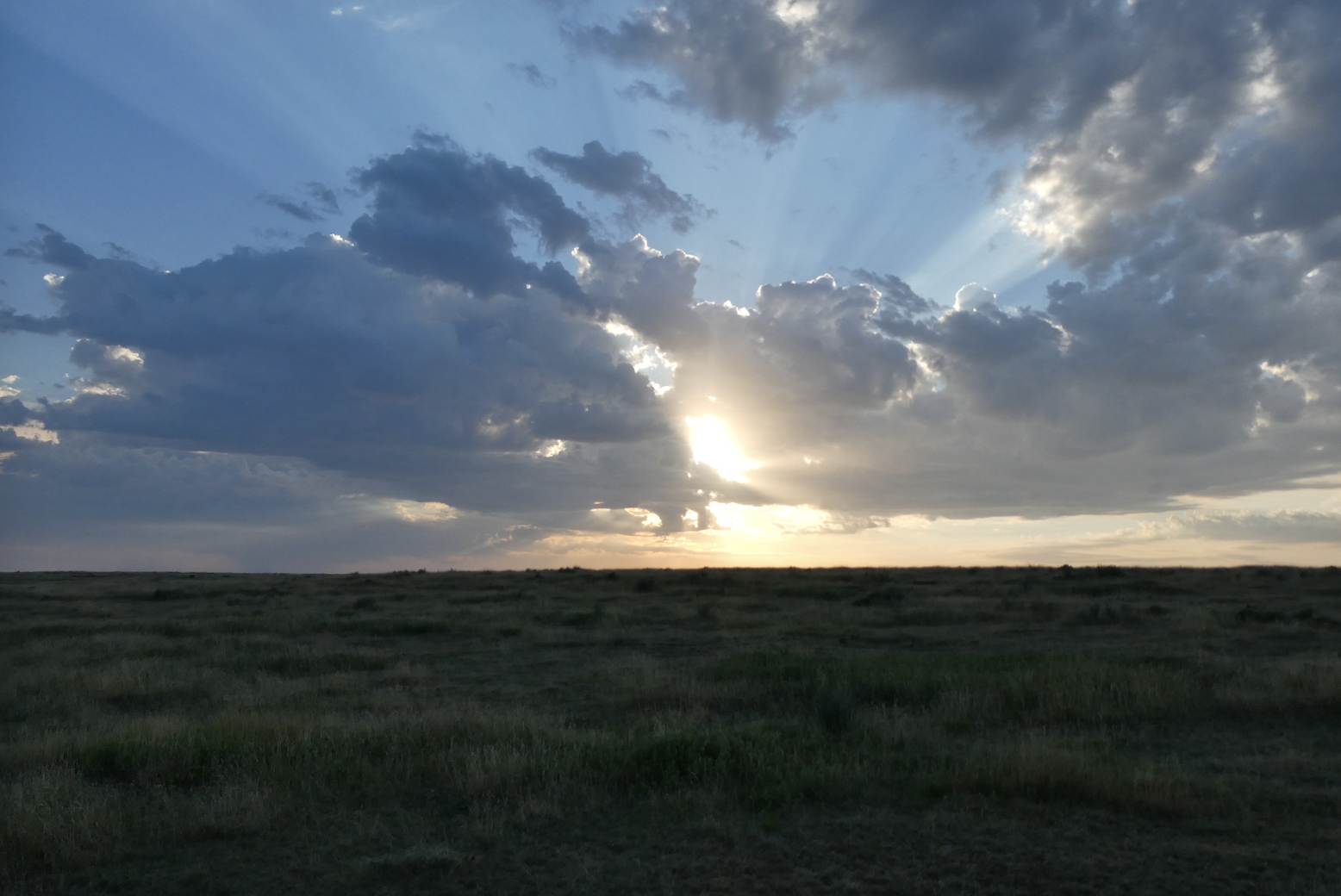
Kansas Sunrise
We are off and running…again! We will be spending the next month touring the Middle West, visiting seven national parks along with several national landmarks and state parks.
Our journey began in the Kansas Badlands, located between Oakley and Scott City on the far western side of Kansas- a/k/a the middle of nowhere.
As long-time Kansas City residents, we had heard of the Kansas Badlands but had never taken the time to stop and check them out. Kansas has a bad reputation when it comes to people traveling across the state. To many, Kansas is simply the place you have to drive through to get somewhere else. But we think if people took the time to stop, they would come to appreciate the beauty the plains have to offer.
We spent 24 hours exploring this area, and it didn't take long for us to realize that Kansas has a few surprises up its sleeve.
All the places we saw were the result of a massive inland sea, known as the Western Interior Seaway that once stretched from the Arctic Ocean north of Canada to the Gulf of Mexico and from the Rocky Mountains to east of the Mississippi River. The sea was 500 feet deep and was teeming with marine life of all kinds. It was the coming and going of this sea that makes this area so fascinating.
Keystone Gallery
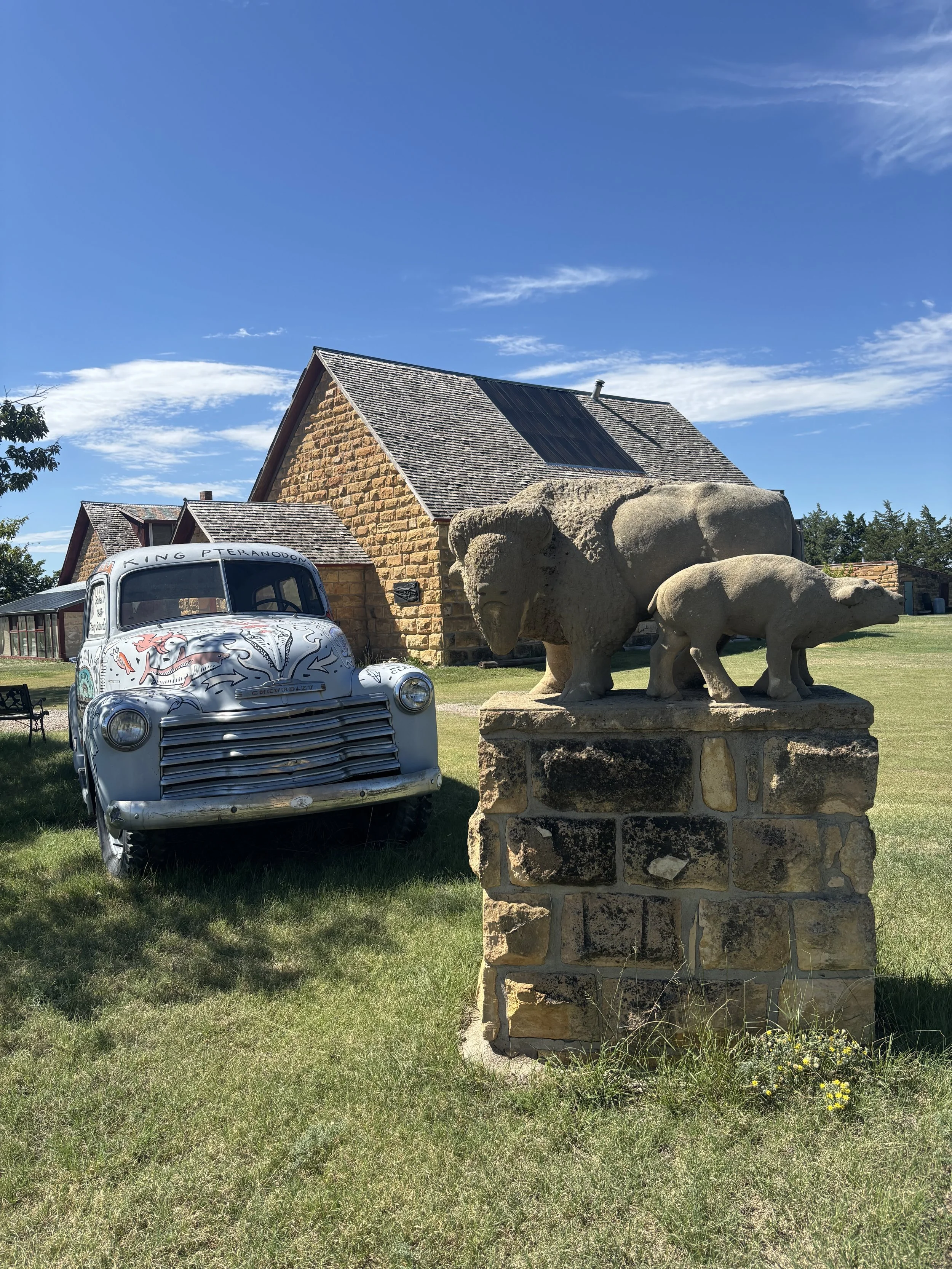
Keystone Gallery
Our first stop was Keystone Gallery which features a collection of Kansas fossils, most of which were discovered within about 30 miles of the gallery. Some of the star attractions include a 20-foot Mosasaur and a 14-foot Xiphactinus.
For those not up to speed on prehistoric marine life, mosasaurs were enormous marine reptiles that lived during the age of dinosaurs. They weren't technically dinosaurs, but that was probably no comfort to anything that crossed their path. Mosasaurs grew up to 40’ long and were some of the top predators in the ancient seas. Xiphactinus, meanwhile, was another large predatory fish that could reach impressive sizes of 16-20 feet! One article described them as gargantuan, fanged tarpon! Apparently, pre-historic Kansas was not the place to be if you were trying to avoid getting eaten 80 million years ago!
The gallery is run by Chuck and Barb who have been fossil hunting for decades. Chuck's father began hunting for fossils in the 1920s. So you could say fossil hunting is a family tradition. The gallery itself is also a fossil of sorts. Built in 1917, it now serves as their gallery and a home for the fossils they've collected from the surrounding area.
This is a quintessential small mom-and-pop operation. Chuck and Barb find and prepare the fossils, run the gallery, and keep the whole operation going primarily through donations and merchandise sales. It is one of those unexpected little places that makes road trips so much more interesting.
Monument Rocks
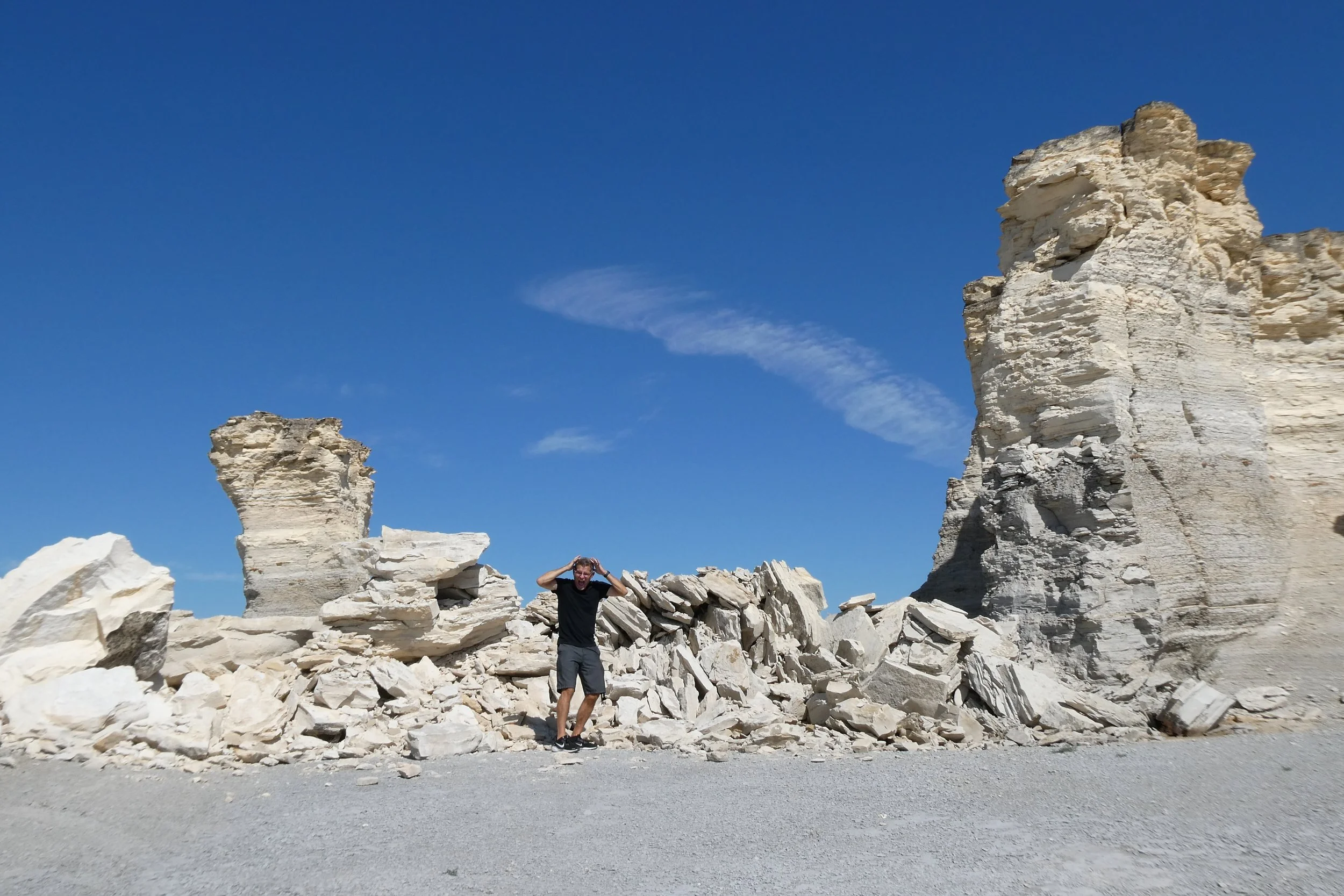
Monument Rocks - Oh no, watch out!!
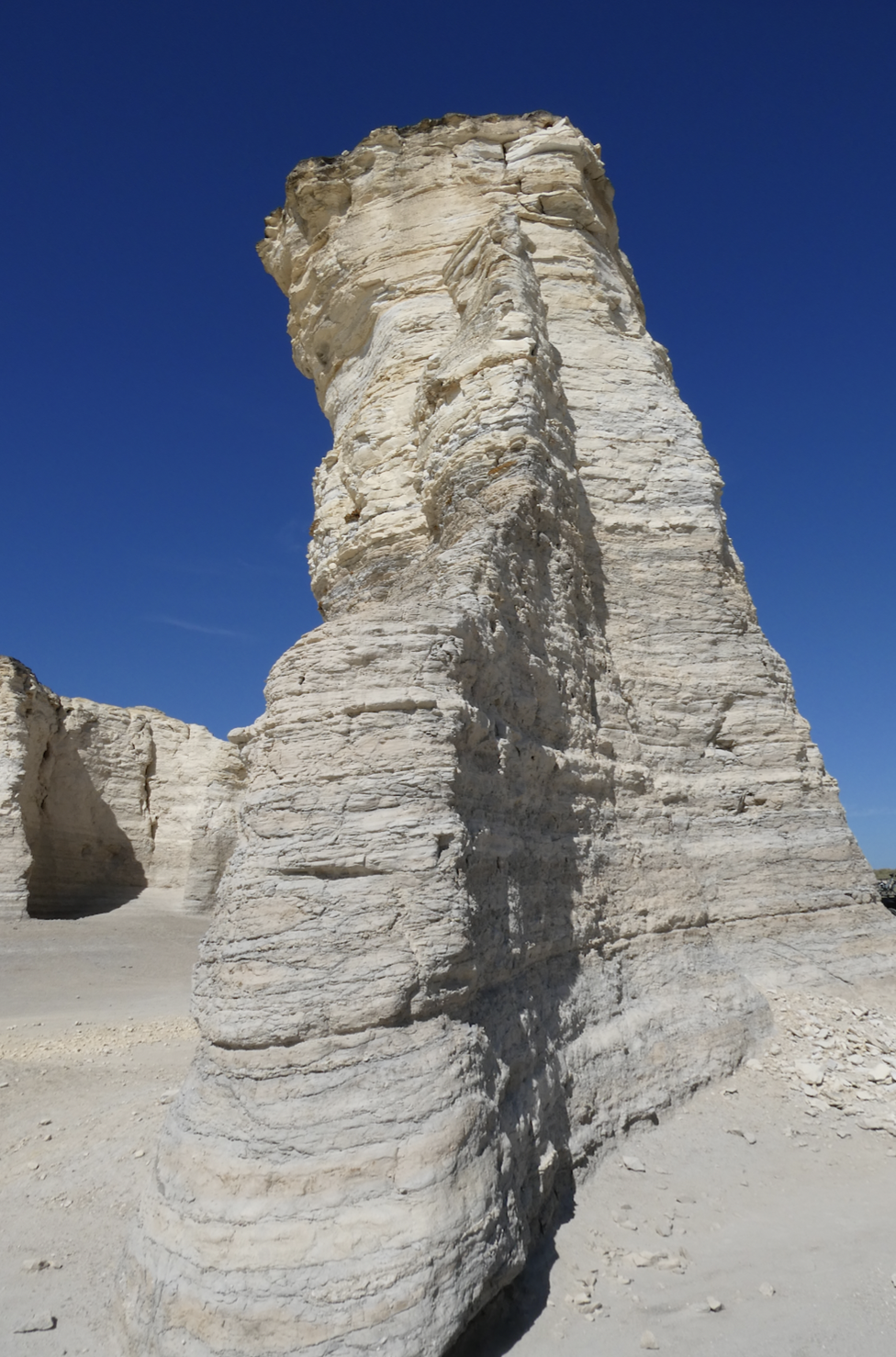
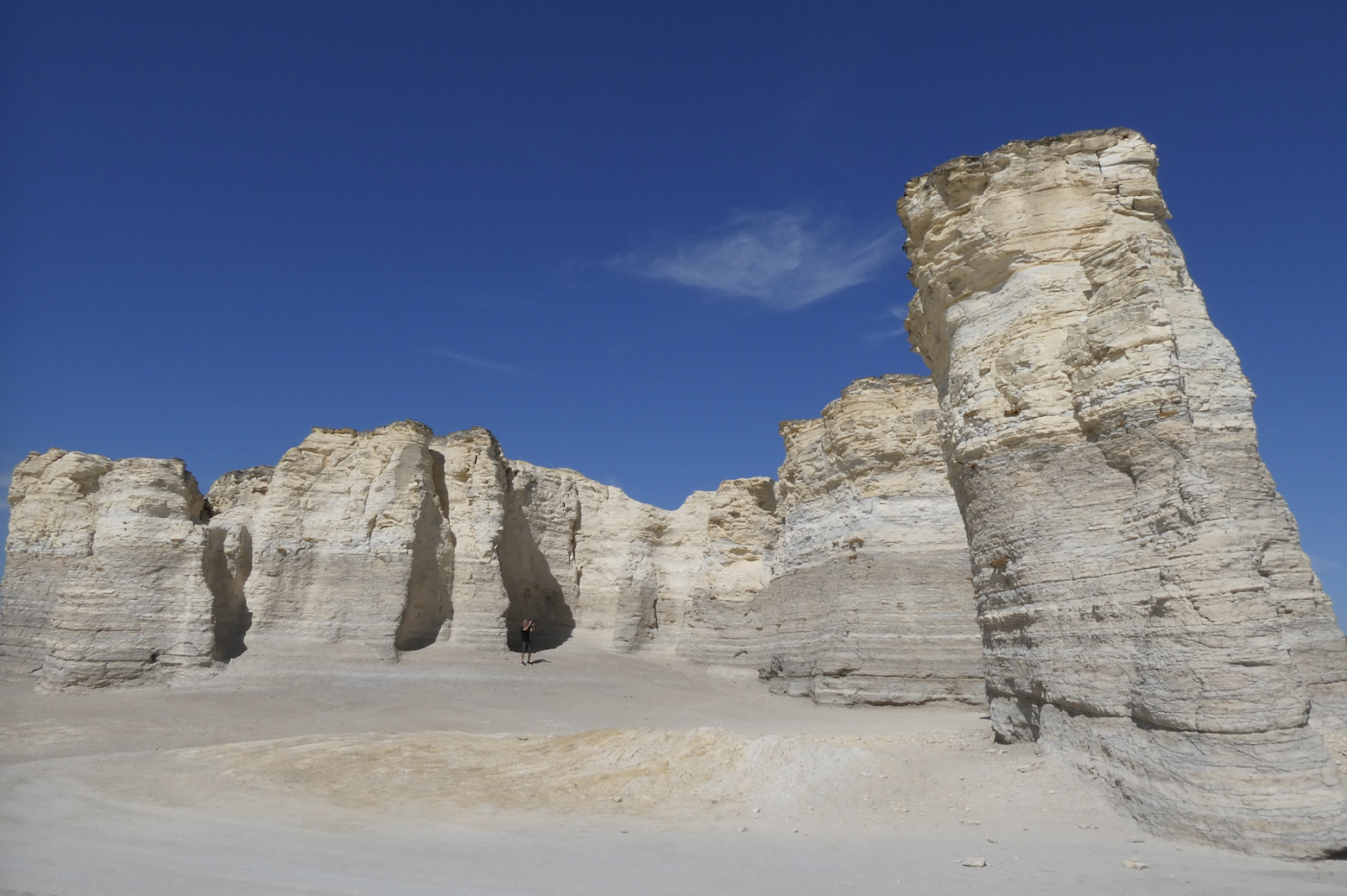
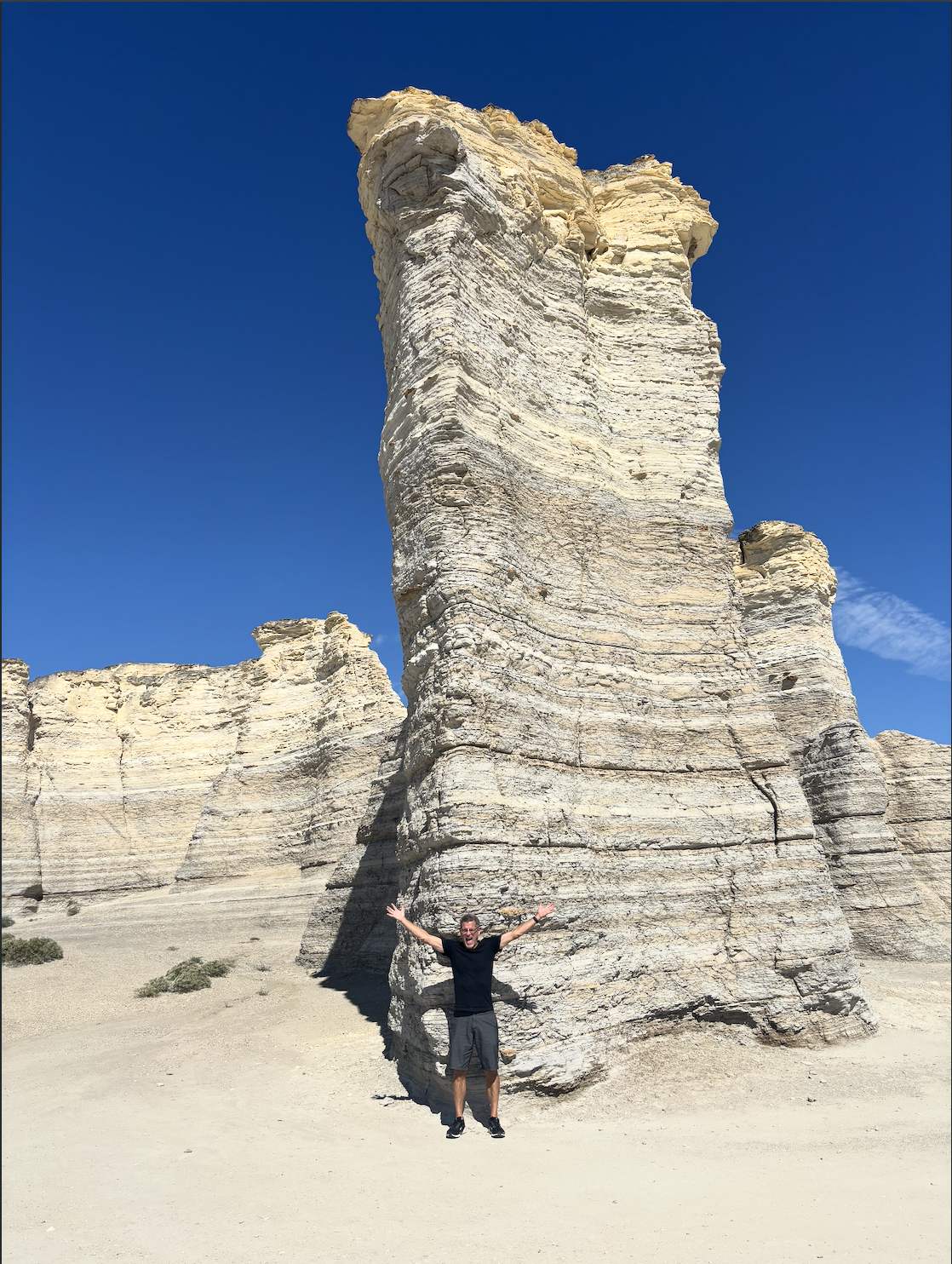
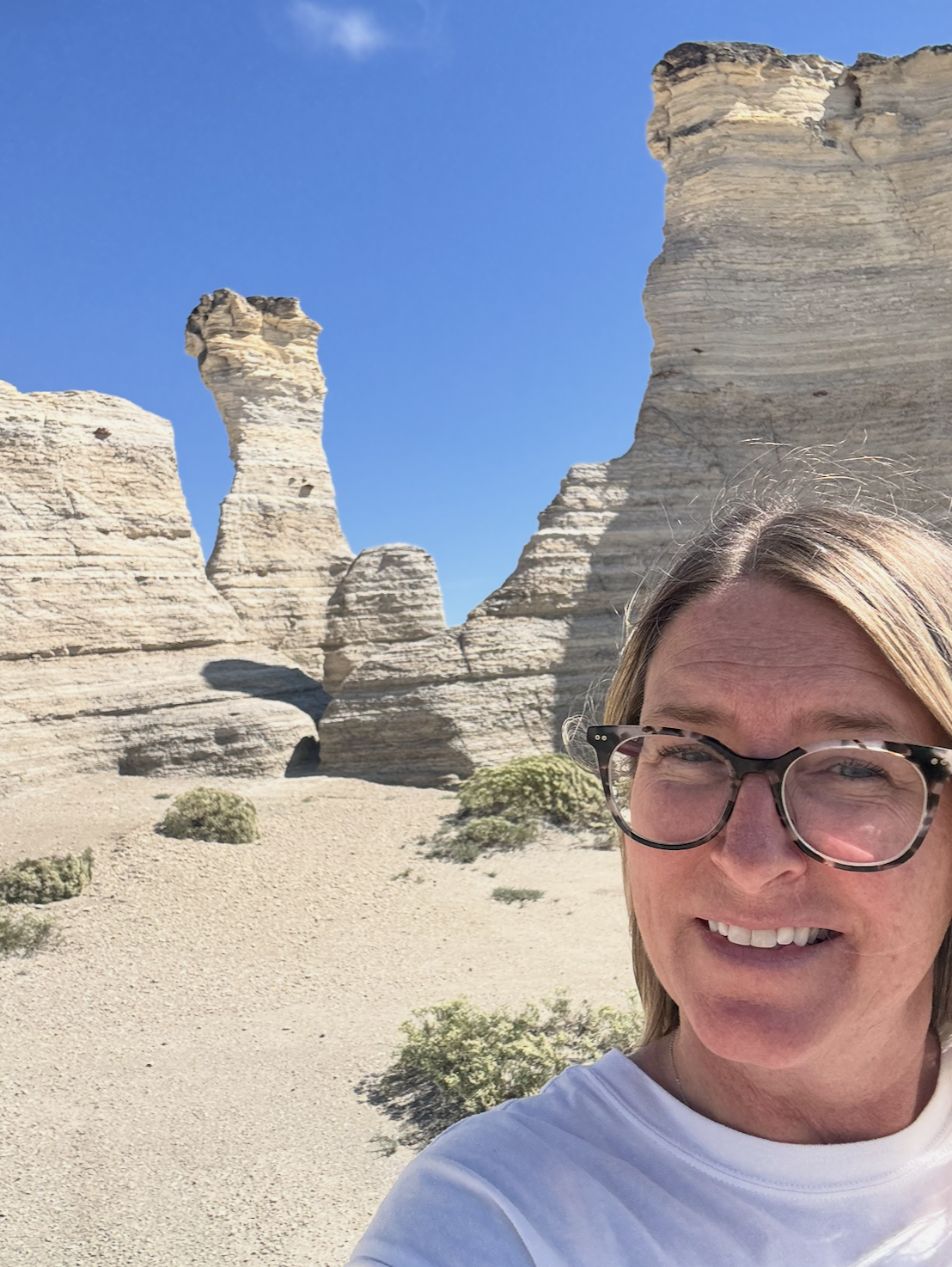
Up next was Monument Rocks, also known as the Chalk Pyramids which were designated Kansas' first National Natural Landmark in 1968.
The chalk formations started taking shape roughly 80 million years ago. (Now that is freaking old!!) Over millions of years, layers of marine sediment accumulated on the seafloor and eventually hardened into rock. Once the sea receded, erosion took over to create the chalk formations we see today. Today, the towers reach 50 feet in height and are visually striking with their many layers and colors.
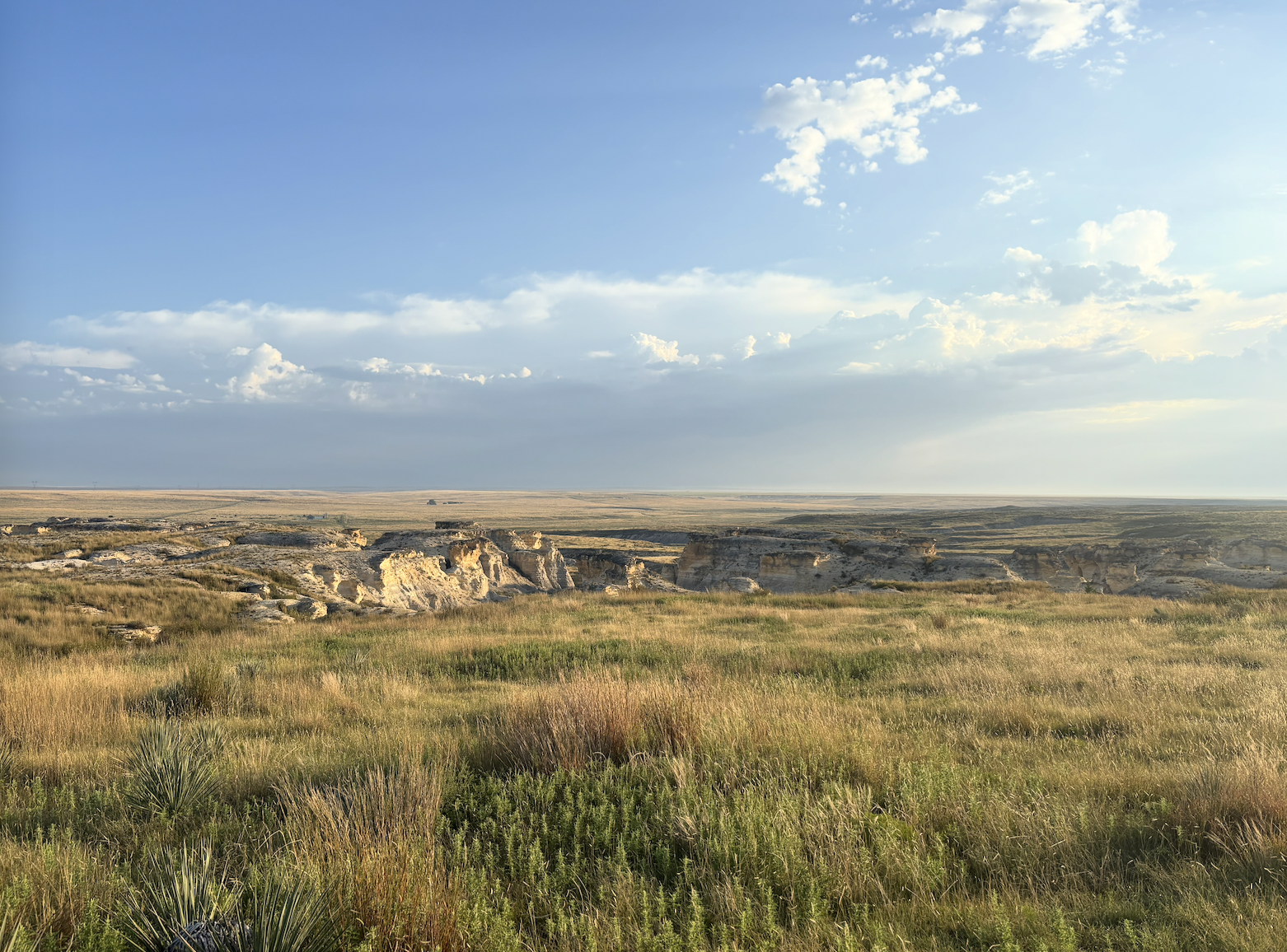
And what makes Monument Rocks even more impressive is the setting. These giant formations are sitting right in the middle of a cattle pasture with seemingly nothing around them for miles. It is one of those places where you look around and think “How in the heck did this get here?”.
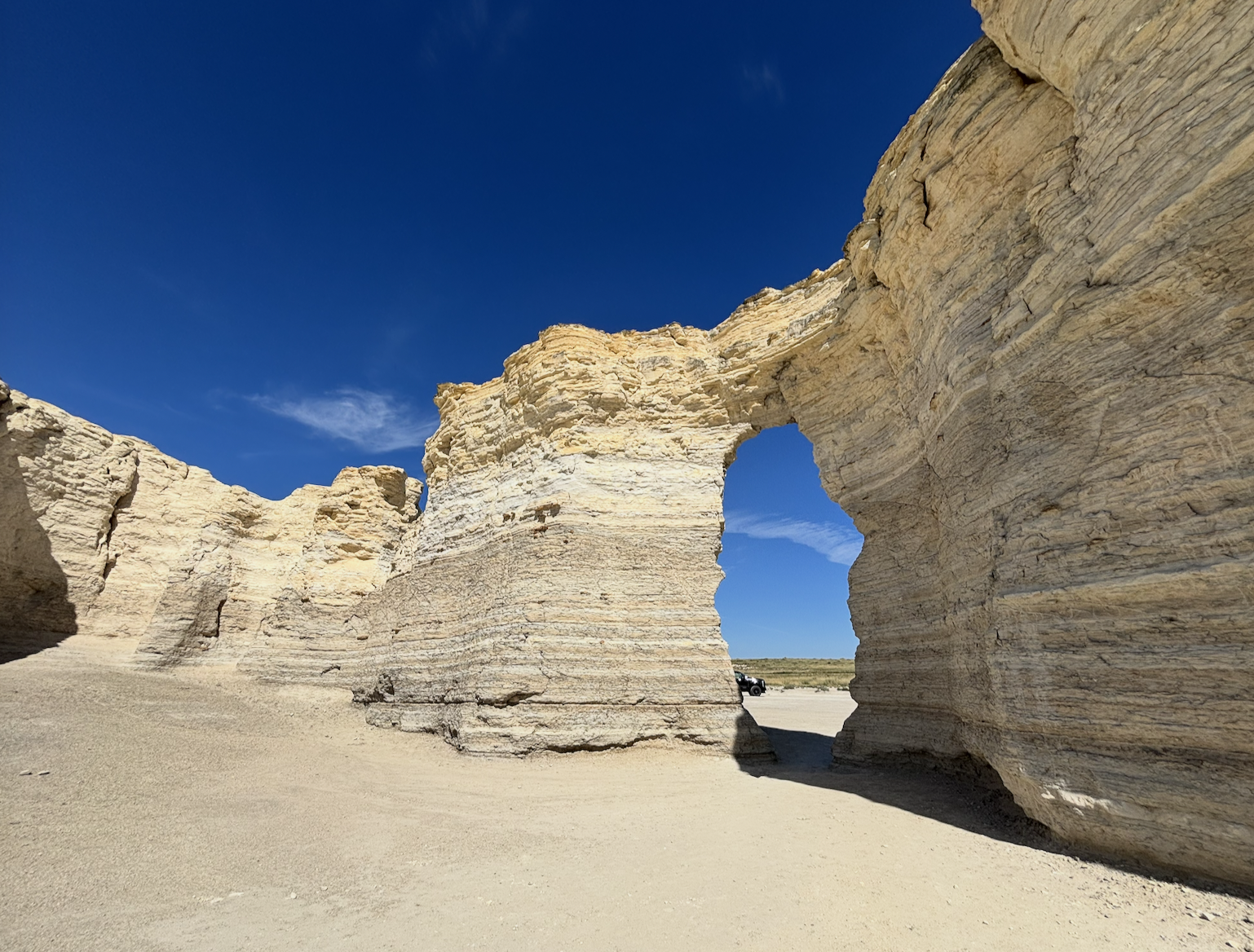
Little Jerusalem Badlands
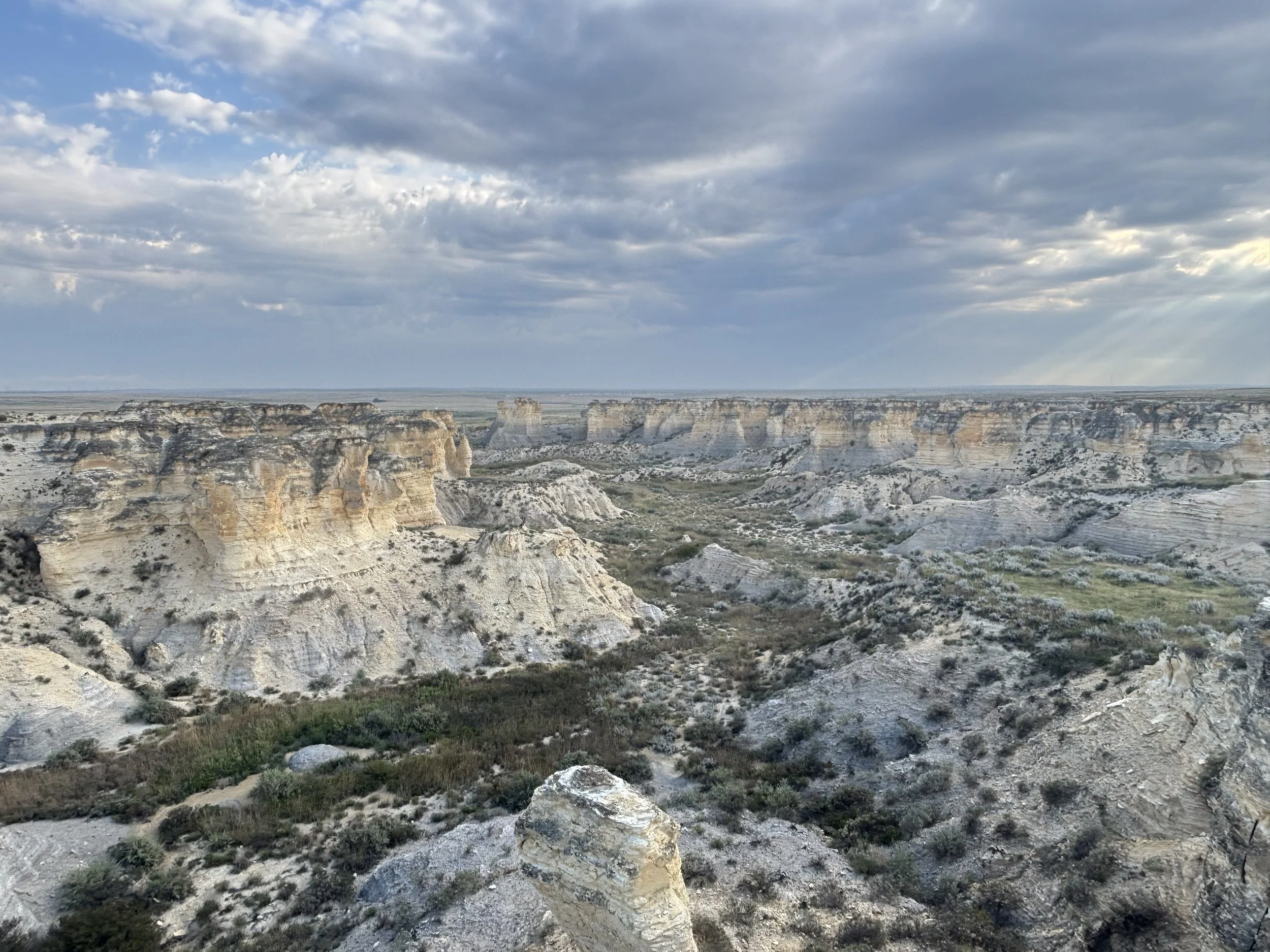
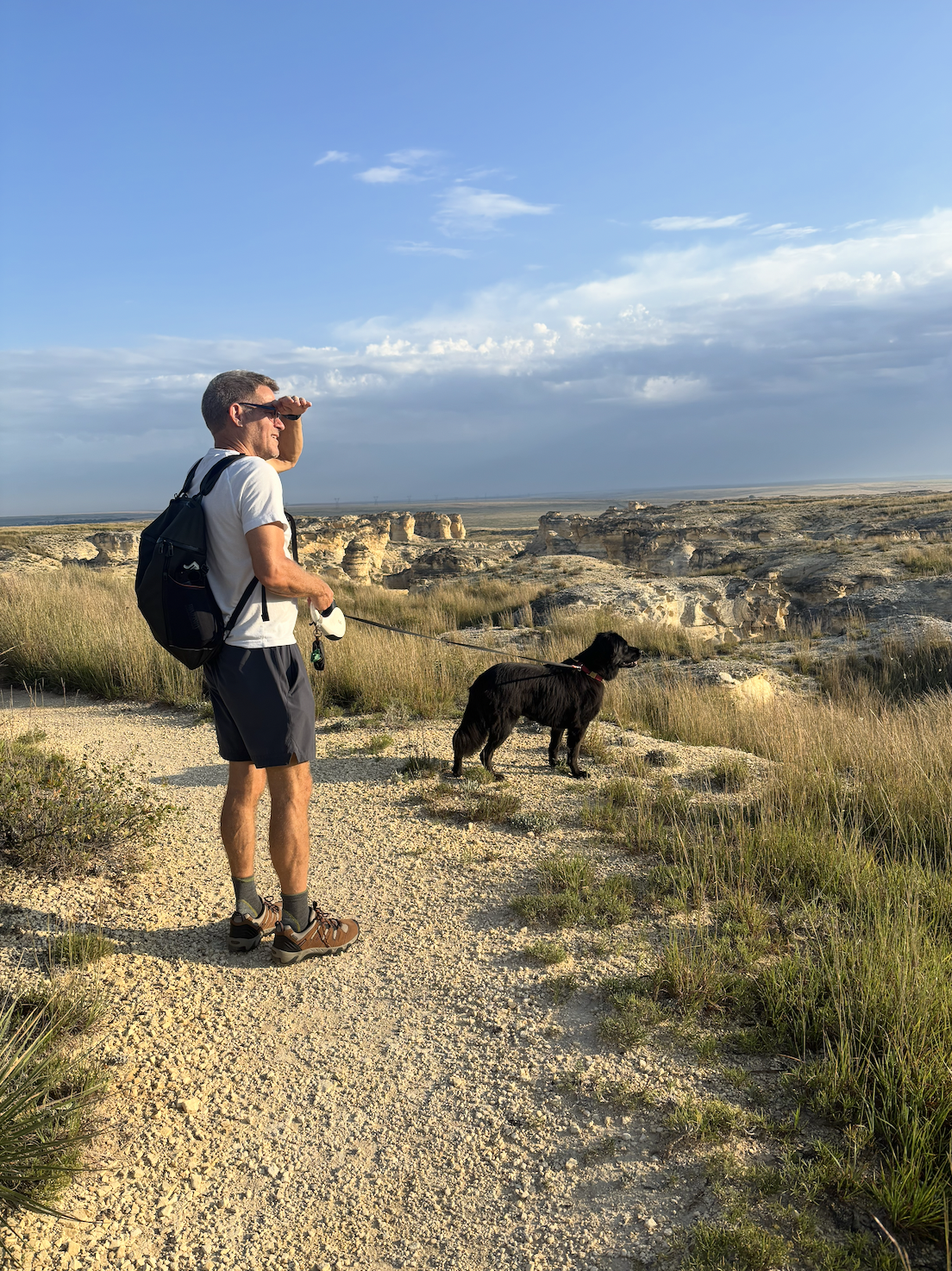
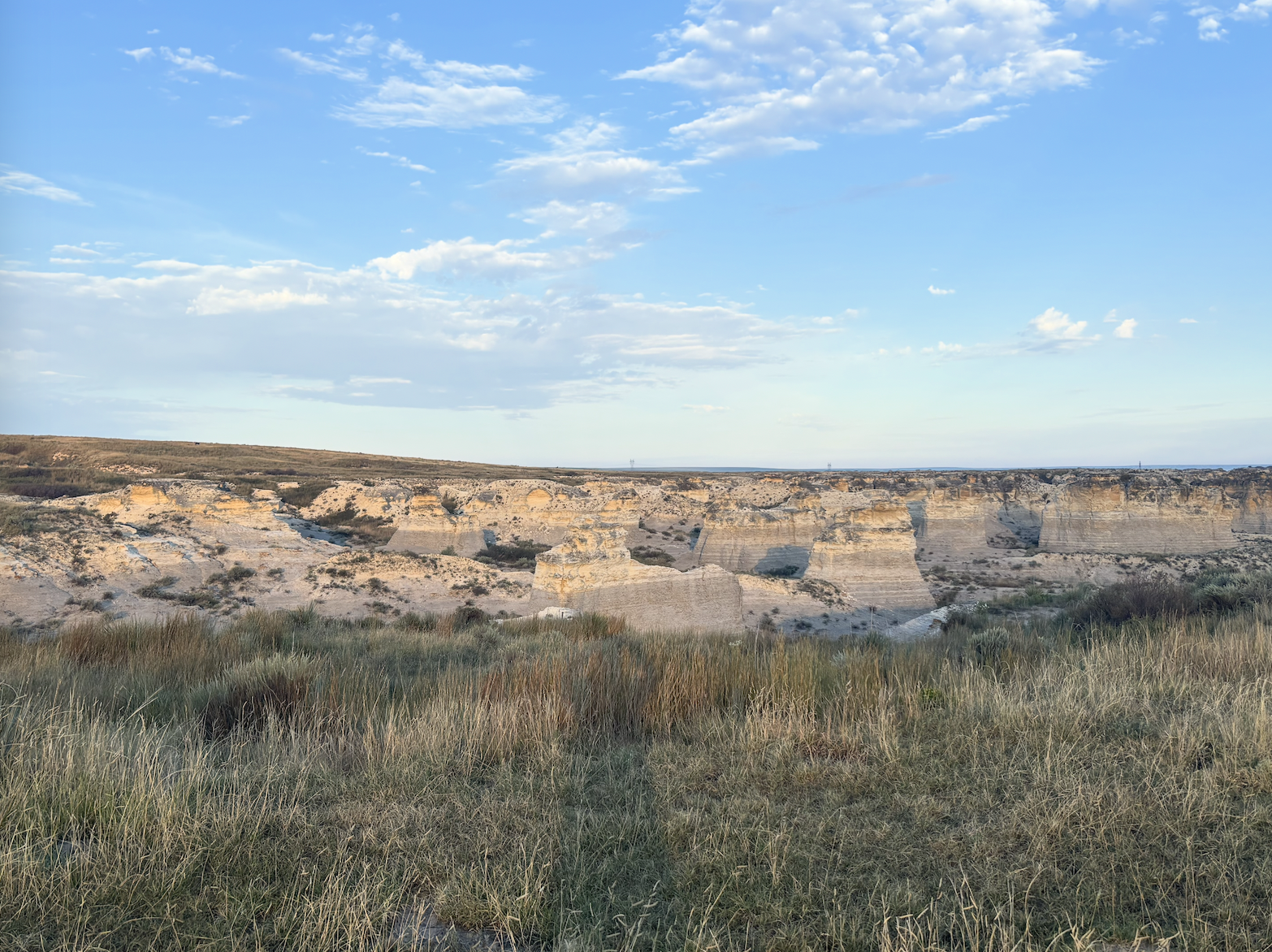
Little Jerusalem Badlands State Park
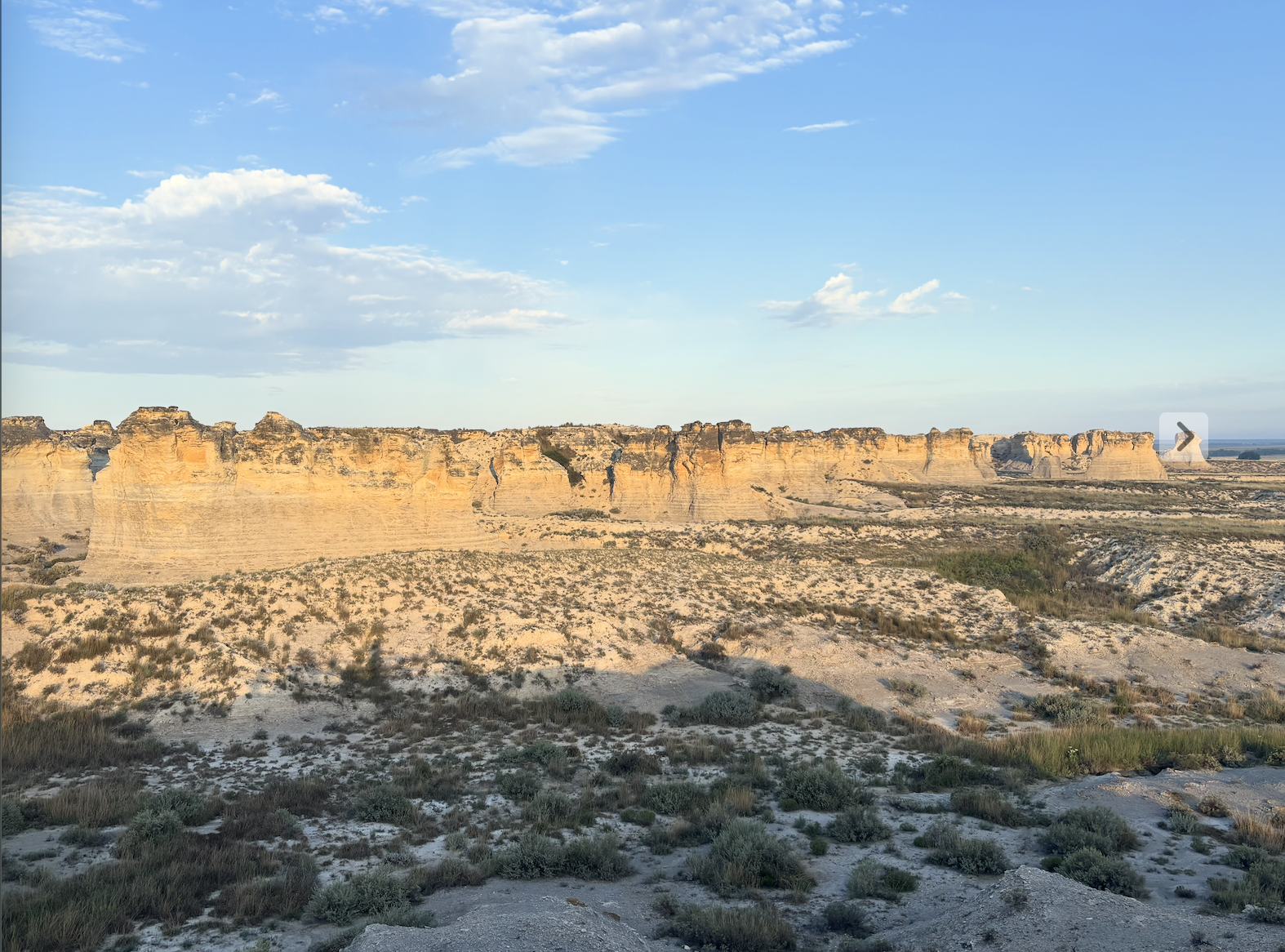
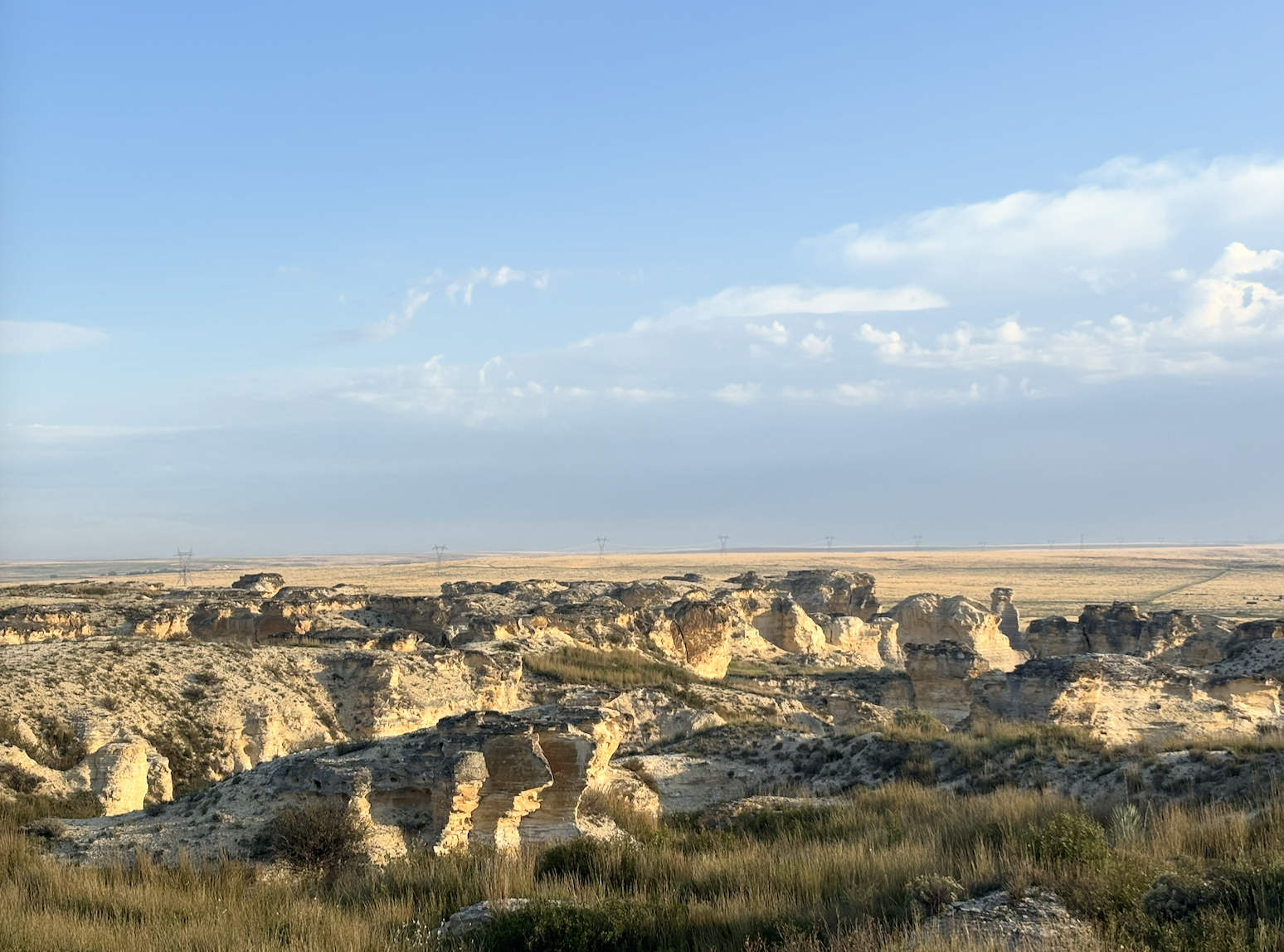
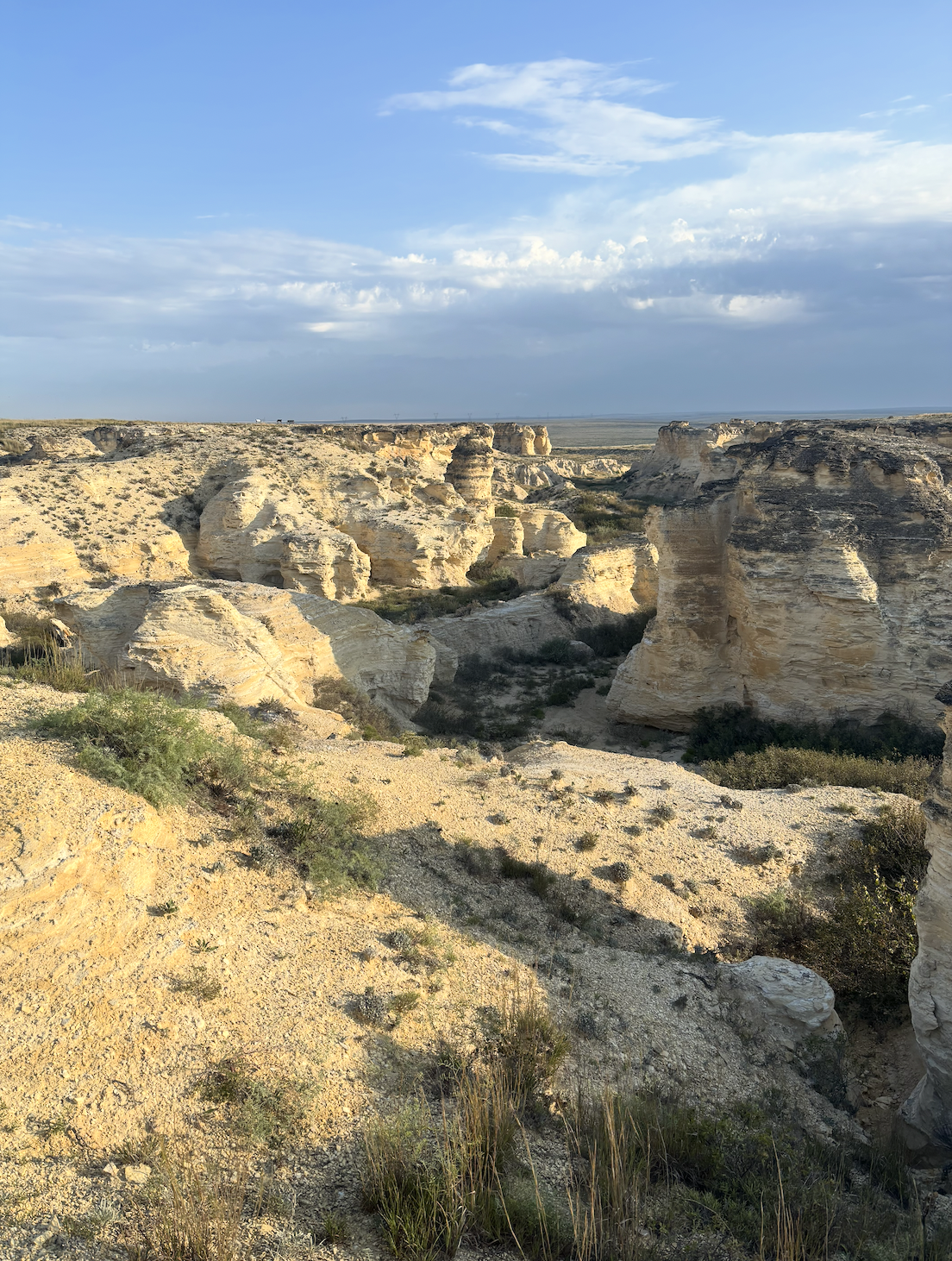
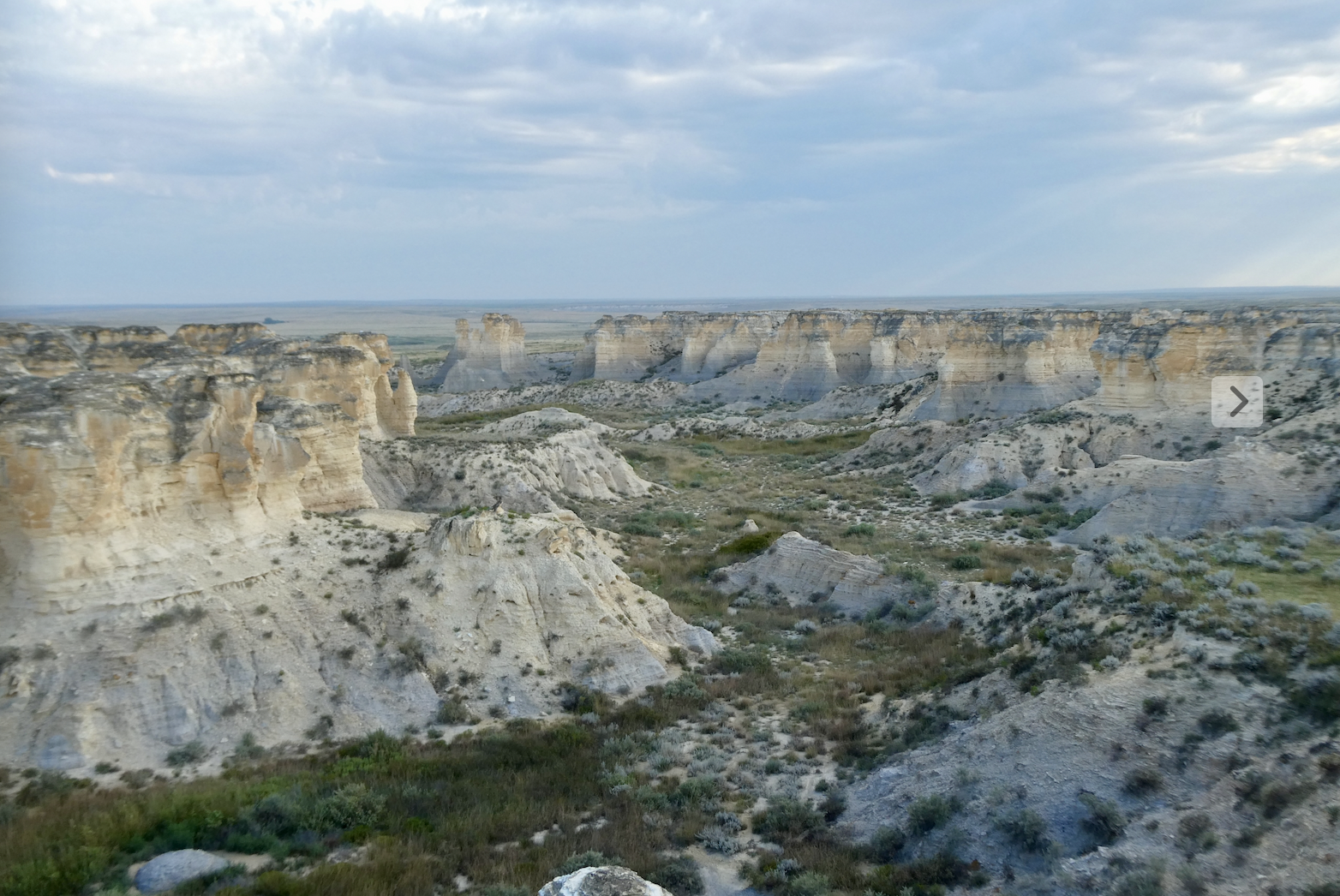
The next morning, we headed to Little Jerusalem Badlands State Park. Like Monument Rocks, this area is a direct result of the erosion of the prehistoric sea floor.
Standing and looking out over the Niobrara Chalk Formation (which is its technical name) was truly a sight to see. We spent the morning taking in the view as we hiked the trail. As we walked, we passed multiple species of prairie grasses, but what we didn't expect to see was such a surprising array of plants including cacti, yucca, and ten-petal mentzelia.
It was a beautiful morning. The air was cool, and a light wind was blowing from a rainstorm brewing in the distance. As the sun rose, its light hit the chalk formations and created a plethora of golden hues across the landscape. It was peaceful, unexpected, and absolutely beautiful.
We definitely think Kansas is a state worth exploring. Sometimes the places you think you'll simply drive through are the ones that surprise you the most.