
Badlands National Park
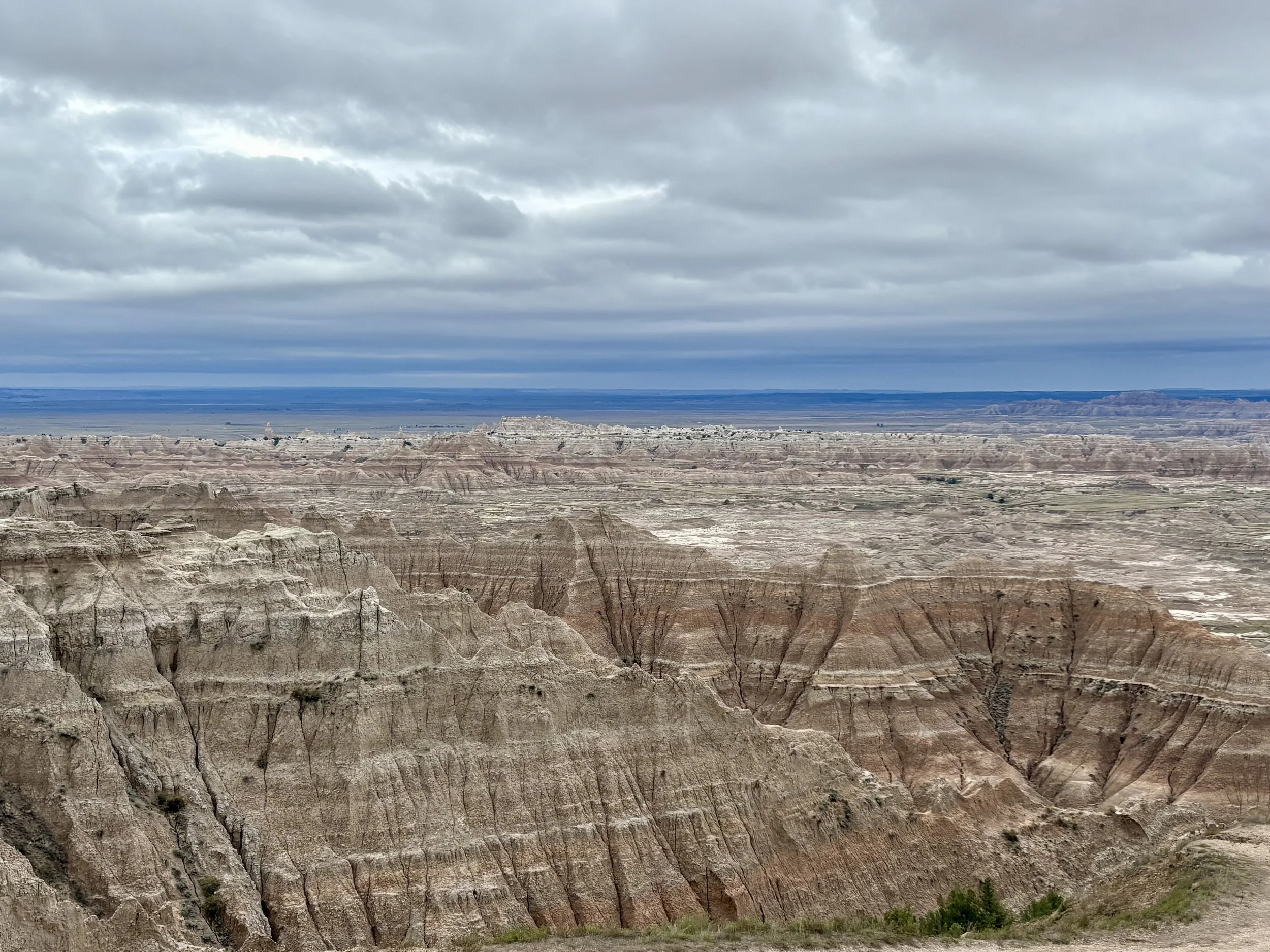
The Badlands
Badlands: Land Bad, Adventure Good
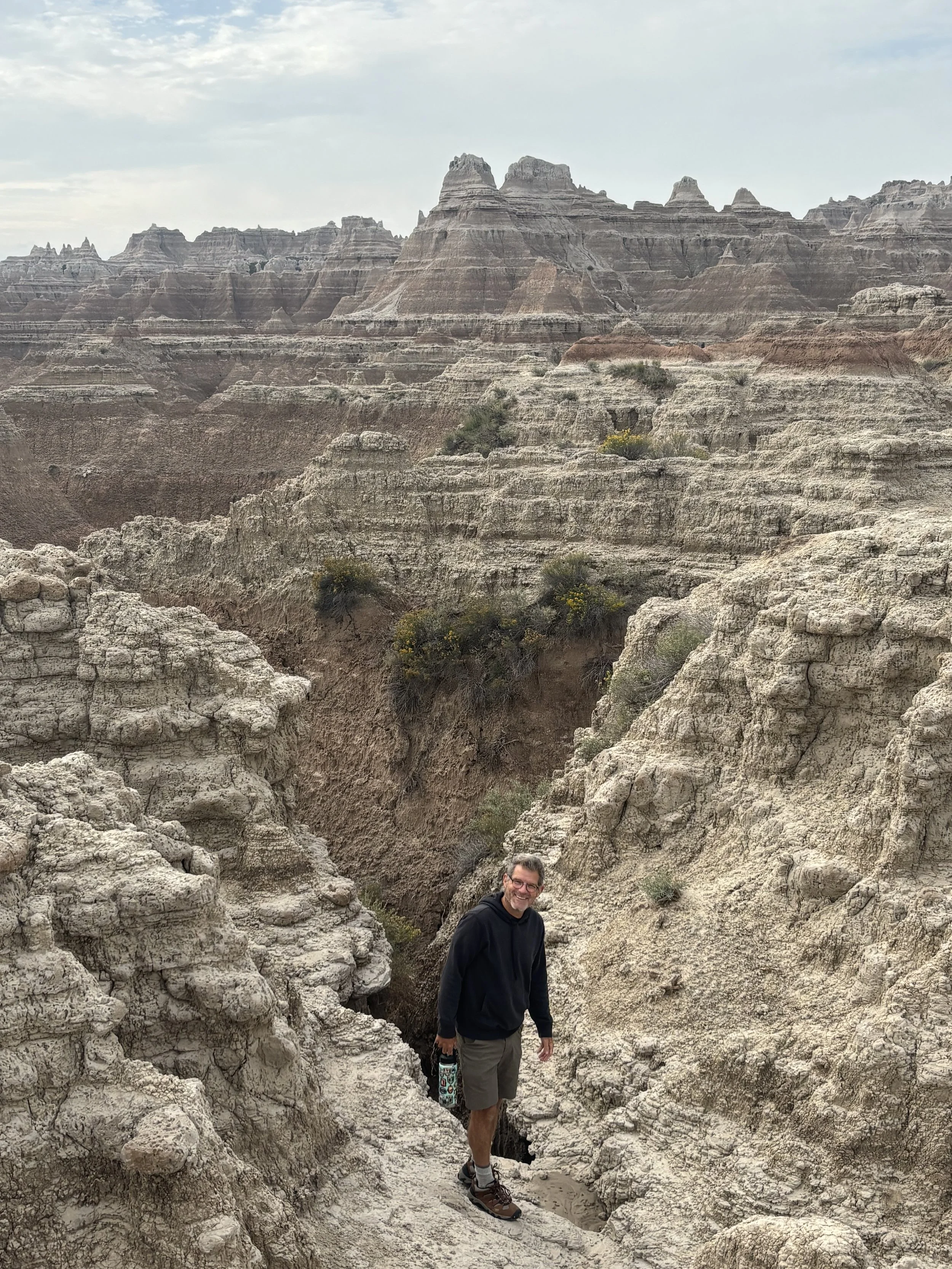
The Badlands of South Dakota have inspired a mix of dread and fascination for centuries. We found it funny that the Lakota called this place mako sica, meaning “land bad,” while early French trappers called it Les Mauvaises Terres à Traverser, or “bad lands to travel across.”
Different languages. Same basic message: This place is not making it easy on you.
And yet, difficult or not, the Badlands are absolutely fascinating!
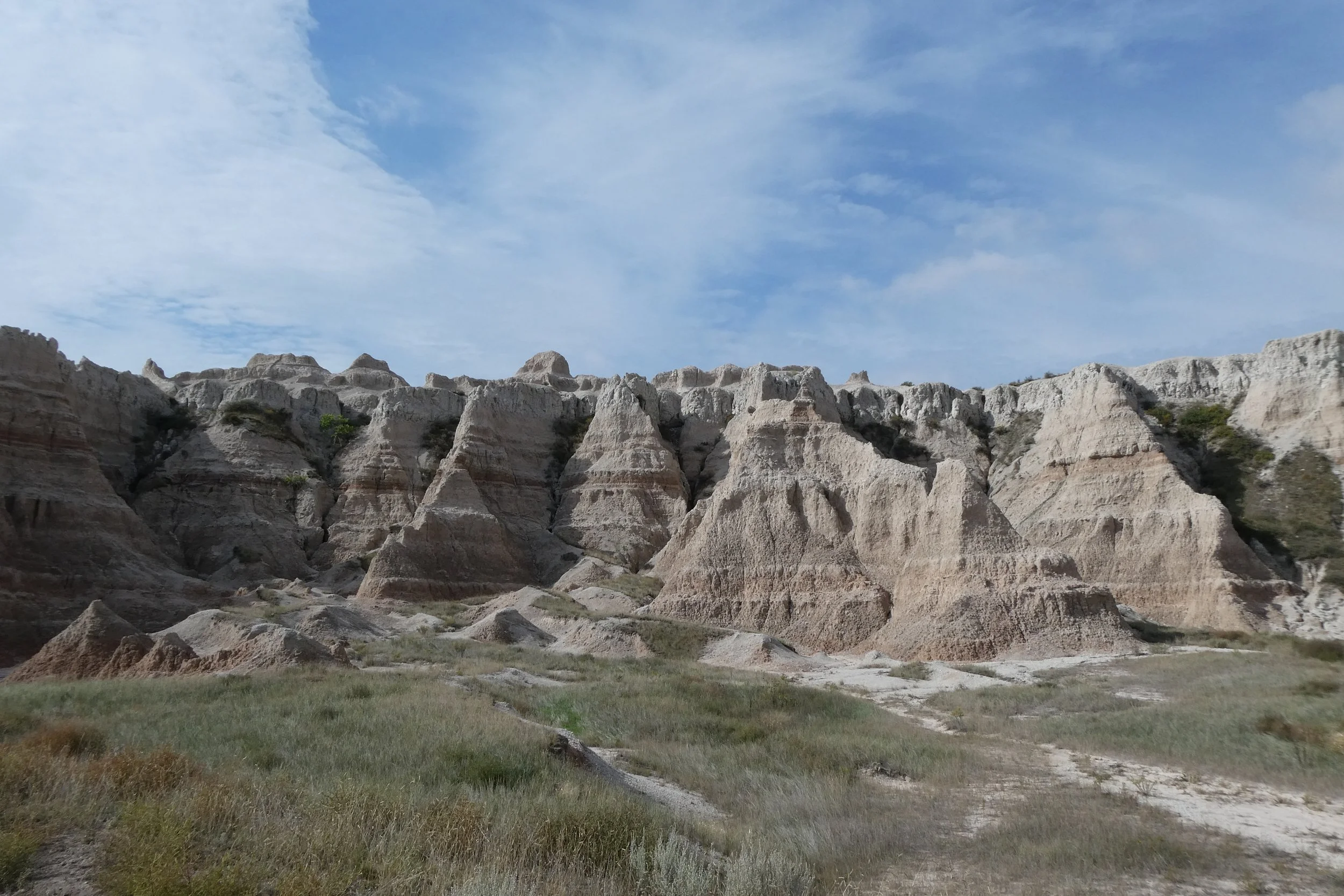
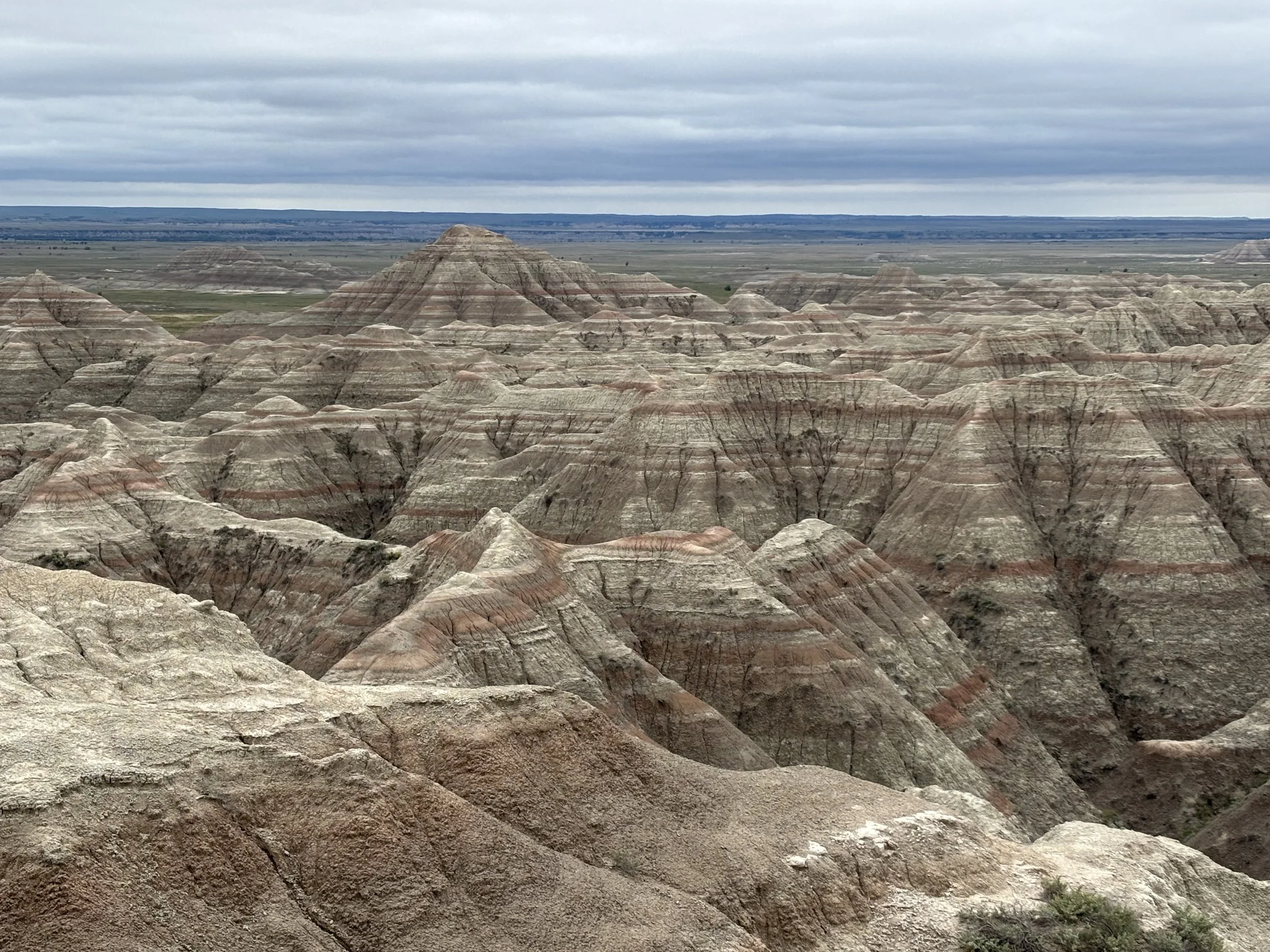
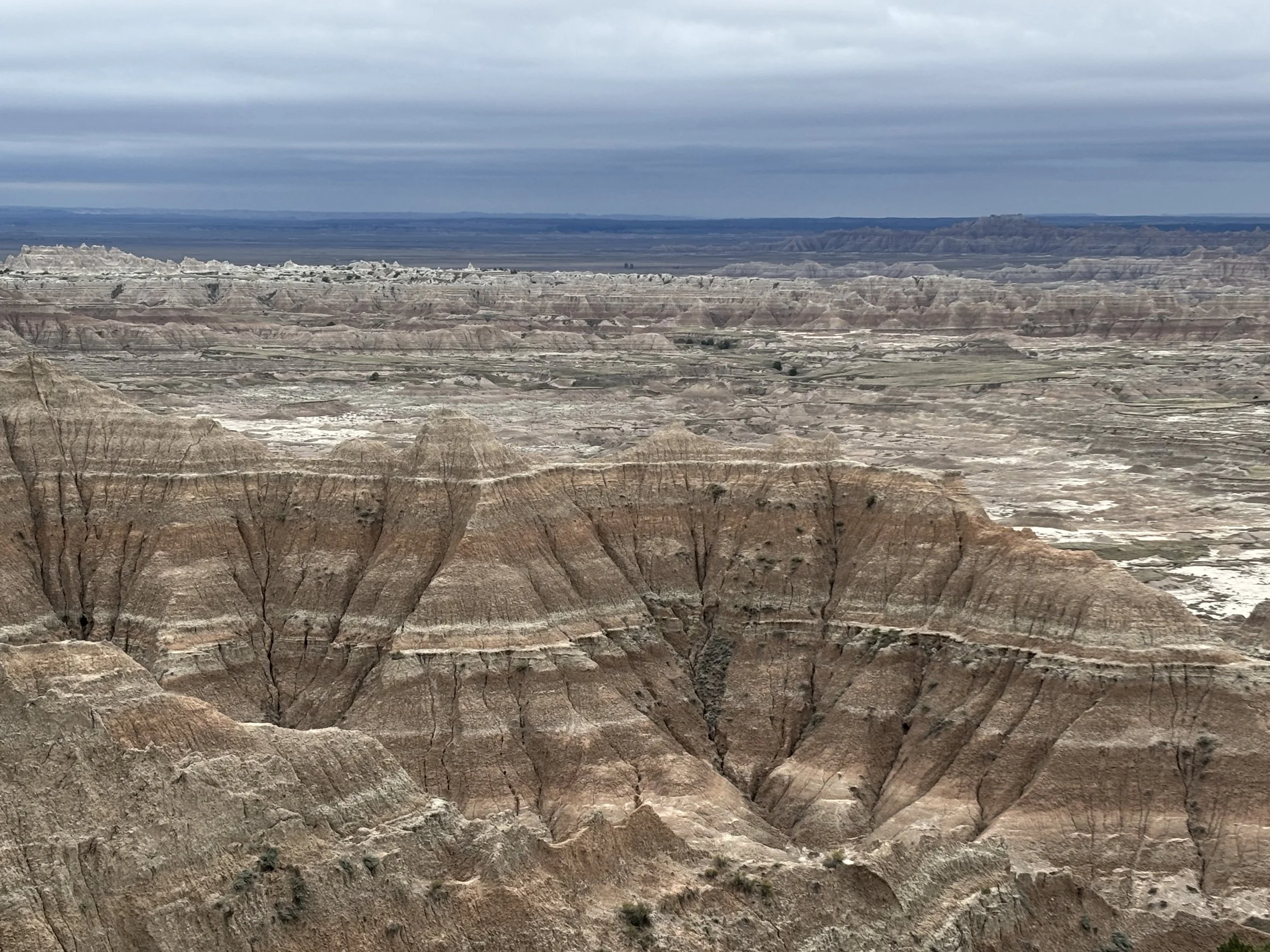
The landscape tells a story that began millions of years ago. The rocks and formations we see today are the result of ancient environments, water, wind, and erosion constantly reshaping the land. The park is also famous for its remarkable fossil record, particularly the remains of ancient mammals that lived here millions of years ago.
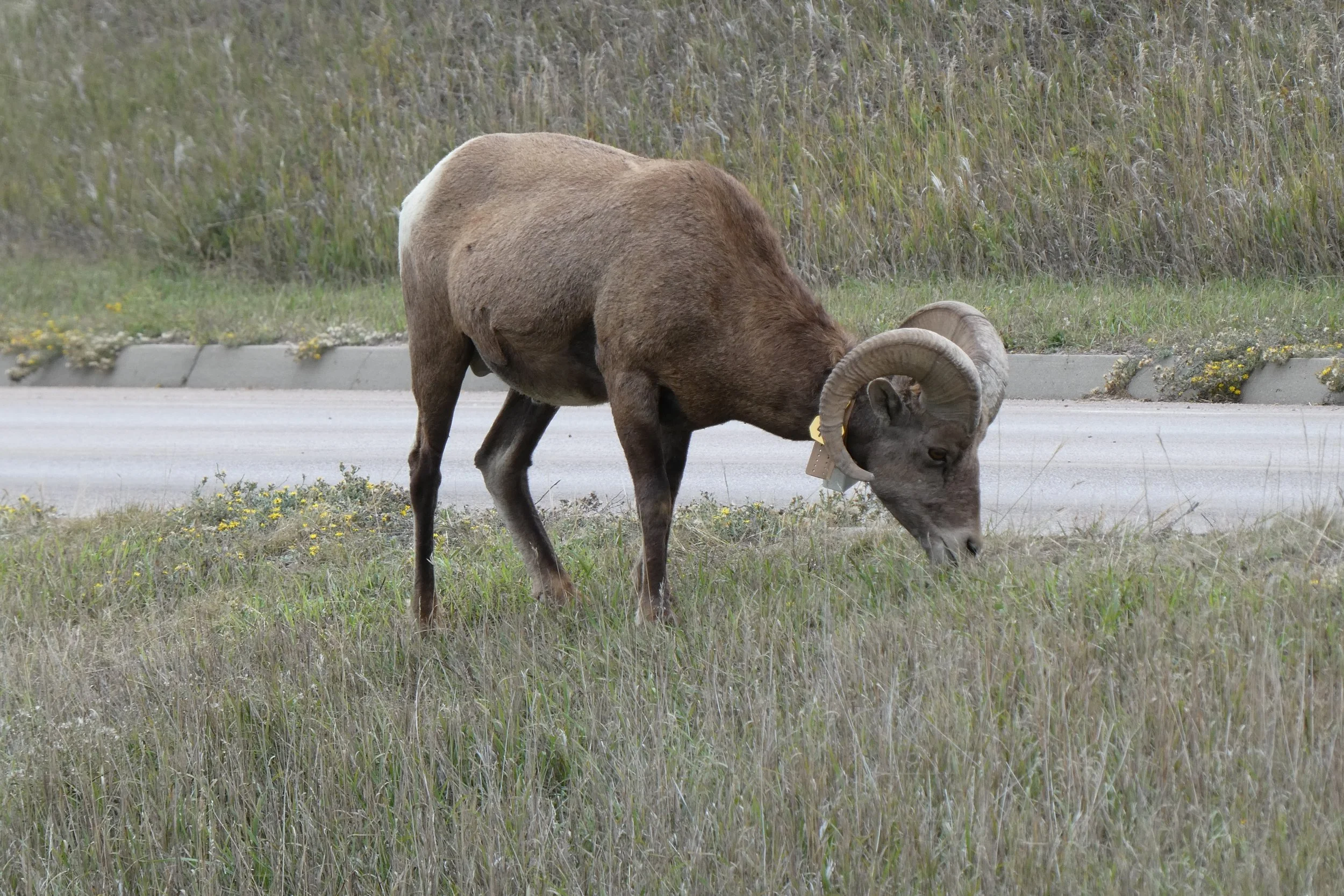
Bighorn Sheep
Today, the Badlands are home to a variety of wildlife, including bison, prairie dogs, bighorn sheep, and numerous reptile species—including rattlesnakes.
Eek! Yes, we saw every one of them including the rattle snake. Thank goodness we were in the car for the rattlesnake.
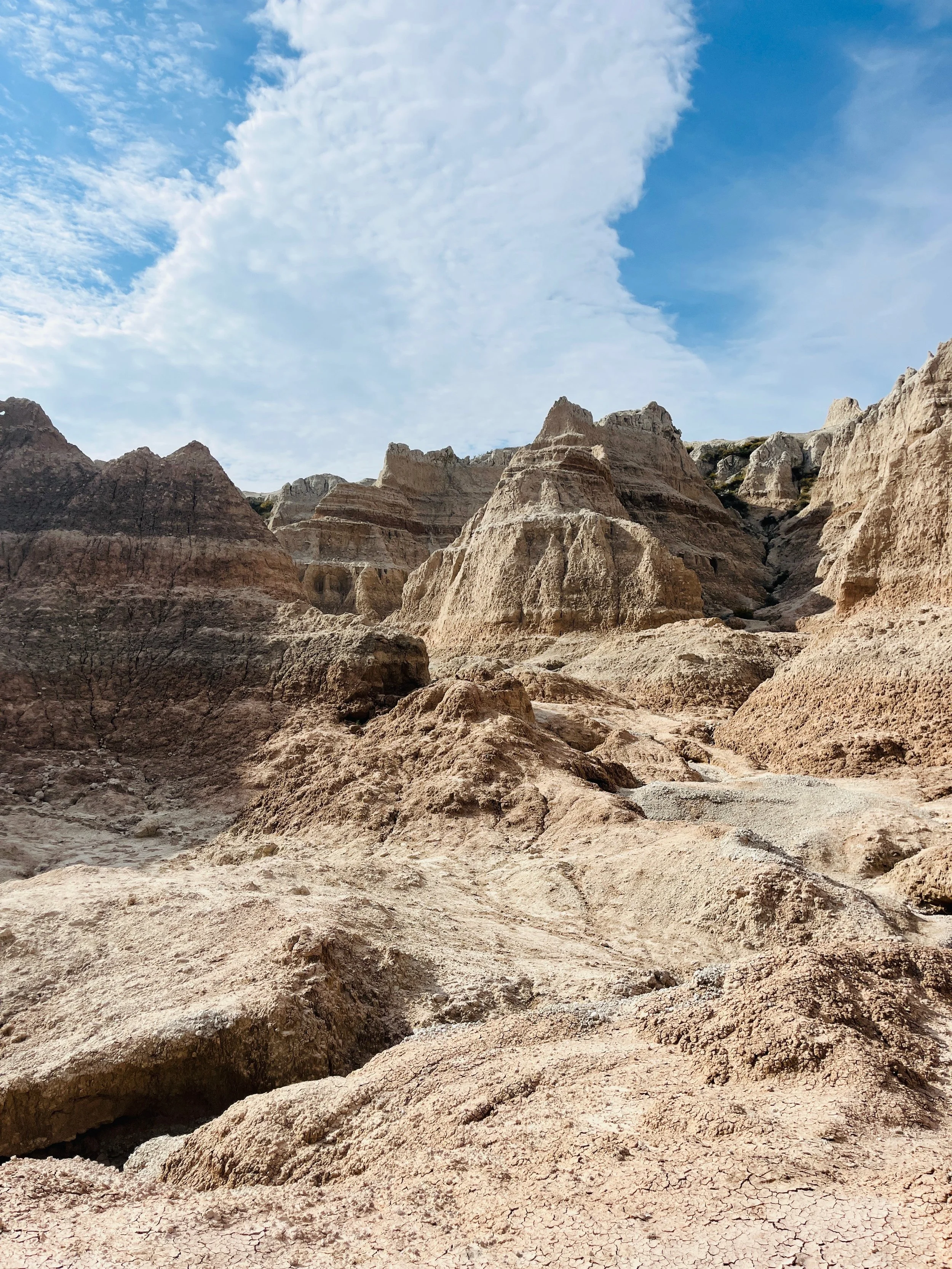
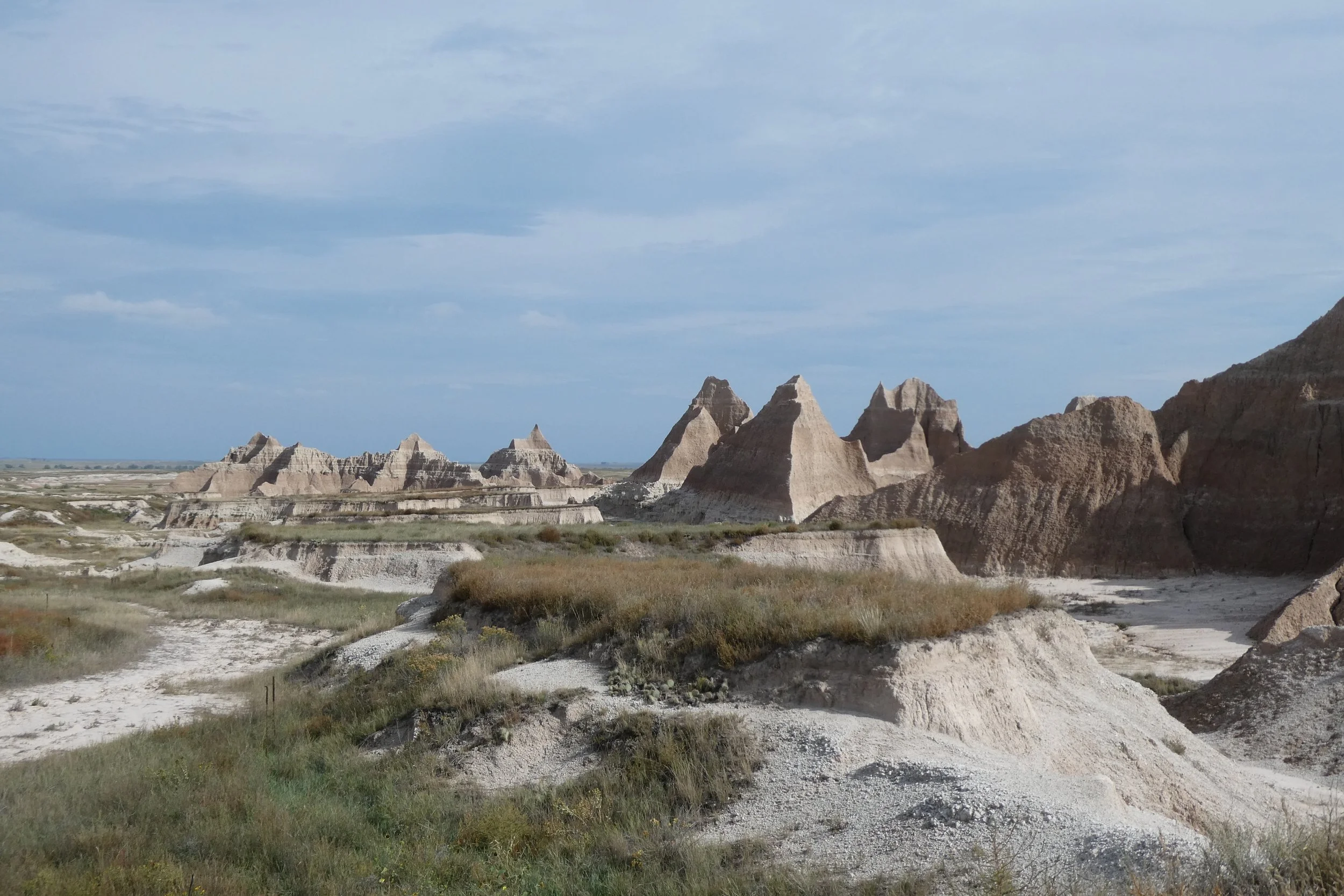
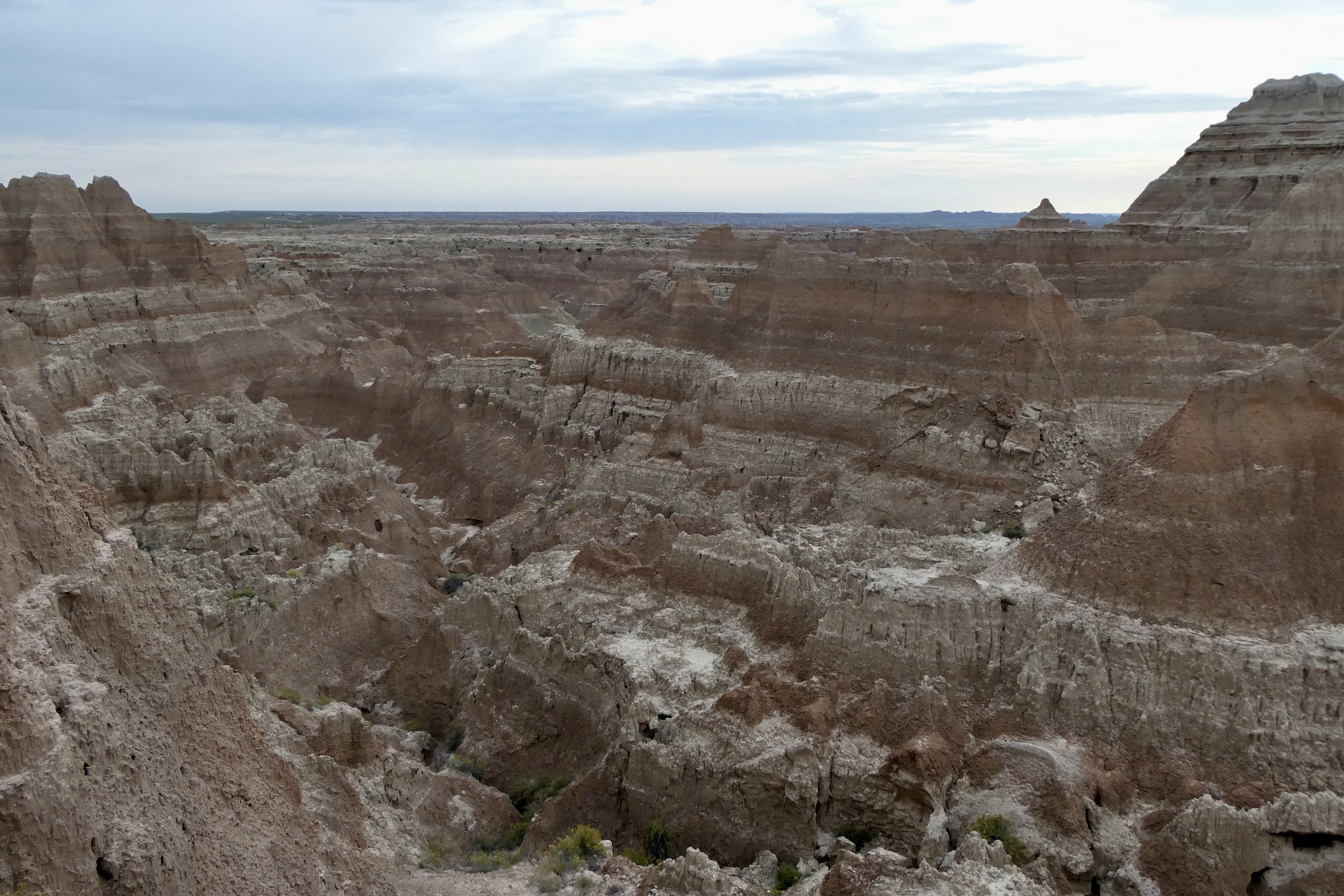
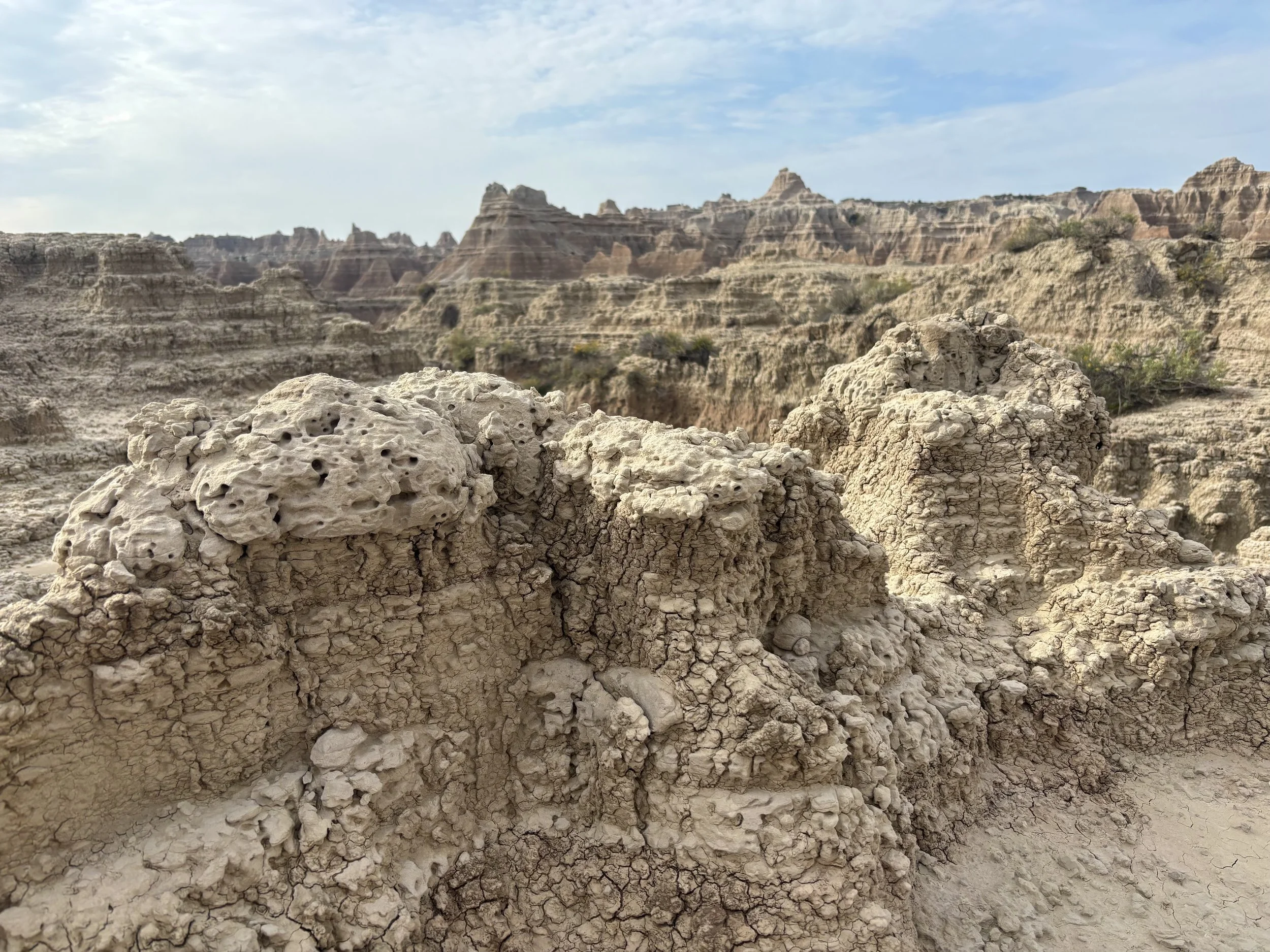
The Badlands boast stunning landscapes, unusual rock formations, and a geology that is constantly changing. The formations erode at an average rate of about one inch per year. That may not sound like much, but over time it means this landscape is literally being rewritten.
So, the next time you visit, you may notice that things have changed just a little.
Our 24 Hours in the Badlands
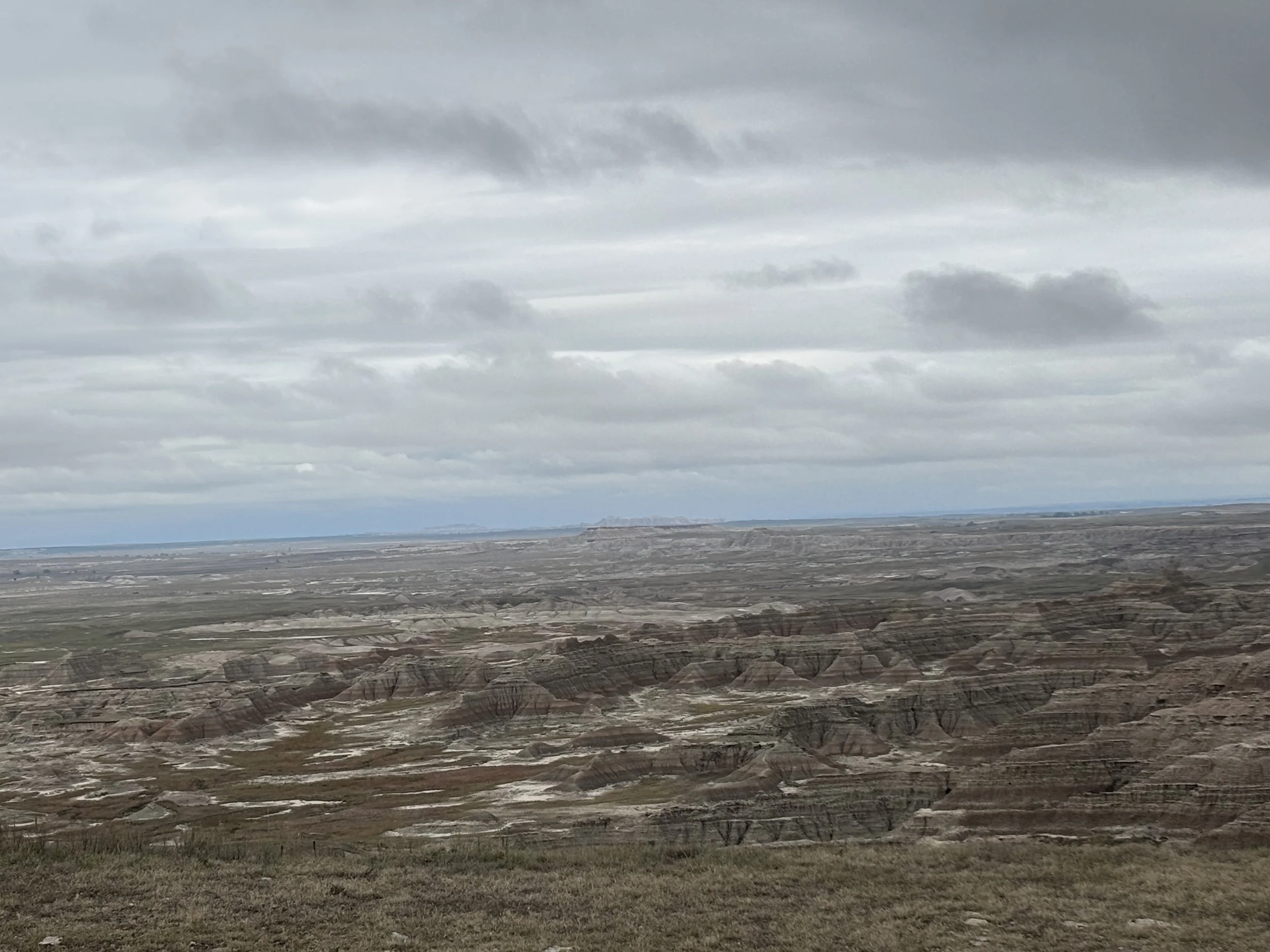
View from Rig
We spent about 24 hours in the park and decided to take a stab at something new for us: boondocking.
For those unfamiliar with the term, boondocking is camping in a remote area without hookups for water, electricity, or sewage. Basically, you bring your own everything and hope you remembered where you packed the flashlight. So, you don’t end up off the cliff.
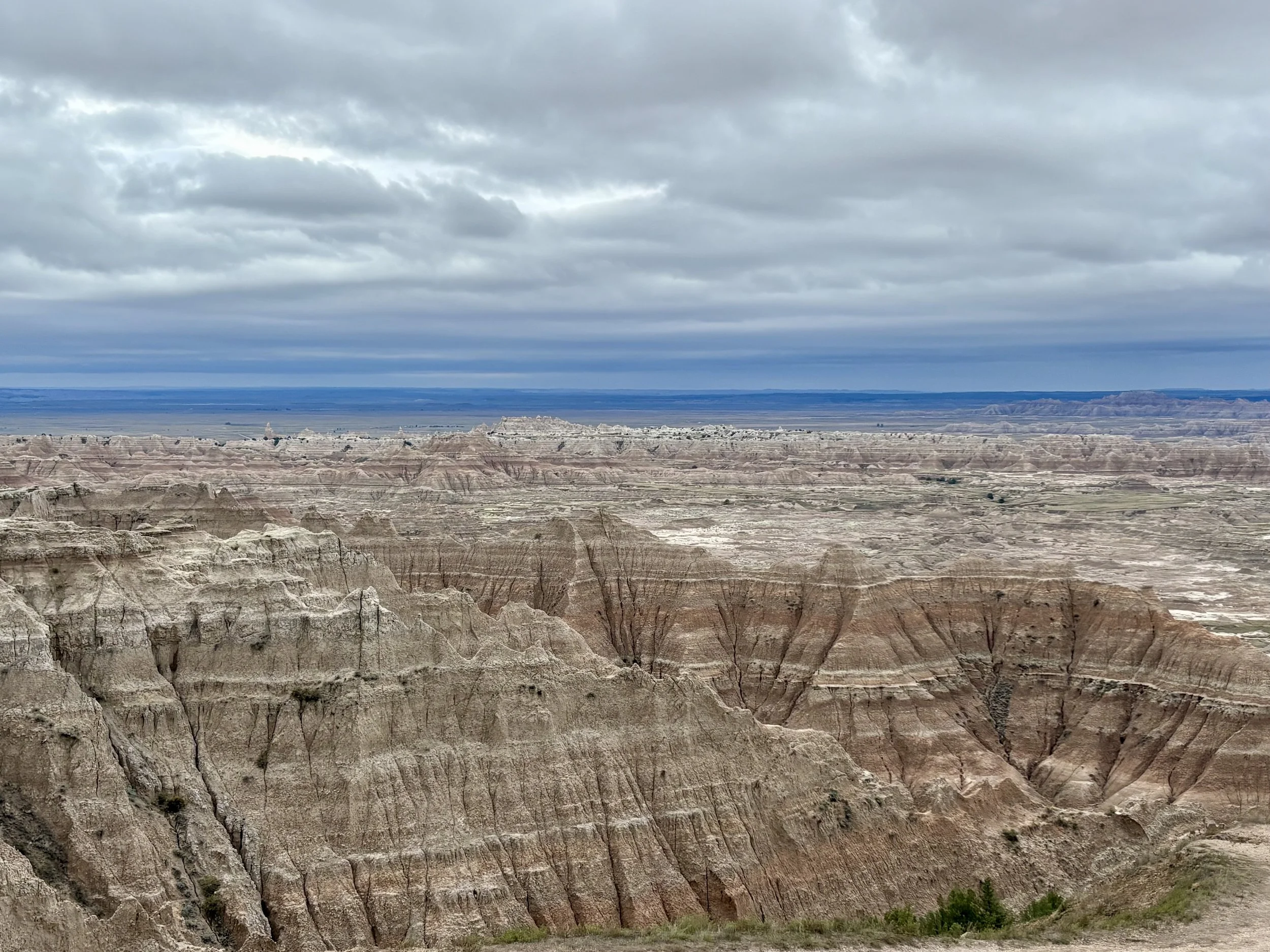
We stayed at The Wall, an area near the park's entrance that provides panoramic views of the Badlands.
We arrived mid-morning, but the mist and fog were so thick that our views were limited for most of the day. At first, we were a little disappointed. We had come to see the Badlands, and the Badlands had apparently decided not to reveal themselves.
But the big payoff came the next morning.
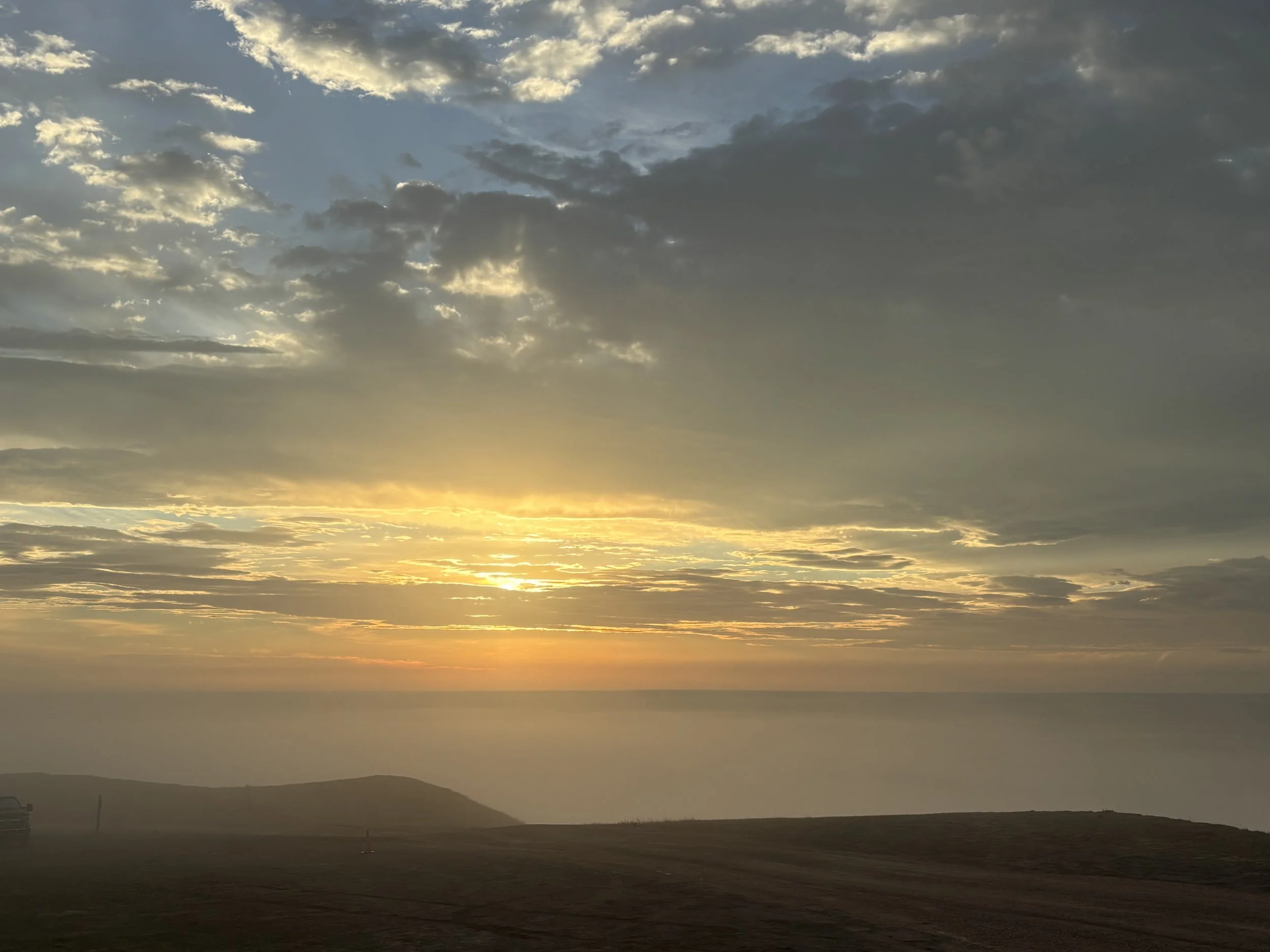
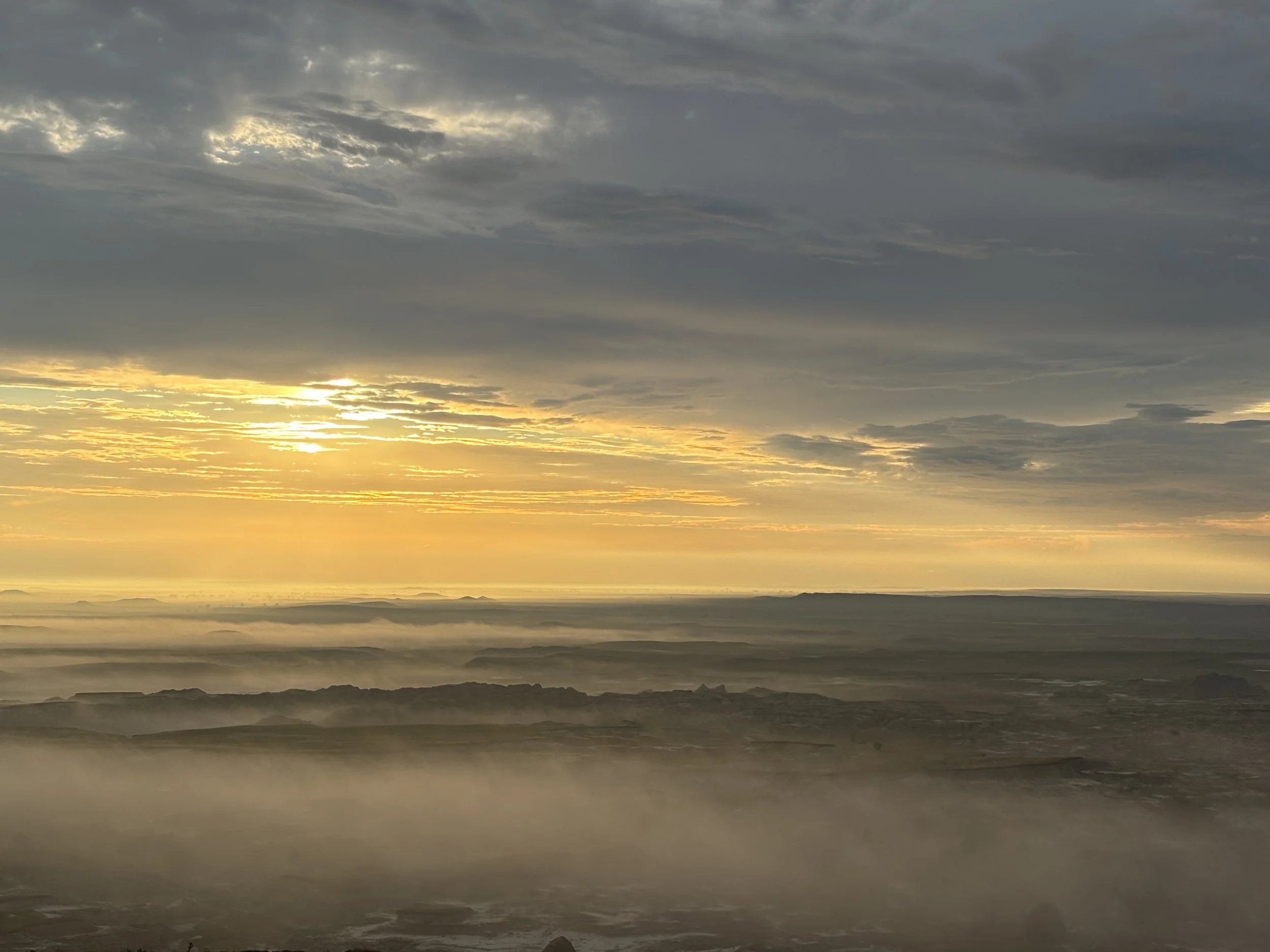
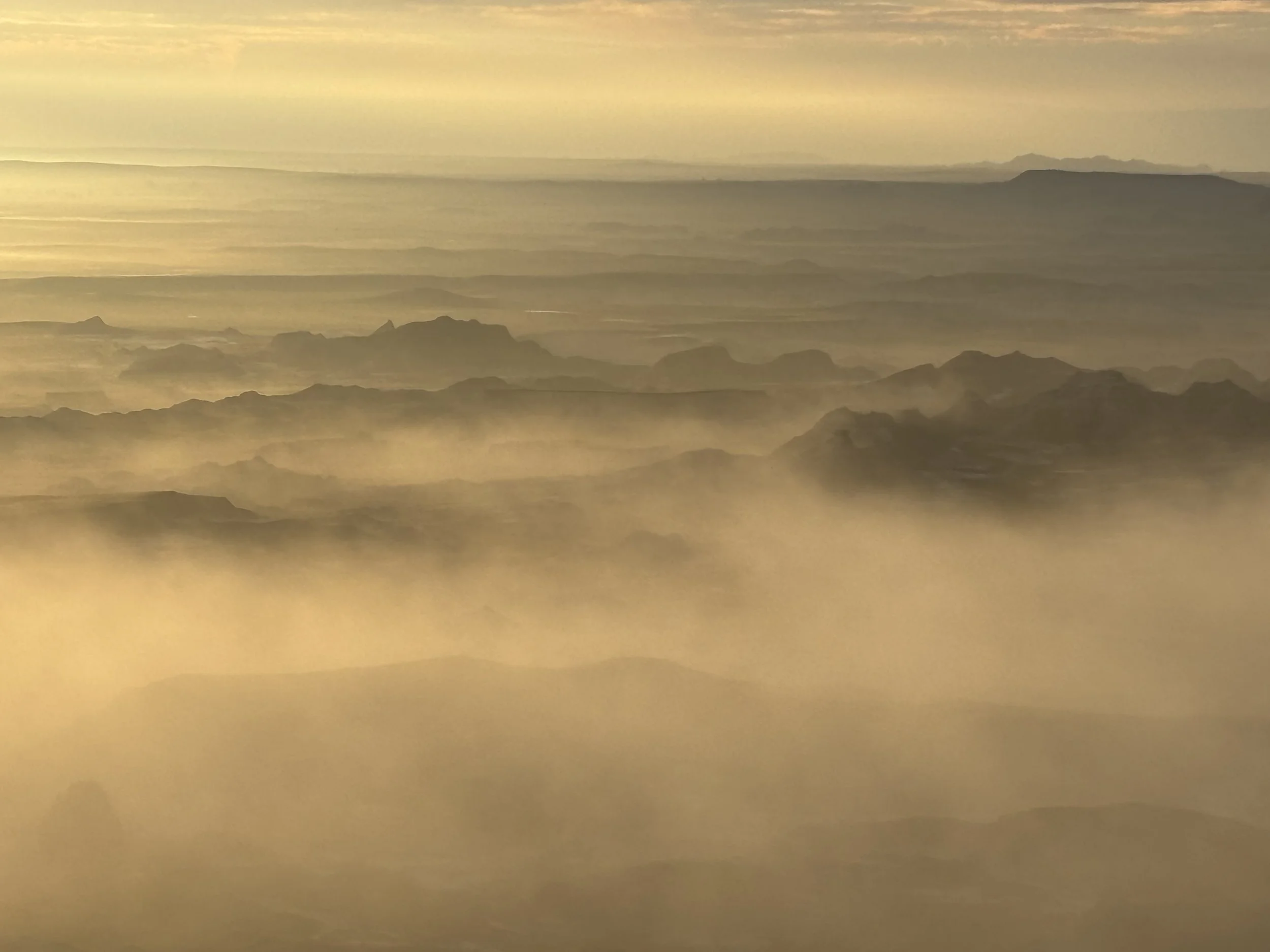
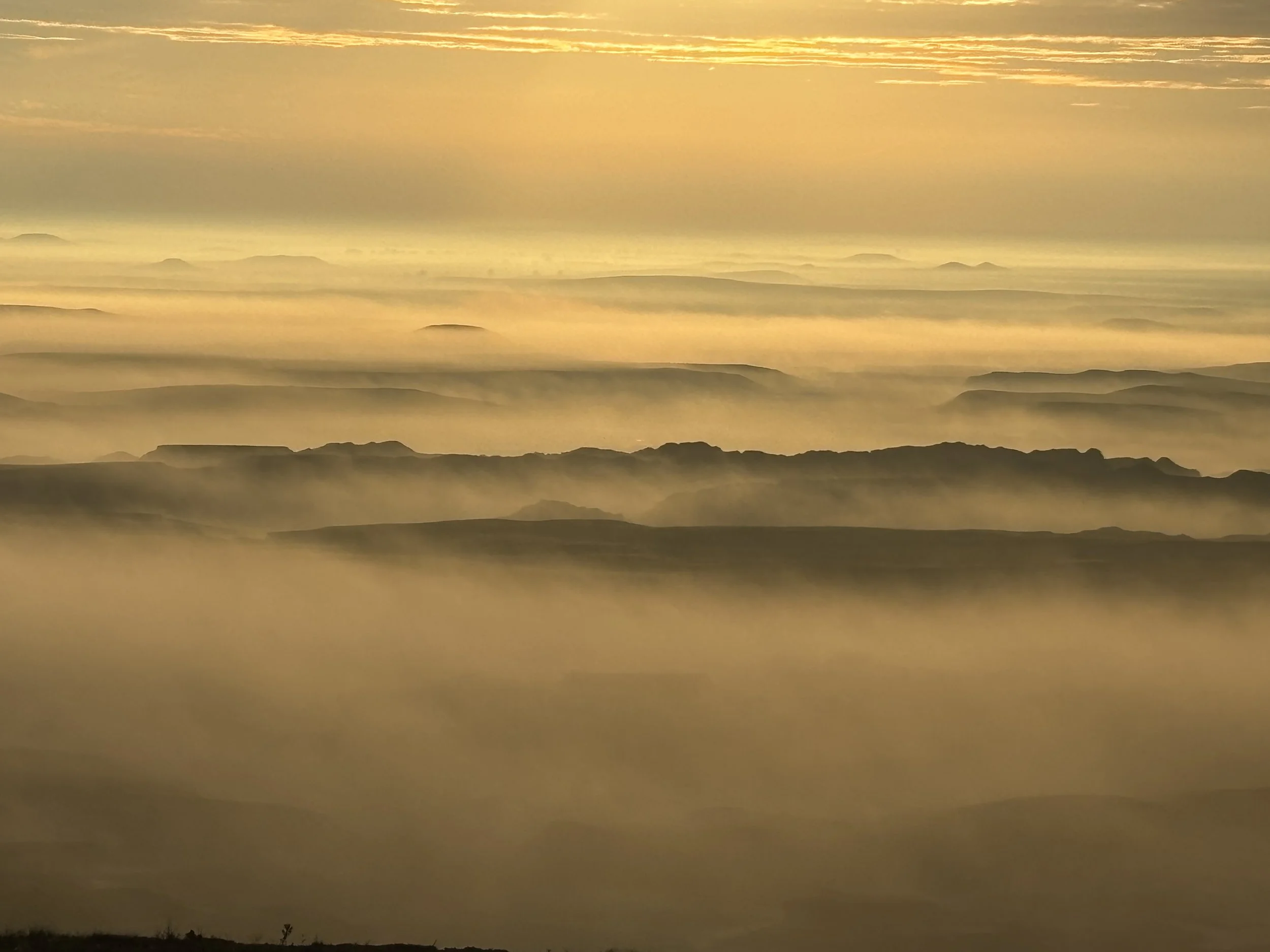
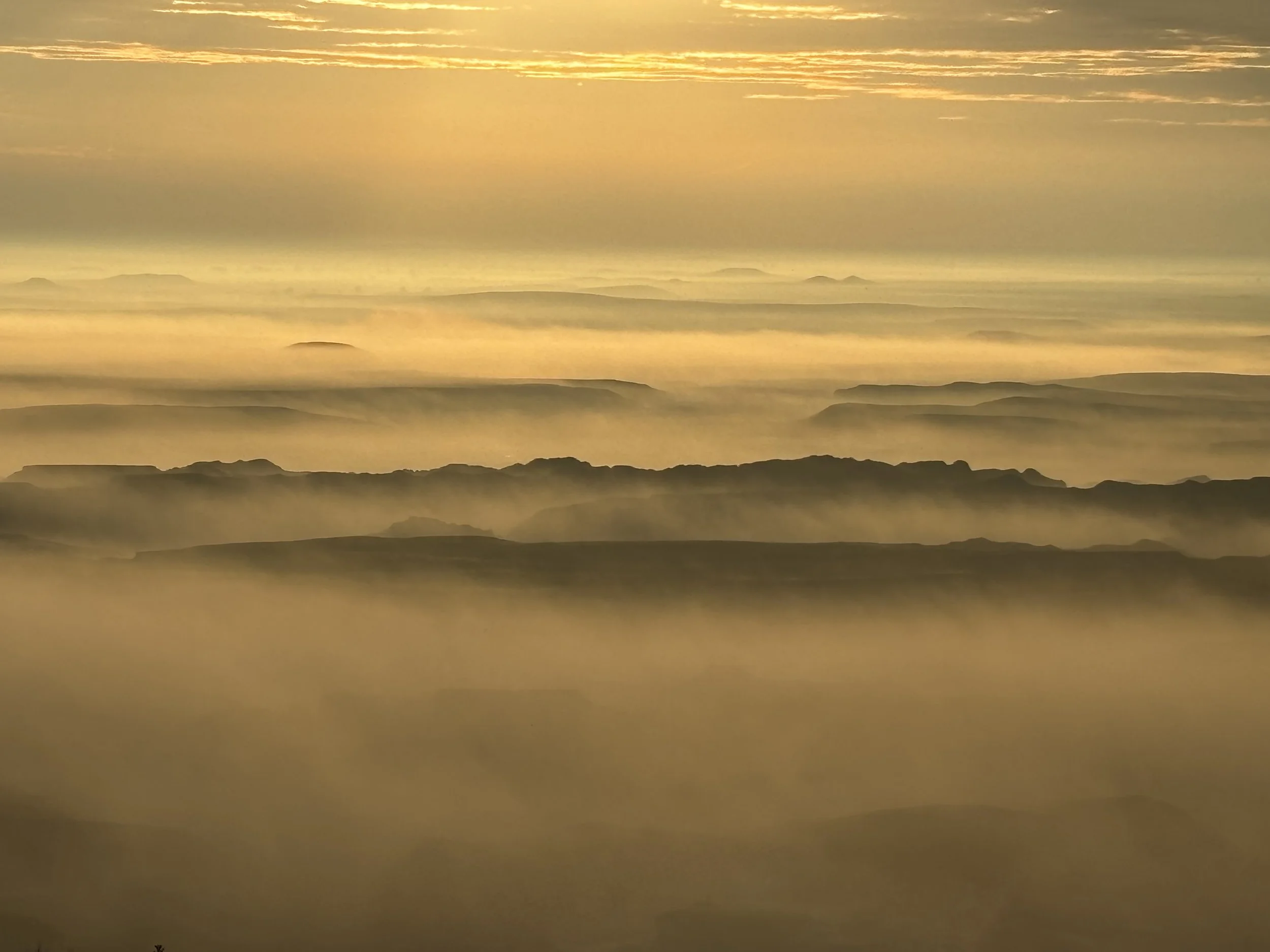
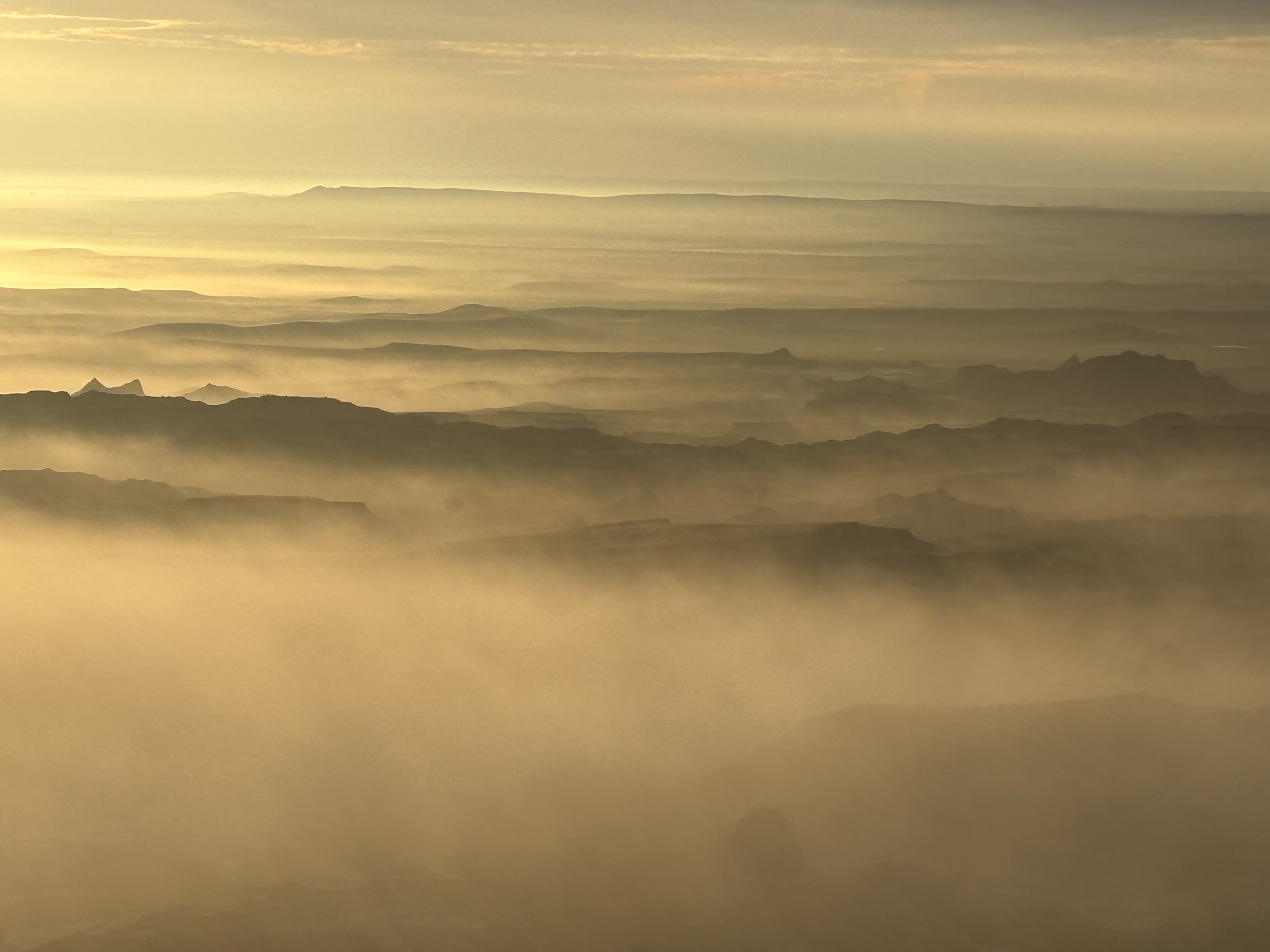
We woke up to fog so thick that you couldn't see more than 10 feet in front of you. Then, almost as quickly as it arrived, the fog began to burn off, revealing a beautiful sunrise.
Honestly, it looked like an abstract painting. Absolutely stunning!
Exploring the Badlands
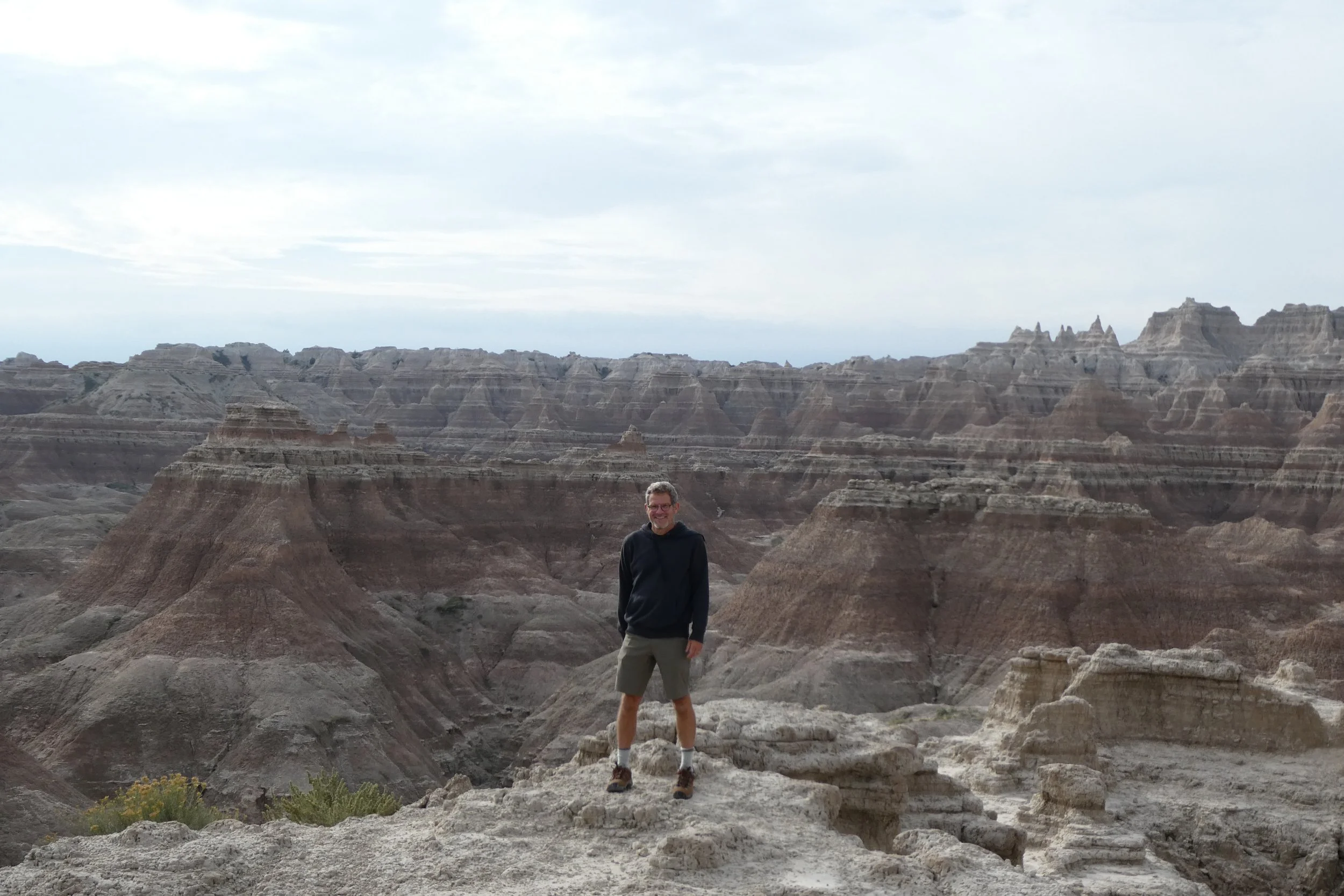
Exploring the Badlands
Most people can experience a lot of the Badlands in a day by driving the scenic route and stopping at the overlooks. That's what we did on our first day, although the weather wasn't exactly cooperating.
The next day, we decided to get out of the car and explore the park on foot.
We had planned to hike The Notch, one of the park's most popular trails. It's a short hike—about 1.25 miles round trip—but it includes a climb up a log ladder and follows a ledge with dramatic views of the White River Valley.
We had heard great things about it. It was also known for being one of the more challenging hikes in the park. So, of course, we were up for it!
We made the drive, jumped out of the car, and headed toward the trailhead, only to be greeted by a large sign saying the trail was closed.
Needless to say…our bubble was deflated.
The trail was closed for repairs to the ladder, so The Notch will have to go on our next-time trail list. We did run into a Ranger, and I asked what would happen if we were caught on the trail. She quickly replied we would be FINED!
So, we pivoted and headed over to the Door, Window, and Castle Trails.
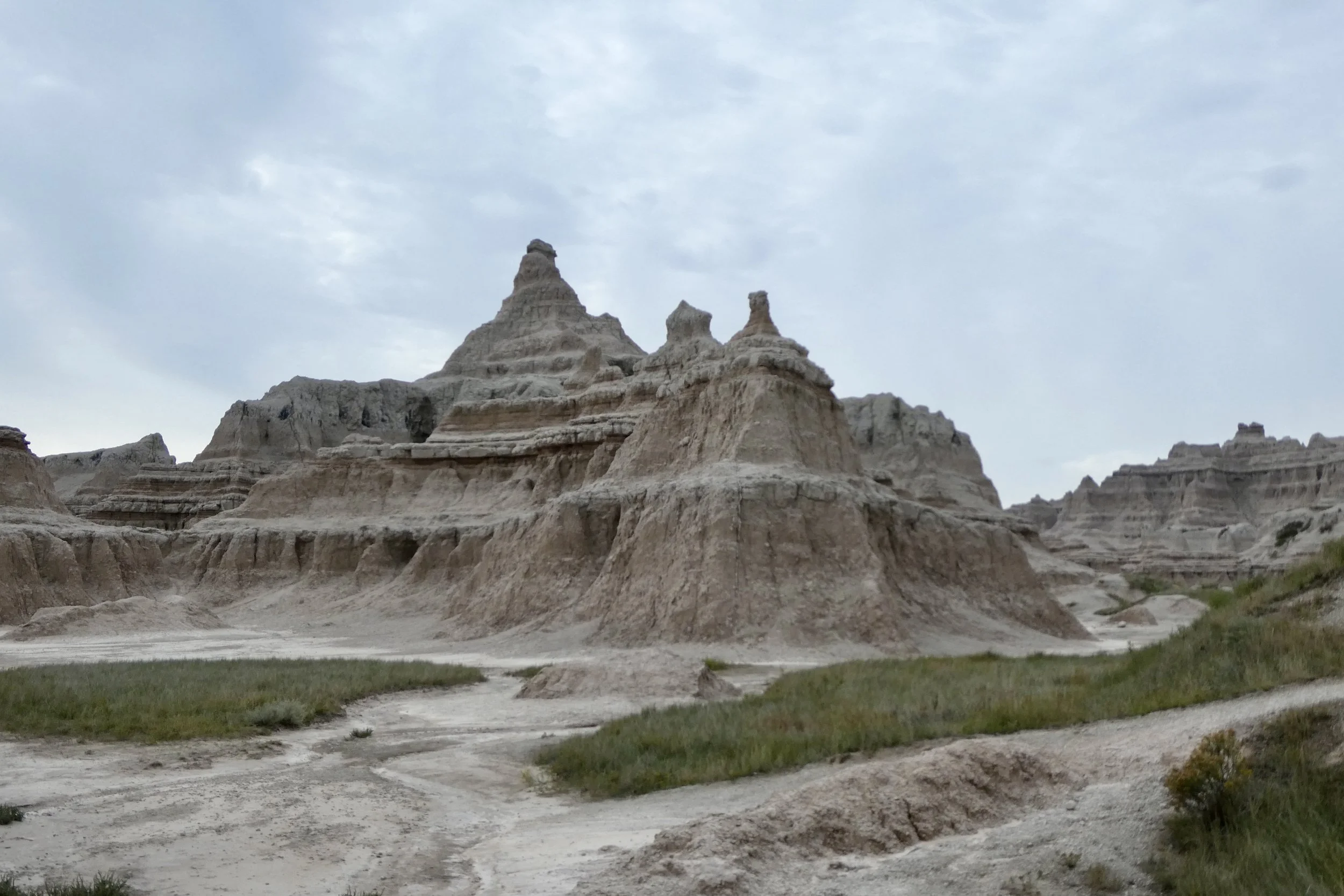
Castle Trail
The Door Trail starts on a boardwalk before continuing out into the Badlands themselves. Along the way, you get a great perspective of the erosion taking place all around you. You can look out over the valley and really begin to appreciate how water, wind, and time are constantly breaking down and reshaping the land.
Across the road is the Castle Trail, the longest established trail in the park at about 10.2 miles round trip. It winds through the heart of the jagged, multicolored formations and provides some great views of the surrounding grasslands.
We didn't hike the entire trail, but even a portion of it gave us a completely different perspective of the Badlands. There is something about getting down into the formations and walking among them that you simply don't get from behind a windshield.
Before calling it a day, we stopped at the Fossil Exhibit Trail.
We thought we were going to see actual marine fossils lying on the ground.
Well…not exactly.
Instead, the trail has interpretive exhibits showing fossils and explaining the animals that once lived in this area. We did, however, happen to catch a ranger providing visitors with actual fossils and explaining more about the creatures that once called this place home.
That was an unexpected bonus!
And Then There Were the Bison
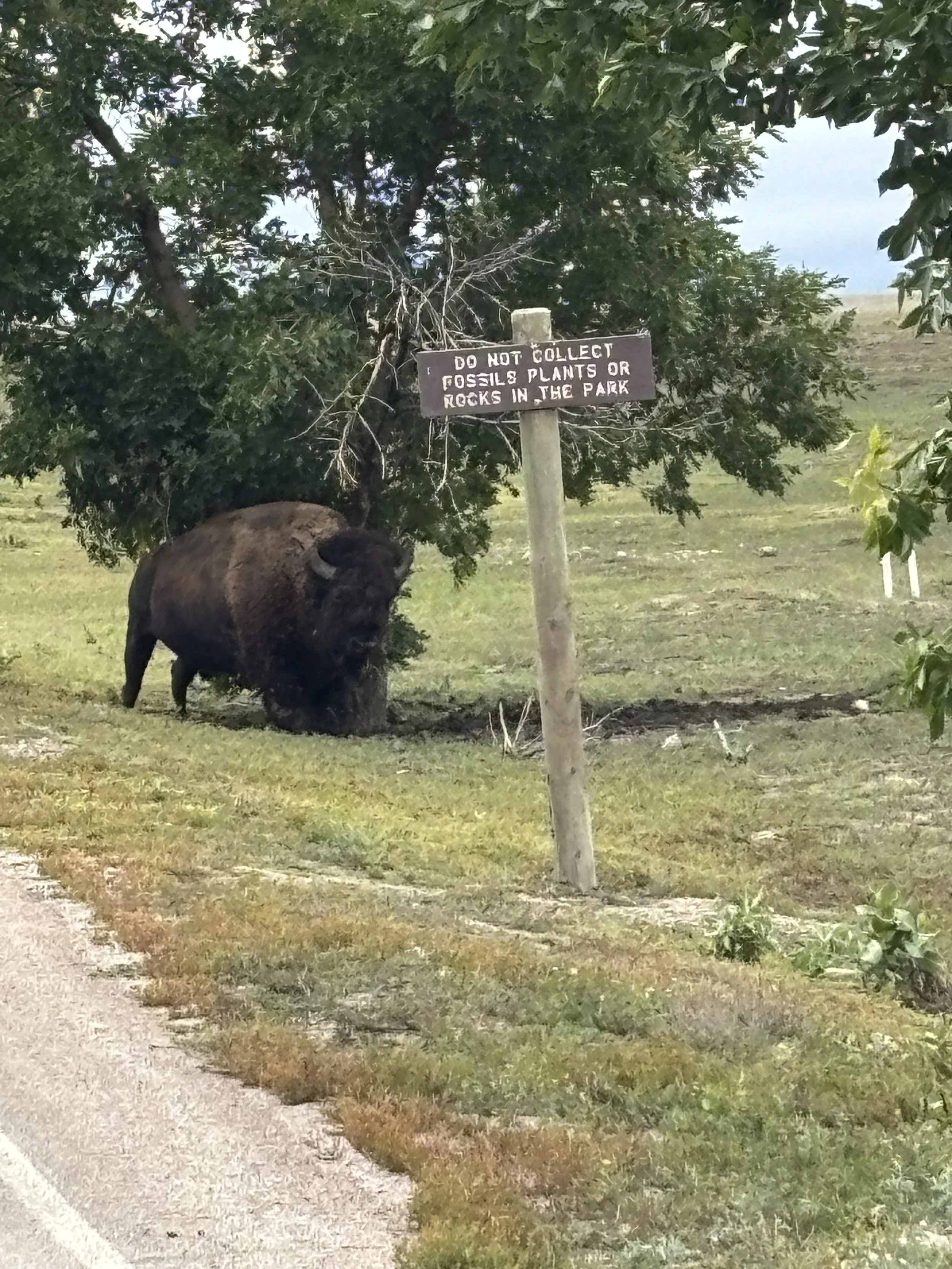
Another Bison
Like all journeys, they eventually end. We truly enjoyed this trip!
What we didn't expect was just how many “bad lands” we would actually encounter along the way. We started in Kansas, continued through Colorado, Wyoming, Idaho, Montana and North Dakota, and ended in South Dakota. We visited badlands in three different states (KS, ND, SD).
Along the way, we also developed what became our unofficial catchphrase:
“Oh, there’s another bison!”
By the end of the trip, I'm pretty sure we could have driven past a bison and barely slowed down.
Okay, maybe we still stopped, but not necessarily because we wanted to, more due to a Bison traffic jam.
In all seriousness, learning about the American bison was one of the highlights of the trip.
In the 1800s, commercial hunting and other pressures brought bison populations dangerously close to extinction. Estimates suggest that 30 to 60 million bison once roamed North America. By the early 1900s, fewer than 1,000 bison remained.
Conservation efforts eventually helped bring bison back from the brink.
One of the most fascinating examples is Yellowstone National Park, where bison have lived continuously since prehistoric times. Yellowstone is also home to the largest bison population on public lands in the United States.
But perhaps one of the most inspiring parts of the story is the effort to return bison to Native American tribes.
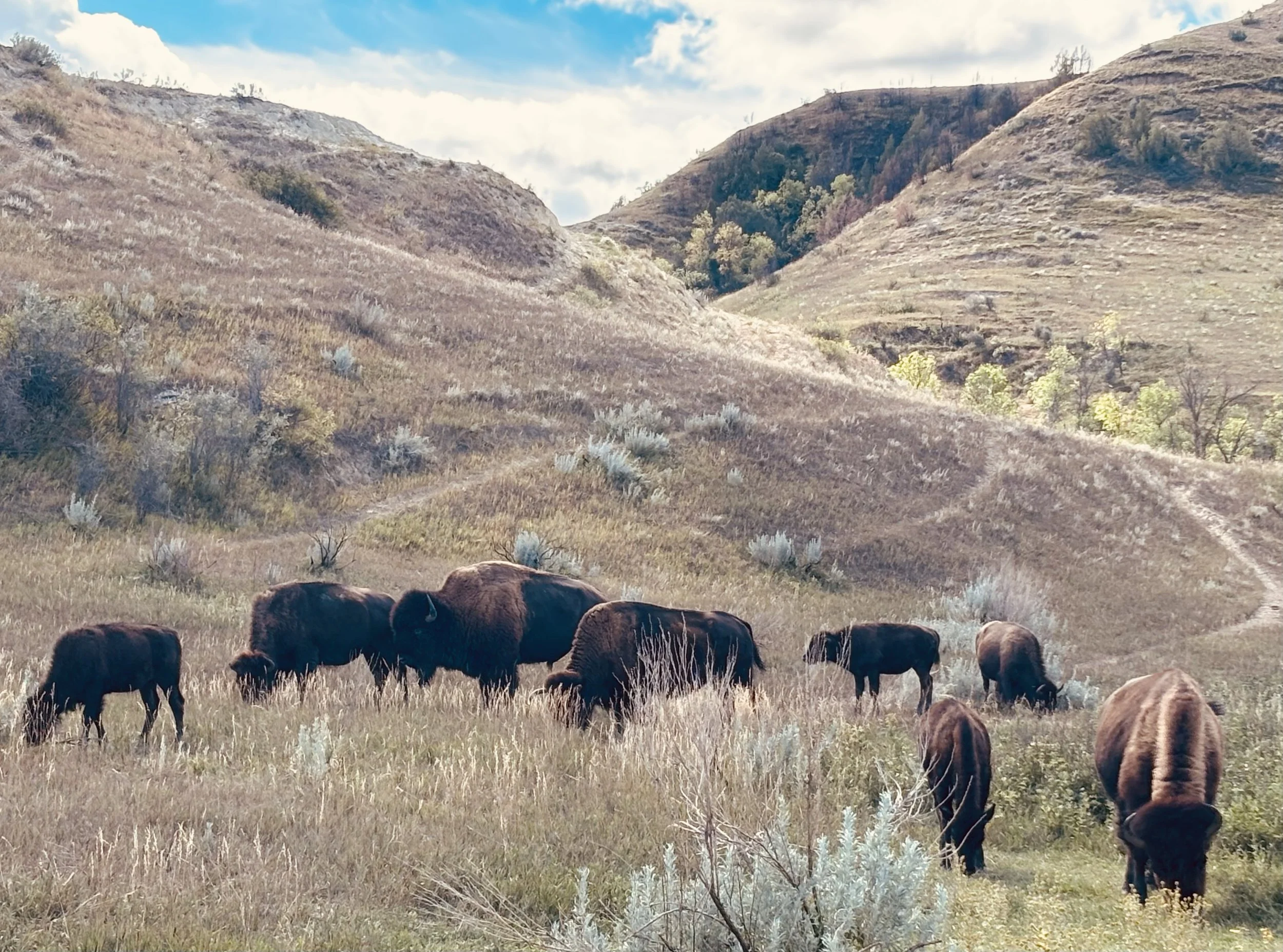
Bison Roaming Free
Since 2019, more than 600 Yellowstone bison have been transferred to 29 tribes across 13 states and one Canadian province. These efforts are helping restore bison to tribal lands and reconnect communities with an animal that holds enormous cultural, historical, and ecological significance.
And that brings us to the end of our journey.
We came for the scenery, but we left with a much greater appreciation for the history, geology, wildlife, and conservation stories that make this part of the country so special.
The Badlands may have earned their name because they were considered difficult land to cross. But from where we stood, they were anything but bad. They were fascinating, beautiful, sometimes frustrating, occasionally foggy, and filled with surprises.
And yes…
There’s another bison!
