Yellowstone National Park
Lamar Valley
Yellowstone
We are half way there!! Yellowstone, America’s first national park, is the 32nd park we have visited. That means, we have officially passed the halfway point in our quest to visit all 63 national parks! Yahoo, or maybe, Yee Haw would be more appropriate!!
This park is HOT!
Imagine an enormous super volcano lying hidden miles under the surface of the earth. A volcano so big that when (not if) it erupts, it will alter life as we know it across the entire United States, and around the globe. Now imagine that you put a national park right on top of that volcano. Congratulations, you just imagined Yellowstone.
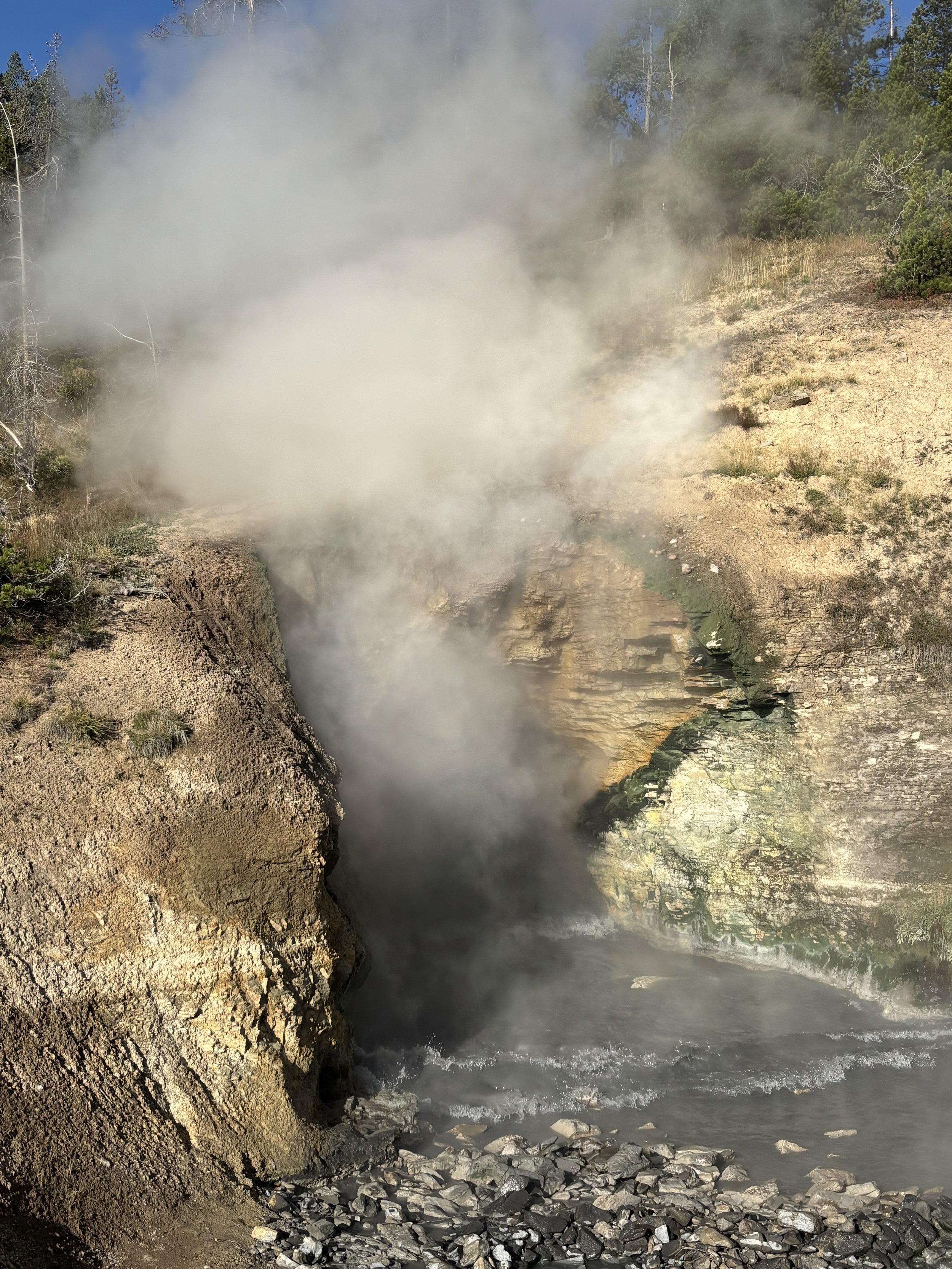
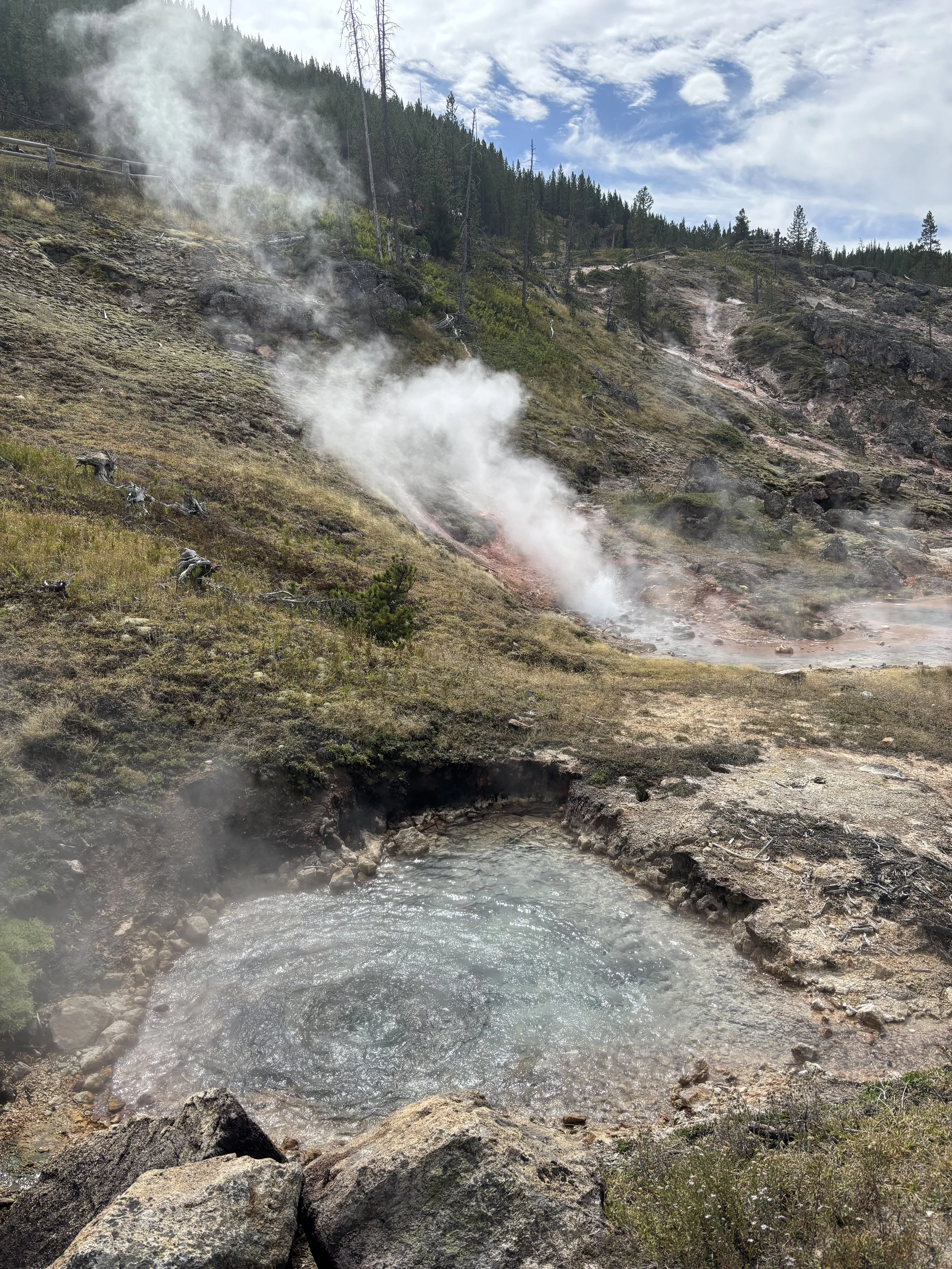
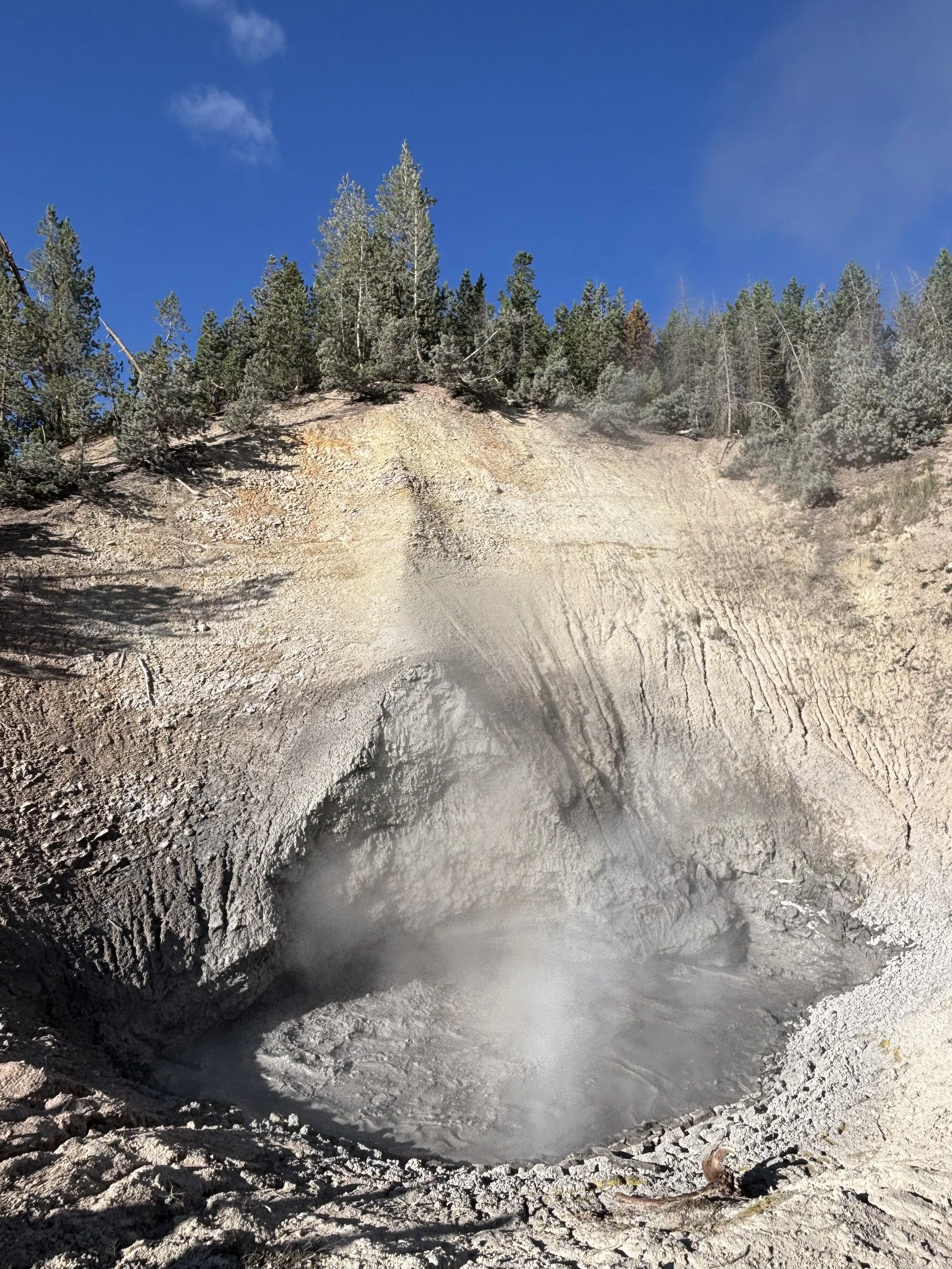
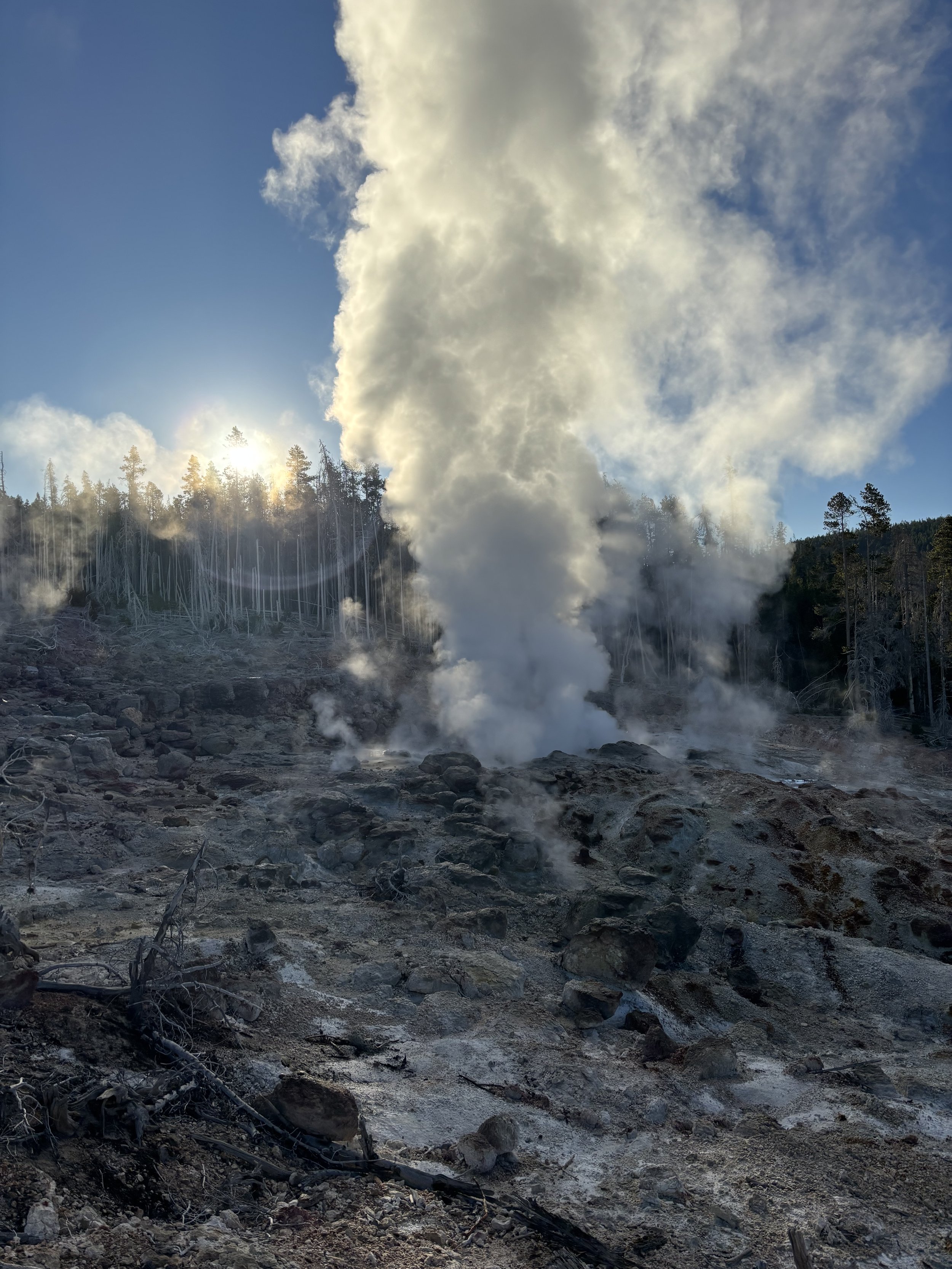
The Yellowstone caldera (a/k/a underground volcano) is the engine for the thousands of thermal features ( geysers, hot springs, fumaroles and mud pots) that make the park famous.
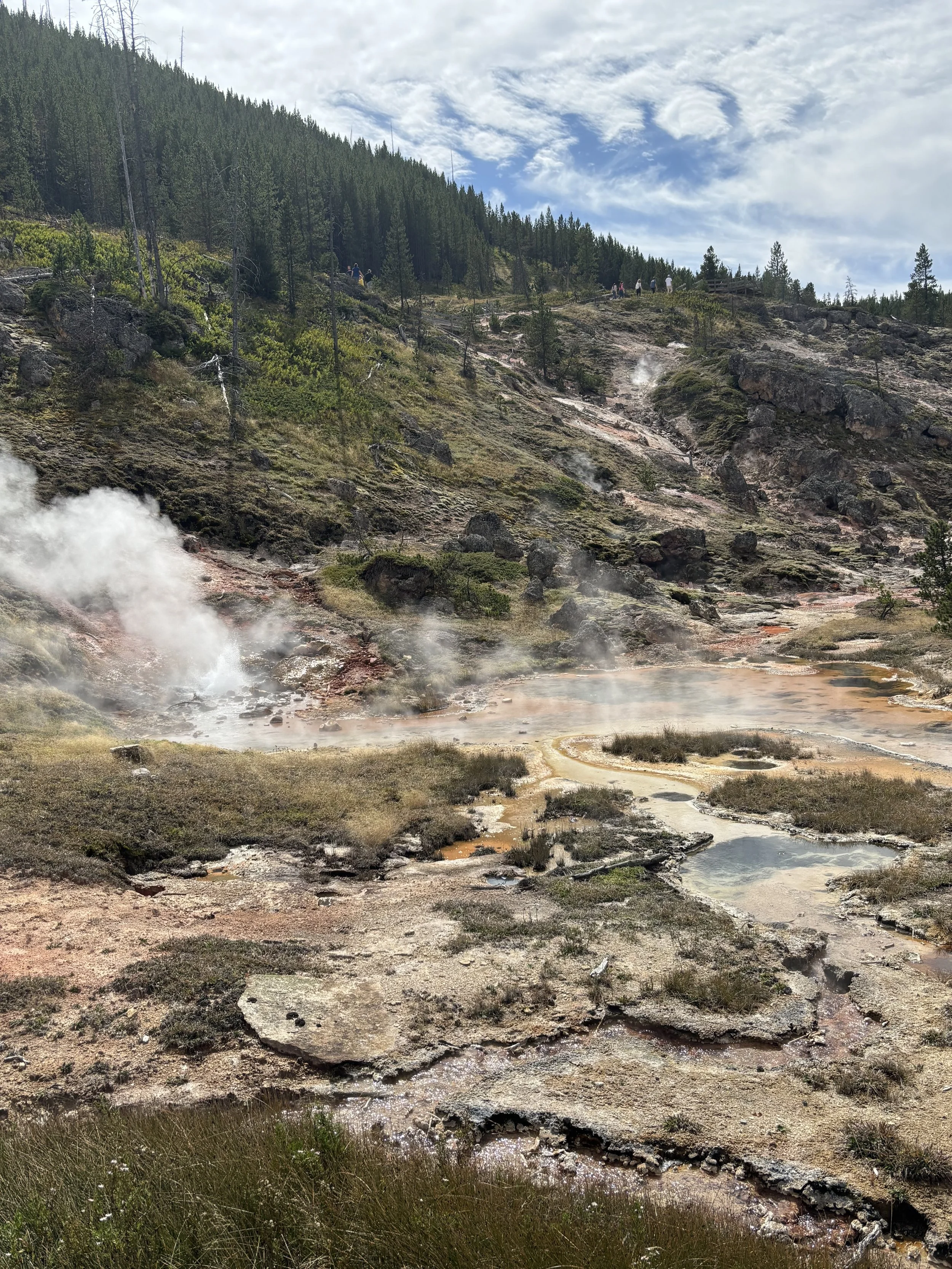
Art Paint Pot
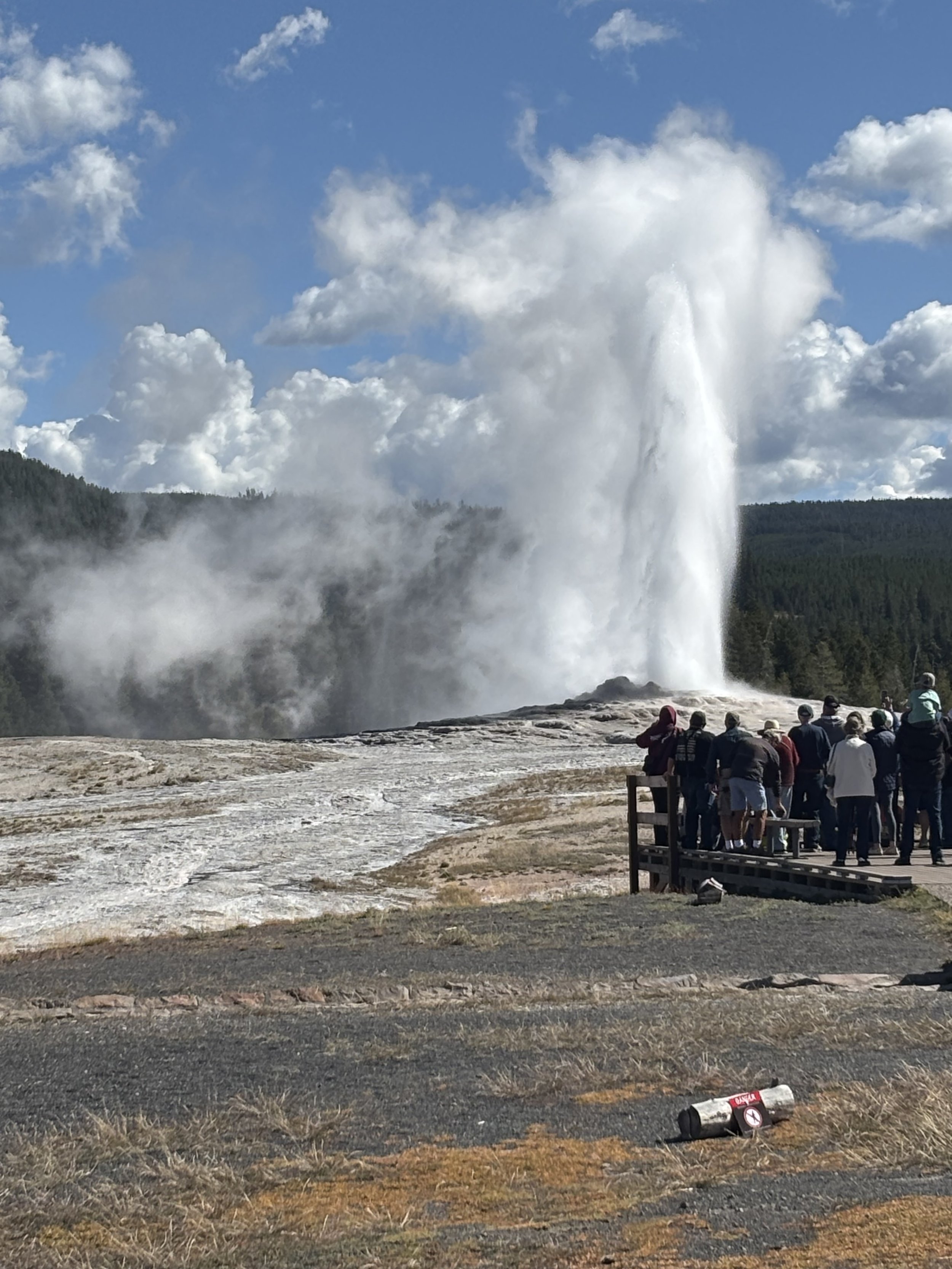
The most famous thermal feature in the park is the Old Faithful geyser. As the name implies, this geysers erupts on a regular and predictable schedule. It is so faithful, that each day the park publishes the estimated eruption times with a margin of error of only 12 minutes. While most people have heard of Old Faithful, it is just one of many geysers in the park. In fact, over half of all the geysers in the world are in Yellowstone.
While geysers may get the press, the remaining thermal features are every bit as interesting and impressive. Hot springs are pools that continually emit water that can reach super-heated temperatures. Fumaroles are holes in the ground that belch out steam throughout the park (think of them as nature’s smokestacks). Finally, there are mud pots. These are like mud baths you might find at an exclusive spa, but a bit hotter.
While they vary greatly in size, temperature and appearance, all these thermal features share certain characteristics. Most notably, they can all kill you, and, in some cases, completely destroy the evidence. They are generally hot enough to cause third degree burns. They are often caustic or acidic enough to disintegrate anything that has the misfortune of falling in. Finally, they are filled with dangerous bacteria and elements like arsenic and mercury. In short, when you read the danger signs on these, it is best to heed their warning.
This park is wild!
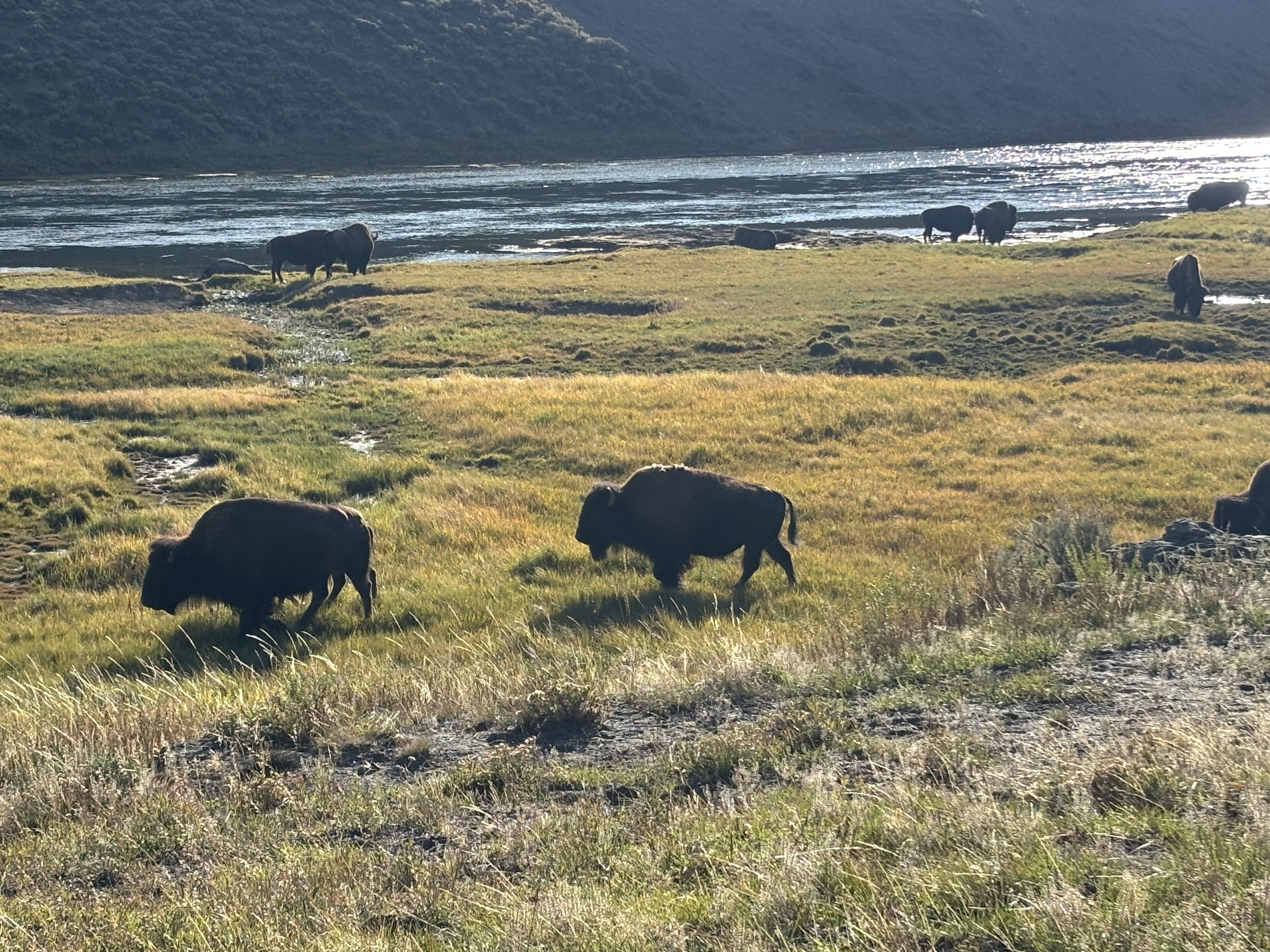
The animals of Yellowstone are the other stars of the park. They include 5,000 wild bison, 14,000 elk, and thousands of moose, deer, mule deer, and pronghorns. You will also find numerous animals that could eat you as well as the elk, bison, and their other herbivorous friends. These predators include bears, wolves, coyotes, bobcats, foxes, lynxes, and mountain lions. Getting to see all these animals in their natural habitat is a great treat.
The other big group of wild animals in the park are the people, and, yes, people in Yellowstone can be as clueless as they appear in the thousands of online videos. We watched dozens of people ignore all the warnings and put themselves in harm’s way by getting dangerously close to these wild animals.Bison can weigh over 2,000 pounds, stand 6’ tall at the shoulder, run 35 mph, and jump a 6’ fence. Yet, people approach them like they are pets, and, for the record, the elk and the moose are no less dangerous.
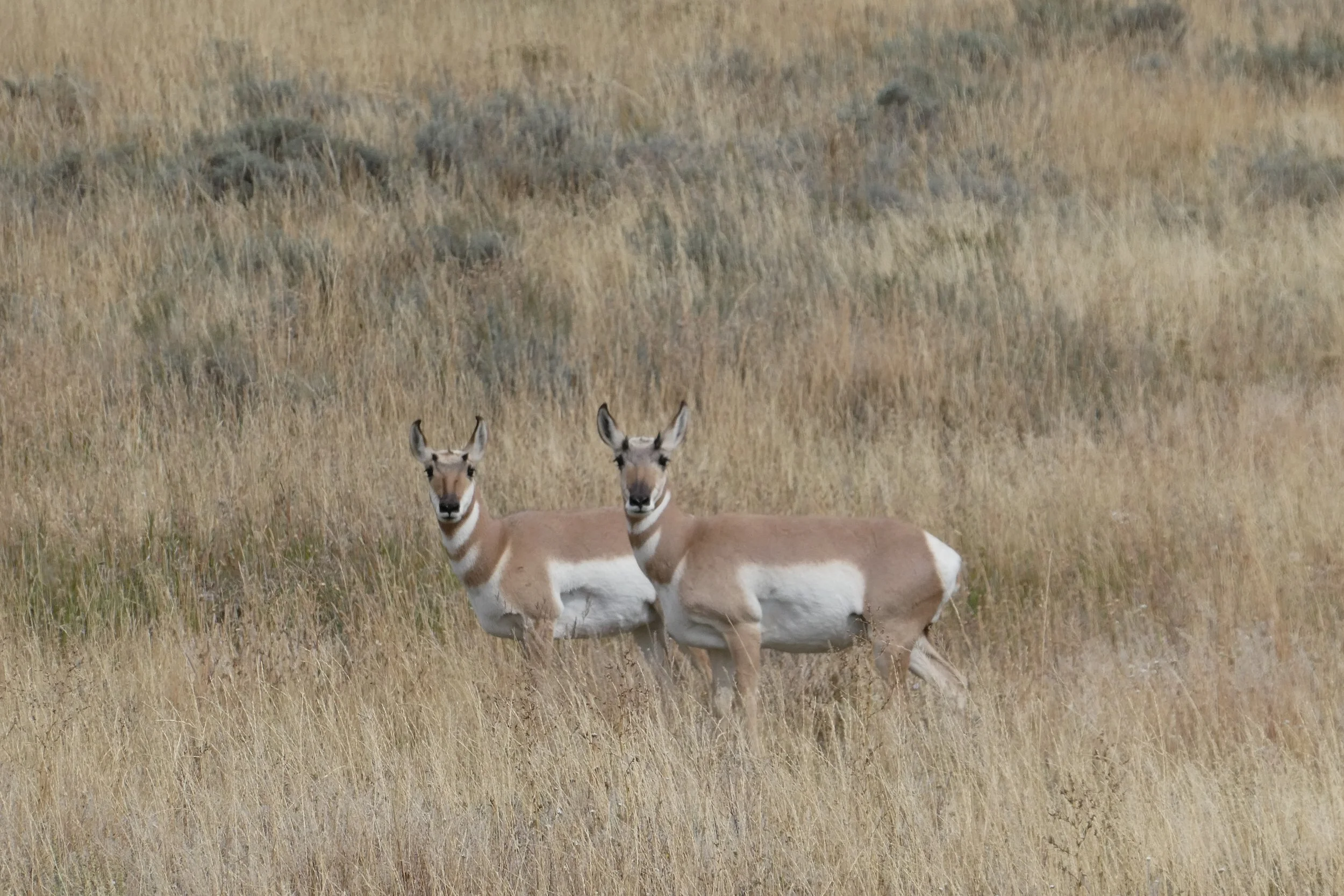
Pronghorn
(Evolutionary fun fact: The pronghorn is the fastest land animal in North America, and the second fastest in the world. It can run 60mph. This great speed is a holdover from when, prior to the last ice age, there was a North American cheetah.)
This park is definitely worth the visit!
Camp Airstream
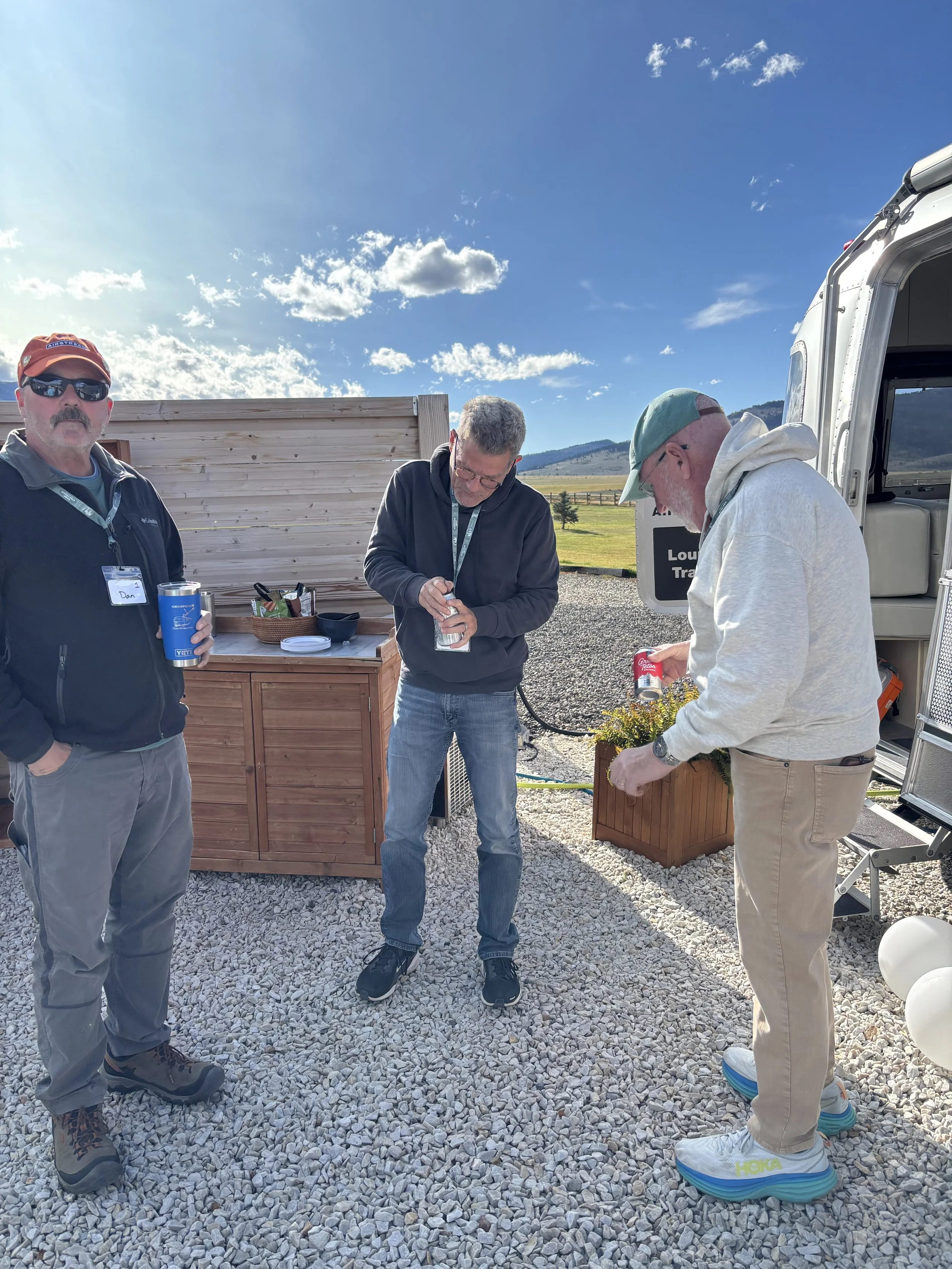
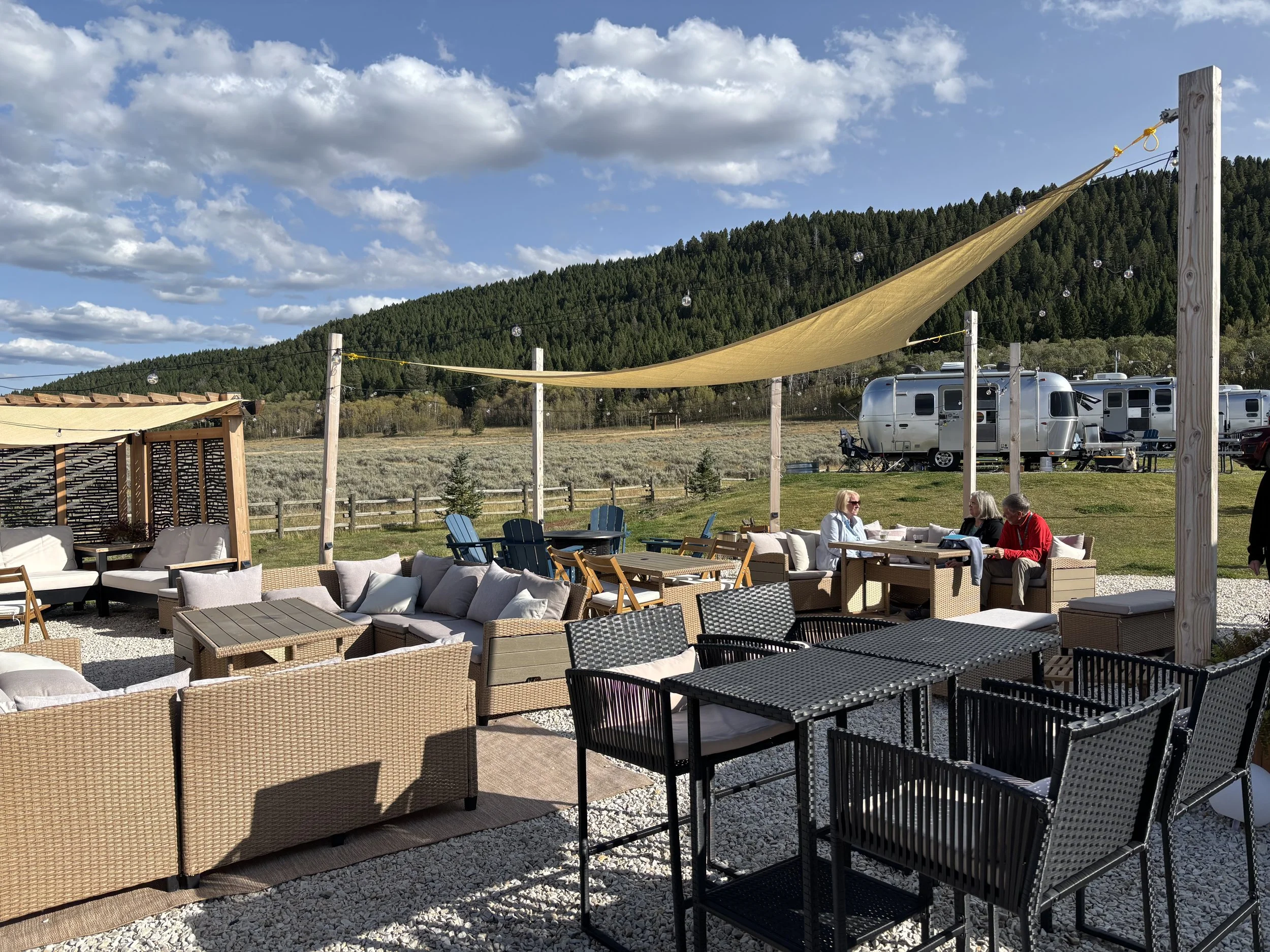
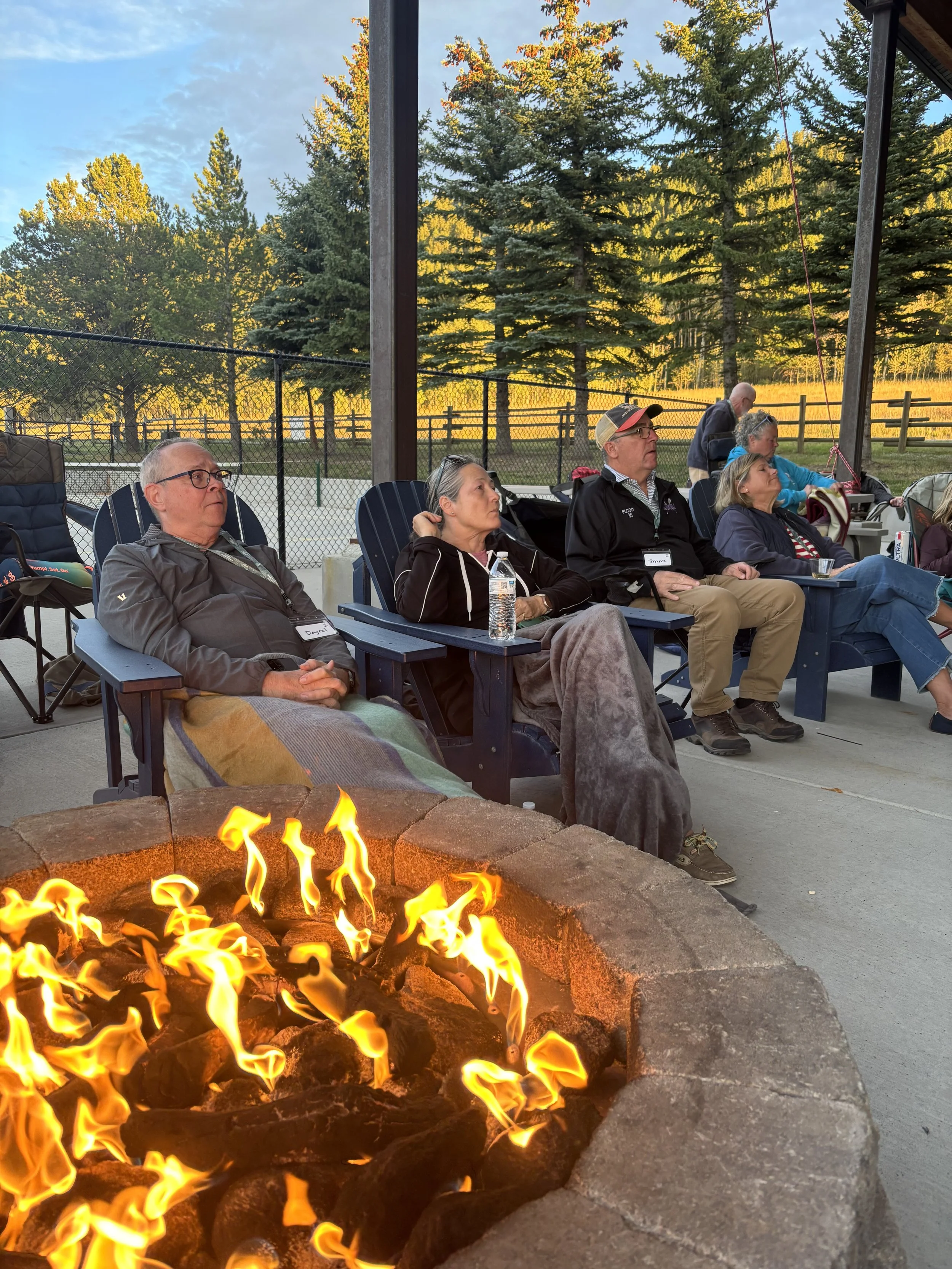
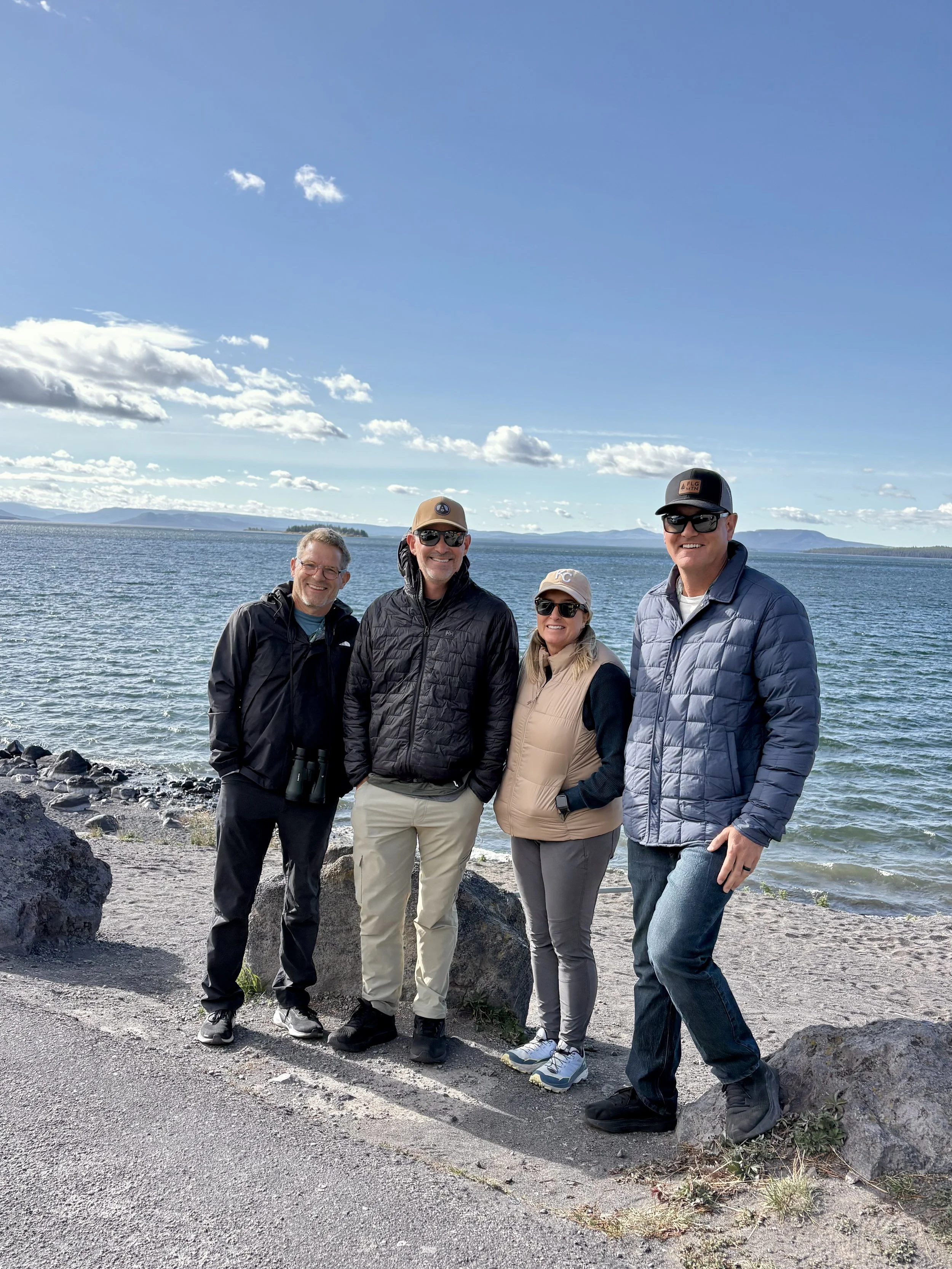
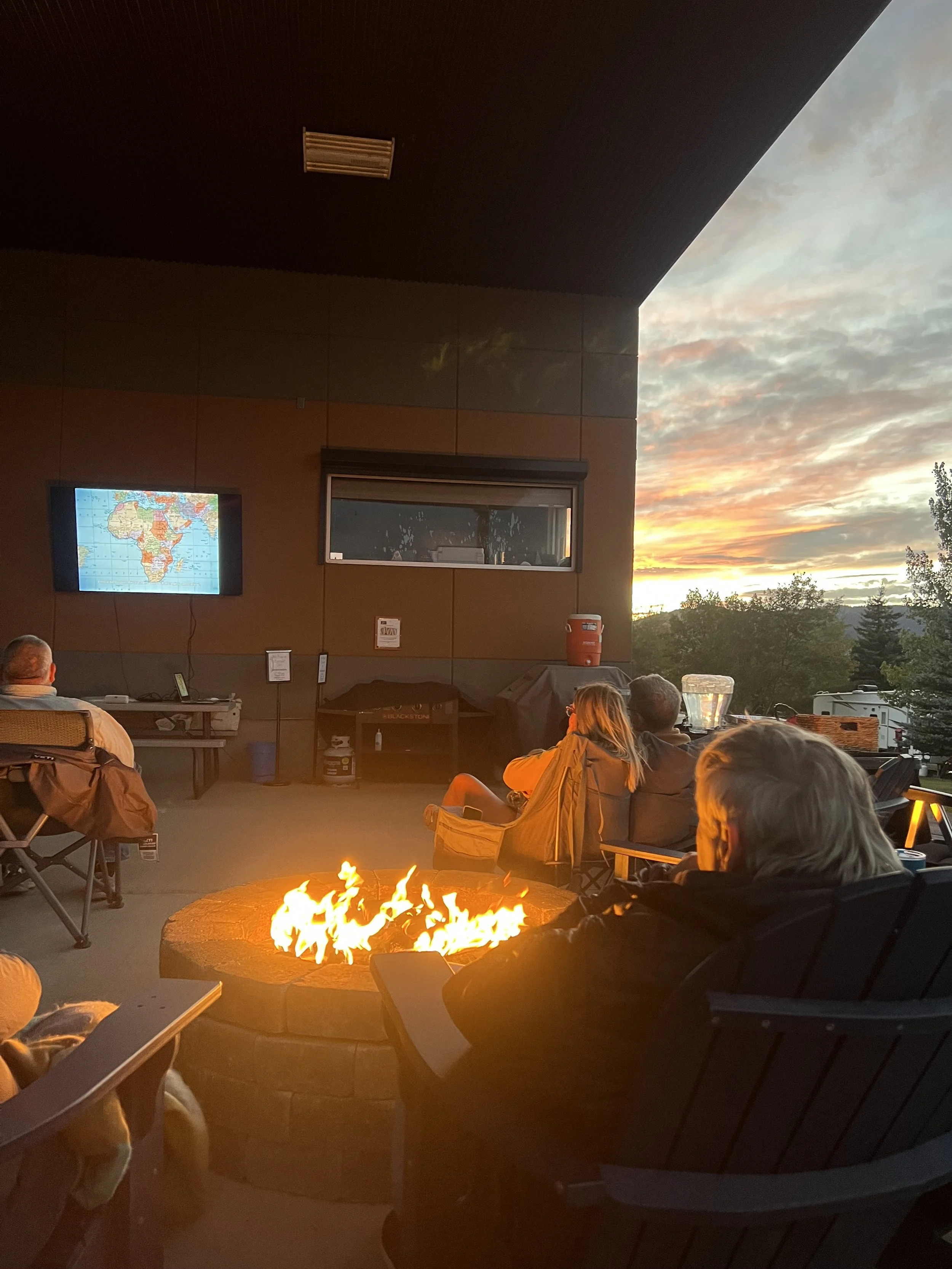
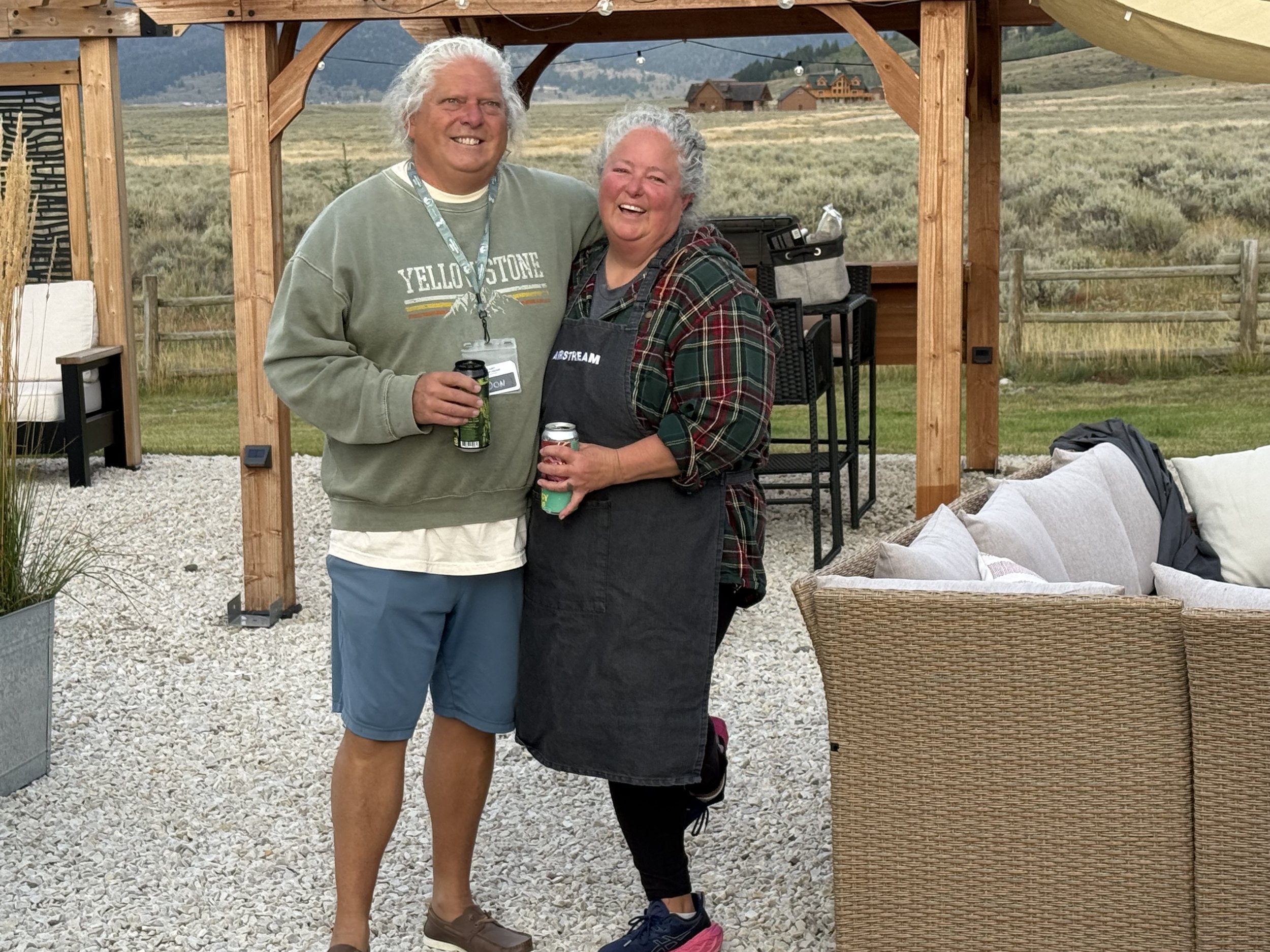
We stayed near the park as part of “Camp Airstream - Yellowstone”. This was an Airstream-sponsored program that brought together 14 Airstream trailers and their owners for a fun-filled, educational week. We had social hour almost every night, and it was great to meet new friends who share our interest in traveling and the Airstream lifestyle. We had a few arranged events including a guided tour of the park, presentations on the history and wildlife of Yellowstone, and a leisurely riverside stroll. Our tour guide was an impressive young man who looked a lot like Russell from the Disney movie “Up” and was a wealth of information on all things Yellowstone. (He actually knew the average height of a full grown lodgepole pine in Yellowstone…75’ for those who are curious). He was also a good story teller and shared with us the story of mountain man Richard Leigh who had the unfortunate, but humorous nickname of “Beaver Dick”. Not surprisingly, that’s the only part of that story we remember!!
All in all, we spent a great week in the park and thoroughly enjoyed the new friendships we made, the amazing sights, wildlife, and the natural beauty of the place.